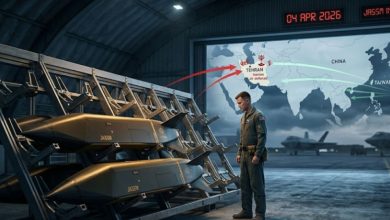
The Great Decoupling: Why America Must Revolt Against Its Own Interventionism to End Global Terror
Beyond the Brink: Assessing the Radical Theory That US Stability and International Terrorism Are Two Sides of the Same Coin

The Vacuum Theory: Would Collapse Mean Peace?
There is a cold, academic logic to the idea that a US collapse would trigger the collapse of international terrorism. Modern extremism is often a reactive force—a “blowback” phenomenon. As the late Chalmers Johnson, a former CIA consultant, argued in his seminal work Blowback, the unintended consequences of American overseas empire-building are the primary drivers of anti-Western militancy.
If the “Great Hegemon” ceased to exist, the primary grievance used for recruitment would vanish. However, this is a “scorched earth” solution. A total collapse of the United States would not result in a peaceful vacuum; it would likely mirror the fall of the Soviet Union on a global scale, potentially leaving loose nuclear assets and massive power voids for localized warlords to fill.
The Third Way: Revolution Over Ruin
The most compelling path forward isn’t the destruction of the American state, but an internal revolution of policy. This is a call for a systemic “decoupling” of the American military from the business of regime change and unnecessary aggression.
A key example of this “aggression over diplomacy” is the Western stance toward Iran. Professor Jeffrey Sachs, Director of the Center for Sustainable Development at Columbia University, has pointed out that the narrative of “guilty parties” is often flipped. Sachs highlights that the cycle of terror and tension is frequently maintained by a refusal to negotiate:
Iran is not the guilty party in these; Iran is the victim of aggression. That point is Iran has wanted to negotiate, not last for the week, not for the last month, but for the last 15 years. Iran has said that we don’t want nuclear weapons. It’s against our religious principles.”
This perspective suggests that terrorism isn’t an inevitable external threat, but often the byproduct of a foreign policy that prefers confrontation over 15 years of diplomatic overtures.
Why “Decoupling” is the Only Moral Choice
Hoping for a total US collapse is a nihilistic gamble. The resulting global economic depression would likely claim more lives through starvation than terrorism ever could. The more ethical—and practical—hope lies in a structural divorce.
By disconnecting the US government from its habit of ignoring diplomatic olive branches, the “justification” for international terrorism begins to evaporate. As Ron Paul, former Congressman and critic of interventionism, famously noted: “They don’t come here because we’re free and prosperous; they come here because we’re over there.”