Why Iran’s Airspace Could Break the Illusion of American Air Dominance
Decades of radar deception, missile layering, and electronic warfare have turned Iran into the most dangerous aerial battlespace the U.S. has faced since the Cold War

For decades, American air power has been built on an assumption that has rarely been challenged: once U.S. aircraft arrive, control of the sky soon follows. From Iraq to Libya, that expectation largely held. A confrontation with Iran, however, would test that belief more severely than any conflict in the modern era.
This would not be a war against a brittle air-defense system waiting to be dismantled in the opening hours. It would be a sustained contest against an adversary that has designed its entire military doctrine around denying the United States what it values most—freedom of movement in the air.
The Houthi Precedent: A Small-Scale Preview
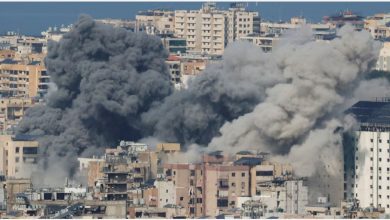
U.S. pilots have already received an early warning. In engagements over Yemen, forces aligned with the Houthis demonstrated an uncomfortable truth: even limited actors, with modest resources, can stress American air operations when they abandon predictable air-defense behavior.
Rather than operating radars continuously, these forces embraced emissions discipline—keeping sensors dark until U.S. aircraft committed to egress routes, fuel constraints, and fixed timelines. Missiles were launched not to deny entry, but to punish withdrawal. The result was prolonged missile exposure, minimal reaction time, and an environment where survivability depended as much on chance as on technology.
Iran has studied these encounters closely. Unlike the Houthis, Tehran can execute this approach at scale.
Iran’s Air Defense Doctrine: Denial, Not Duel
Iran does not seek aerial parity with the United States Air Force. Instead, its doctrine focuses on airspace denial through attrition, confusion, and delay.
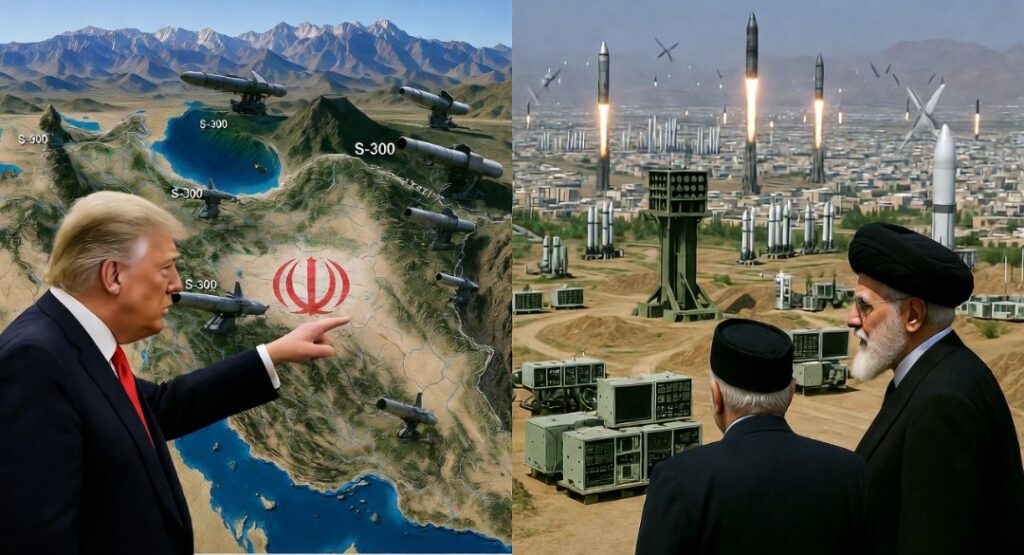
Its air-defense network is layered rather than centralized. Long-range systems such as the Russian-designed S-300 variants provide early engagement capability, while domestically produced platforms—including the Bavar-373—cover overlapping altitude and range envelopes. Medium- and short-range systems fill the gaps, supported by optical trackers, passive sensors, and mobile launchers that can relocate within minutes.
Crucially, Iran avoids reliance on a single radar picture. Data is fragmented, shared selectively, and frequently manipulated to create uncertainty for incoming aircraft. False emitters and decoy sites force U.S. pilots to waste precision munitions on empty targets while real systems remain hidden.
Missile Saturation and the Cost Equation
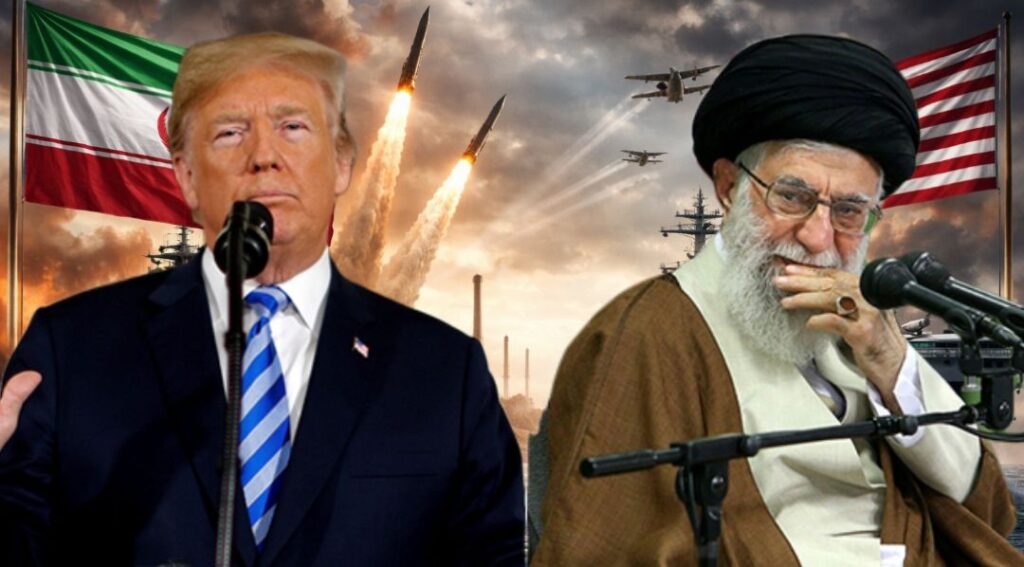
Iran’s strength lies not in a single “silver bullet” weapon, but in numbers. Surface-to-air missiles are designed to be expendable. Aircraft are not.
By launching salvos rather than single interceptors, Iranian defenses aim to overwhelm onboard countermeasures and compress pilot decision-making windows. Even missed shots serve a purpose: they force evasive maneuvers, disrupt strike timing, and degrade mission effectiveness.
Every additional missile in the air compounds risk. Over time, that risk translates into losses—or operational paralysis.
Electronic Warfare: Turning Technology Against Itself
Perhaps Iran’s most underestimated capability is its growing electronic warfare portfolio. Jamming, spoofing, GPS interference, and data-link disruption are all integral to its strategy. The goal is not total blindness, but selective degradation—introducing doubt into navigation, targeting, and threat recognition systems.
Geography as a Weapon
Iran’s terrain amplifies these defenses. Mountain ranges mask radar coverage, urban density complicates target discrimination, and hardened underground facilities reduce the effectiveness of stand-off strikes. U.S. aircraft would operate far from mainland bases, dependent on vulnerable tankers and predictable transit corridors—each a lucrative target in a broader regional escalation.
The Strategic Reality
The United States could still project air power over Iran. But doing so would come at a cost far higher than Americans have grown accustomed to since the 1990s.
This would not be a campaign of shock and awe. It would be a campaign of endurance—where every sortie carries strategic weight, every aircraft loss reverberates politically, and victory is measured not in days, but in the ability to sustain pressure without breaking public support.
Iran’s greatest weapon is not any single missile or radar system. It is the erosion of certainty—the slow realization that air dominance is no longer guaranteed.
And that realization would reshape American war planning far beyond the Middle East.