Iran Denies Reports of ‘Special Passage’ for Indian Tankers in Strait of Hormuz
Tehran dismisses claims of a shipping pact with New Delhi despite successful transit of SCI vessels amid escalating Gulf tensions.

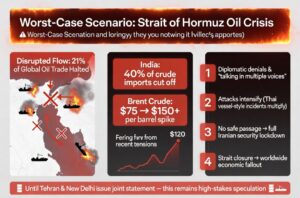
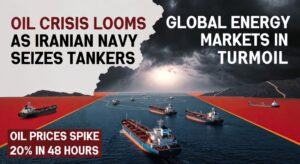
21% of global oil trade halted. India’s 40% crude imports severed. Brent crude surges to $150+ per barrel. Energy chaos threatens worldwide economies—until safe passage is restored.”
Risky Transits and ‘Talking in Multiple Voices’
The diplomatic mixed signals come as the maritime situation in the Gulf remains precarious. Despite the official denial from Tehran, at least two Shipping Corporation of India (SCI) tankers—the Pushpak and the Parimal—reportedly completed successful transits of the Strait without military escort over the last 24 hours.
“There is utter confusion as various Iranian entities appear to be talking in multiple voices,” noted a maritime security analyst. “While some tankers are making it through, others are being targeted, suggesting that ‘permission’ is neither permanent nor guaranteed.”
Rising Stakes After Thai Vessel Attack
Tensions spiked on Wednesday after the Thai-flagged bulk carrier Mayuree Naree, bound for India’s Kandla port, was struck by a projectile in the Strait. While the crew survived, the incident prompted a sharp rebuke from New Delhi.
The Indian Foreign Ministry expressed “deep concern” over the targeting of commercial shipping, noting that the intensity of attacks in the corridor appears to be increasing. India, Asia’s third-largest economy, is particularly vulnerable to disruptions in the Strait, where even a temporary closure could send global Brent crude prices toward the $120 mark.
A Waiting Game for Energy Markets
For now, the Indian government has not issued a formal confirmation of a “safe passage” deal, opting instead to monitor its vessels through a 24-hour control room established by the Directorate General of Shipping.
As the conflict in West Asia continues to evolve, energy traders and shipping firms are left navigating a landscape where diplomatic assurances and maritime realities rarely align. Until a joint statement is issued by both Tehran and New Delhi, the “special status” of Indian tankers remains a matter of high-stakes speculation.