The Infrastructure War: Why Bombing Iran’s Power Grid is a Strategic Myth with Global Risks
As "Power Plant Day" rhetoric escalates, military history and modern humanitarian data warn that targeting civilian lifelines will trigger regional collapse without breaking Tehran’s resolve.


The threat of military strikes on Iran’s civilian infrastructure has moved to the forefront of global security concerns following recent declarations from Washington. While the strategic intent behind such moves is often framed as a way to degrade national resolve or limit industrial output, a comprehensive analysis by the Atlantic Council suggests that targeting the Iranian power grid, oil refineries, and water treatment facilities would yield negligible military advantages while precipitating a humanitarian catastrophe. Experts emphasize that the Iranian military operates largely independently of the national civilian grid, relying instead on localized power sources and hardened backup systems designed specifically to withstand external shocks. Consequently, while the lights may go out for 92 million civilians, the operational capacity of the Islamic Republic’s missile sites and command centers would likely remain intact.
This aggressive posturing sits at the center of a military debate that a retired U.S. Air Force Colonel settled—and warned was doomed to fail—three decades ago. In 1996, Colonel Everest E. Riccioni, a 30-year Air Force veteran, experimental test pilot, and Pentagon analyst, published a landmark paper titled “Strategic Bombing: Always a Myth.” His thesis was definitive: every major U.S. bombing campaign in history has failed to break an enemy’s will or substitute for ground forces. Riccioni argued that without boots on the ground, strategic bombing cannot win wars; it only serves to prolong them. In 2026, the hope of bombing a path to victory in Iran faces a crucial, modern reality that Riccioni’s era didn’t have to weigh: Tehran possesses the reach to strike back.
The human cost of “Power Plant Day”—a term recently used in escalating rhetoric—would be immediate and severe. In a region where extreme heat makes refrigeration and climate control matters of survival, a total collapse of the energy sector would cause a cascading failure of public health systems. Perhaps most critical is the link between electricity and water. Iran relies heavily on power-intensive groundwater pumps and desalination to provide potable water to its population. Without electricity, millions would face a sudden shortage of drinking water, likely triggering widespread thirst and the rapid transmission of waterborne diseases. This “weaponization of infrastructure” is increasingly viewed by international observers not as a surgical military tactic, but as a maneuver that risks violating international norms regarding the protection of non-combatants.
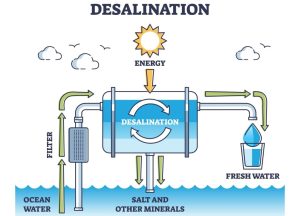
Beyond the borders of Iran, the ripples of such an escalation would likely destabilize the entire Persian Gulf. Unlike past targets of U.S. air campaigns, Tehran has the means to follow through on its warnings of retaliation. The Iranian leadership has made it clear that any attack on its critical infrastructure will be met by destroying equivalent infrastructure in neighboring countries. The past month has demonstrated that this is not an empty threat. The region’s geography creates a mutual vulnerability; the same energy-intensive desalination technology that sustains Iran is also the lifeblood of neighbors like Qatar, Kuwait, and the United Arab Emirates.

Analysts warn that if tensions spiral into “tit-for-tat” strikes on regional energy hubs, the Middle East could witness a water crisis of unprecedented scale, potentially leaving tens of millions without reliable access to hydration within days. This interconnectedness means that an attack on Iranian civilian sites is effectively an attack on the region’s shared environmental and economic security. The geopolitical fallout extends further into the global economy, with the Strait of Hormuz already a point of extreme tension. Rather than forcing a diplomatic resolution, the prospect of destroying civilian lifelines appears to be hardening domestic resolve within Iran and deepening the rift between the United States and its regional partners, who fear being caught in the crossfire of an infrastructure war that offers no clear path to peace.