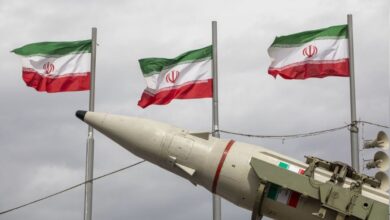
Israel’s Iron Dome Math Problem: Why Iran’s “Trash Drone” Swarm Changes Everything
Tehran figured out the cheat code: You don't beat a $100 million jet. You just make it chase flying lawnmowers until it goes broke.


The numbers are out, and they’re ugly.
When an Iranian military spokesperson bragged this week about an Arash-2 drone “penetrating” the airspace near Ben Gurion Airport, it didn’t really matter if the drone hit a bullseye or crashed in a field. The claim itself—even if it’s half-embellished—shines a cold light on a strategic nightmare that’s keeping Israeli defense planners awake at 3:00 AM.
Iran has essentially built a “bleeding machine.” They’ve realized they don’t need to beat the world’s most sophisticated air defense system; they just need to outspend it.
The Asymmetric Math
The Arash-2 isn’t a miracle of engineering. In fact, it’s kind of a “budget” weapon. It’s slow, it’s loud, and it’s basically a flying lawnmower engine strapped to 200kg of explosives. But it has a 2,000-kilometer range and a price tag that makes a Toyota Camry look expensive.
Here’s the rub: Every time an F-35—a $100 million stealth jet—scrambles to hunt down a $150,000 drone, Iran wins. Every time Israel fires a high-end interceptor to stop a “kamikaze” drone, that’s one less missile available for the actual ballistic nightmare that usually follows the swarm.
Israel’s defense is a masterpiece, but it’s a masterpiece designed for a different era. Using a million-dollar Arrow missile to swat away a “trash drone” is like using a gold-plated sledgehammer to kill a mosquito. It works, sure—until you run out of gold.
The Swarm is the Strategy
Iran’s “innovation” isn’t the drone itself; it’s the sheer, cynical volume of it. By flooding the sky with “good enough” tech, they force Israel into a lose-lose choice: either burn through your limited stockpile of interceptors or let the drones through and hope they don’t hit something vital.
We saw the “beta test” for this in April 2024. The coalition spent a fortune to stop a wave of drones that cost Iran next to nothing to launch. It’s attrition warfare dressed up in carbon fiber. Iran isn’t trying to level Ben Gurion’s terminals—they’re trying to make insurance premiums so high that no airline will land there, and defense budgets so bloated that the economy implodes from the inside.
The Bottom Line
Ben Gurion Airport is Israel’s economic jugular. Since the country is effectively an “island” for trade, a 48-hour shutdown doesn’t just delay flights; it paralyzes the nation’s heart rate.
Israel’s edge has always been quality over quantity. But as the drones keep coming, the question shifts from “Can we stop them?” to “Can we afford to stop them?” That’s a question Jerusalem—and Washington—still doesn’t have a good answer for.
Analysis based on verified military statements and open-source intelligence.