Martin Luther King Jr.’s Timeless Warning: America, Power Without Justice Cannot Last
From “Beyond Vietnam” to “Why I Am Opposed to the War in Vietnam,” King’s prophetic critique of militarism and arrogance resonates today amid U.S. actions in Iran and global conflicts.

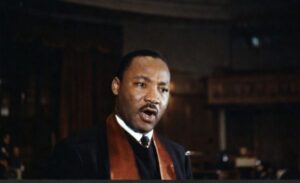
On April 4, 1967, Martin Luther King Jr. took an extraordinary step beyond civil rights and entered the complex realm of foreign policy. At Riverside Church, New York City, USA, in his historic speech “Beyond Vietnam: A Time to Break Silence,” he did more than condemn the war in Southeast Asia — he drew a direct connection between militarism abroad and moral decay at home.
King argued that America’s massive spending on war, while neglecting the urgent needs of its poorest citizens, represented not only a strategic failure but a profound spiritual crisis. A nation that invested more in weapons than in education, healthcare, and social uplift risked eroding the moral foundations that had long defined its identity.
Weeks later, in his sermon “Why I Am Opposed to the War in Vietnam” delivered at Ebenezer Baptist Church, Atlanta, Georgia, USA, King intensified this warning in almost biblical language:
“And it seems that I can hear God saying to America, ‘You are too arrogant! And if you don’t change your ways, I will rise up and break the backbone of your power and place it in the hands of a nation that doesn’t even know my name. Be still and know that I am God.’”
Here, King’s prophetic imagery emphasized that unchecked arrogance, militarism, and disregard for justice could ultimately undermine America’s power and moral authority. This was not a literal prediction of military defeat but a timeless moral caution: nations that ignore justice and conscience invite consequences far beyond politics or strategy.
In Beyond Vietnam, he directly labeled the U.S. government as “the greatest purveyor of violence in the world today,” shocking the nation and alienating many of his allies. But his critique went deeper than opposition to one conflict; it was a moral reckoning, linking racism, poverty, and militarism as interlocking forces threatening the nation’s soul.
Today, King’s warnings resonate sharply. U.S. involvement in Iran, global military expenditures, and controversial interventions — including past instances such as the detention of Venezuela’s president — illustrate the enduring costs of unchecked power. Trillions of dollars have been spent, lives lost, and moral authority eroded.
King’s vision, grounded in justice and conscience, challenges America to consider: can a nation wield power without sacrificing its integrity? Can strength coexist with humility? His message transcends time: power without justice is brittle, and arrogance carries consequences that history will judge.