The Beheading of a Regime: Inside the Strategic Arrogance of ‘Operation Epic Fury’
Extrajudicial Liquidation or Tactical Necessity? Deciphering the Unlawful Strike that Shattered Iranian Sovereignty

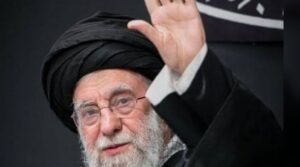
The geopolitical architecture of the Middle East was violently dismantled in the early hours of February 28, 2026. In a display of provocative unilateralism, a coordinated U.S.-Israeli military campaign-branded “Operation Epic Fury” by the Pentagon-successfully targeted and liquidated Iran’s Supreme Leader, Ayatollah Ali Khamenei.
This was not a standard military engagement, instead it was a cold-blooded decapitation strike executed with a level of technological arrogance that has left the international legal community in a state of confusion.
The Anatomy of a High-Tech Execution
The operation utilized a lethal combination of cyber-breaches and kinetic precision. Intelligence sources suggest that “zero-day” exploits in the IRGC’s hardened communication lines allowed the coalition to track the Supreme Leader to a high-security residence in Tehran.
- The Casualties: Alongside Khamenei, the strike claimed his daughter, son-in-law, and grandchild collateral damage that critics label as criminal negligence.
- The Command Vacuum: Simultaneous strikes neutralized the “brain” of the Iranian military, killing Chief of Staff Abdolrahim Mousavi and Defense Minister Aziz Nasirzadeh.
- The Strategy: U.S. President Donald Trump described the mission as a “liberation,” yet analysts see it as a dangerous gamble on regime change through raw force.
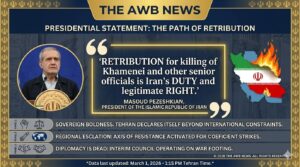
Why the 24-Hour Silence? The Chaos of Succession
While the US and Isael celebrated on Saturday evening, Iran remained eerily silent until the morning of March 1. This delay was not mere hesitation; it was a desperate focus preventing the immediate disintegration of the state.
- Administrative Paralysis: With the “Final Arbiter” gone, the Iranian Assembly of Experts faced an existential crisis. The delay allowed for the hasty formation of a Transitional Leadership Council, currently led by President Masoud Pezeshkian and Judiciary Chief Gholamhossein Mohseni Ejei.
- Internal Purges: Security forces utilized the silence to hunt for the “moles” who provided the geolocation data for the strike.
- Martyrdom Manufacture: The regime used the window to pivot from a narrative of “defeat” to one of “sacred martyrdom,” preparing the public for the “ferocious retaliation” that has since seen missiles rain down on U.S. bases in Qatar and Bahrain.
A Criminal Precedent: The Death of International Norms
From an analytical perspective, Operation Epic Fury represents a radical and unlawful departure from established international norms. By targeting a sitting Head of State without a formal declaration of war, the U.S. and Israel have signaled a new era of geopolitical hubris.
Legal scholars argue that this “extrajudicial liquidation” bypasses the UN Charter, effectively declaring that sovereignty is dead for any nation that opposes Western interests. The arrogance of the strike suggests that the coalition no longer fears the repercussions of international law, opting instead for a “might-makes-right” doctrine that could trigger a global “Hot Vacuum.”
The Economic Aftershock: Oil at $100+
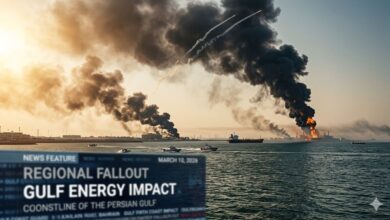
The market’s reaction has been swift and brutal. With the Strait of Hormuz now a de facto combat zone, Brent Crude has surged toward the $100 mark. Global shipping giants have suspended all transits, effectively choking 20% of the world’s energy supply. This is no longer a regional skirmish; it is a global economic cardiac arrest.
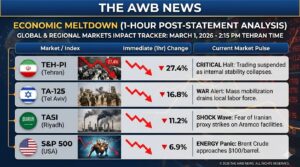
Market Breakdown: The Cost of Geopolitical Hubris
- Tehran (TEH-PI): A total collapse of 27.4% as internal panic outpaces government intervention. The Tehran Stock Exchange is facing a liquidity crisis as the “Decapitation Strike” shatters domestic investor confidence.
- Tel Aviv (TA-125): Defense costs and mass mobilization have triggered a 16.8% slide. The market is pricing in the high overhead of a multi-front war and the cessation of commercial tech operations.
- Energy Security: The $100/barrel milestone for Brent Crude is viewed by analysts as just the beginning. If the Hormuz blockade holds for more than 48 hours, global energy markets face a systemic reset.
Stay Informed: As the 40-day mourning period begins in Tehran, the world waits to see if the IRGC’s “Axis of Resistance” will fracture or unify under a new, even more radicalized leadership. The “Lion’s Roar” has been heard, but the echo may be more devastating than the strike itself. Follow [The AWB New] on X and Telegram for life updates as the Interim Leadership Council in Tehran prepares its move