Spain Defies U.S. Over Iran War, Sparking Rare Transatlantic Tensions
Madrid rejects access to U.S. military bases for Iran strikes, fueling debate on NATO commitments, sovereignty, and Europe’s diplomatic role.

On March 2, 2026, Spain took a firm stand against U.S.-led military operations targeting Iran, denying access to key military bases on Spanish territory and escalating tensions with United States.
Spanish officials said that any use of their bases for strikes would violate international law and bilateral agreements, emphasizing that military action should follow multilateral authorization and diplomacy. Sources in Madrid noted that the government consulted both the parliament and military command before refusing the U.S. request.
“This is not a rejection of alliance obligations, but a matter of legality and responsibility,” said a spokesperson from the Spanish Ministry of Defense, highlighting Spain’s preference for conflict resolution through dialogue rather than escalation.
The decision drew widespread attention, both domestically and internationally. Irene Montero, a Member of the European Parliament, went further, urging Spain to reconsider its NATO membership and criticizing the alliance for failing to ensure global security. Her statements have fueled debate among citizens and lawmakers, with opinion polls showing a growing portion of the Spanish public questioning involvement in foreign military actions.
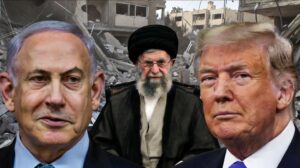
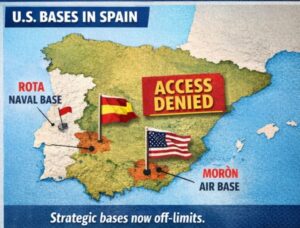
Visual Context: Spain operates two key U.S.-joint bases, Rota and Morón, strategically positioned for Mediterranean and Middle Eastern operations. Analysts point out that limiting access significantly reduces the operational range of U.S. forces, making Spain’s decision a rare show of European strategic independence.
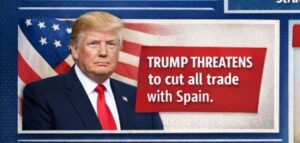
U.S. officials have publicly expressed frustration, warning that Spain’s stance could undermine allied cooperation during a critical moment of international tension. While President Donald Trump has threatened economic repercussions, no formal trade restrictions or sanctions have yet been enacted.
European observers say Spain’s actions highlight a broader debate about the continent’s strategic autonomy. Many governments are weighing long-standing support for U.S. military policy against domestic concerns over legality, public opinion, and the risk of regional escalation.
“This decision reflects a careful balancing act: Spain is committed to NATO and transatlantic relations, but it is unwilling to participate in operations it sees as legally or morally problematic,” said Dr. Marta Ruiz, a European security analyst at the University of Madrid. “It may set a precedent for other European countries considering similar refusals.”
For citizens in Spain, the move has provoked both approval and criticism. Demonstrations in Madrid and Barcelona have reflected public debate, with some groups applauding Spain’s independence and caution, while others warn it could strain relations with a key ally.
As the situation unfolds, Spain’s rejection of U.S. operations against Iran underscores a new era of assertive European foreign policy, where member states may increasingly act independently of Washington’s directives. How this standoff will impact NATO cohesion and U.S.-European relations in the coming months remains uncertain.