Global Energy Shock as Strait of Hormuz Faces Effective Closure — International Tensions Escalate
Strategic Gulf waterway handling up to 30% of the world’s oil is effectively blocked; US, Russia, and China weigh in on consequences for global energy security.

The Strait of Hormuz, a narrow chokepoint linking the Persian Gulf to the Gulf of Oman and vital for global oil shipments, has been effectively blocked since 28 February 2026. The closure follows a series of US‑Israel military strikes on Iran and subsequent Iranian retaliatory threats.
Iran’s Islamic Revolutionary Guard Corps (IRGC) reportedly warned vessels not to transit the strait, stating that passage would not be allowed. Commercial shipping companies promptly suspended operations due to safety concerns and the withdrawal of war-risk insurance. Although not a formal legal blockade, these developments have halted maritime traffic, effectively freezing one-third of global oil exports.
Russian President Vladimir Putin issued a stark warning:
“The Strait of Hormuz (key route for 1/3 of world oil, ~14 million barrels/day, mostly to Asia) is now essentially blocked. Oil production there risks stopping soon. Storage is filling up fast, rerouting supplies will take months/years, cost billions in new ports/roads, and has big risks. Oil is needed right now.”
- Putin emphasized that Russia is prepared to adjust exports and work with global partners to mitigate the impact of the disruption, highlighting the strategic vulnerability of the world energy market.

Global Reactions
United States: The US condemned Iran’s actions and confirmed plans to escort tankers through the Strait of Hormuz, while providing war-risk insurance guarantees to reassure global markets.
Russia: Moscow stressed the fragility of global oil supply chains, promoting Russian energy exports as an alternative, particularly for European markets.
China: Beijing faces heightened risk due to its reliance on Hormuz for crude imports. Chinese officials have called for calm and signaled naval readiness to protect critical shipments while urging diplomatic resolution.
Economic and Market Consequences
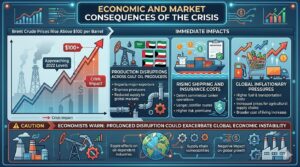
The crisis has already sent Brent crude prices above $100 per barrel, approaching levels not seen since 2022. Immediate impacts include:
- Production disruptions across Gulf oil producers such as Saudi Arabia, UAE, Kuwait, and Iraq.
- Rising shipping and insurance costs, deterring commercial tanker operations.
- Global inflationary pressures affecting fuel, transportation, and agricultural supply chains.
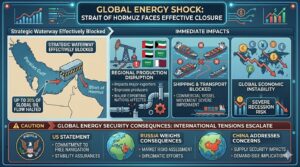
Economists warn that prolonged disruption could exacerbate global economic instability, with ripple effects on industries dependent on oil and gas.
Outlook
While the Strait of Hormuz has not been officially closed in legal terms, the operational halt of shipping has transformed a regional conflict into a global energy emergency. International powers are closely monitoring the situation, with diplomatic and military efforts underway to ensure the safe passage of oil and gas and to prevent further escalation.
As long as threats persist, rerouting shipments will be expensive and time-consuming, and the world may face significant energy shortages until a resolution is achieved.