The Taiwan Gravity Well: Why a Distant Island is the World’s Logistical Heart
Between a Blockade and a Hard Place: Mapping Japan’s Economic Vulnerability in a Taiwan Crisis

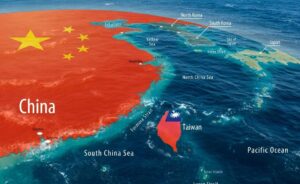
The map of global conflict is bleeding into new territory. While the world’s attention is rightfully fixed on the tragic attrition in Eastern Europe and the perennial volatility of the Middle East, a far more systemic threat is quietly coiling in East Asia. Analysts often call Taiwan a “potential flashpoint,” but that phrase feels increasingly sterile. Taiwan isn’t just a political friction point; it is the vital organ of the modern global economy. If it stops beating, the rest of the world goes into shock.
A Critical Artery, Not Just an Island
To understand Taiwan’s importance, you have to stop looking at it as a piece of disputed land and start seeing it as a gatekeeper. Its geographic position is a fluke of history that has made it central to the survival of the global North. Data from CSIS confirms what sailors already know: a staggering portion of the world’s merchant fleet doesn’t just pass near Taiwan—it relies on those waters to remain open for business.
For an industrial giant like Japan, this isn’t an academic concern; it’s a matter of national survival. Reports from METI and the IEEJ paint a claustrophobic picture: Japan imports over 90% of its energy. Nearly all of it has to thread the needle through the sea lanes surrounding Taiwan. If those lanes are choked, Japan’s economy doesn’t just slow down—it hits a wall. In this corridor, a maritime “hiccup” becomes a global cardiac arrest.
China’s Long Game vs. The American Shield
Beijing’s military build-up hasn’t been a random display of strength; it has been a surgical effort to rewrite the rules of the Pacific. The US Department of Defense has spent years tracking China’s “Anti-Access/Area Denial” (A2/AD) capabilities—a technical term for a very simple goal: making the near seas too dangerous for the U.S. Navy to operate.
The arrival of “carrier killer” missiles like the DF-21D and DF-26 has fundamentally changed the math of intervention. Research from RAND and CNAS suggests that any future conflict in the Strait won’t be a repeat of 1996’s naval posturing. It would be a high-velocity, highly contested scramble where the traditional American playbook might finally meet its match.
Japan: Living in the Shadow of the Volcano
While Washington and Beijing trade high-level rhetoric, Japan is the one living at the foot of the volcano. The proximity is visceral: on a clear day, you can stand on the tip of Yonaguni and literally see the Taiwanese coastline.
This isn’t just about “defense posture,” as the IISS puts it; it’s about a nation realizing it is the front line. Japan is currently undergoing its most significant military transformation since the 1940s, shedding its pacifist skin out of sheer necessity. They know that if Taiwan falls or is blockaded, the US bases on Japanese soil become targets, and Japan’s economic sovereignty becomes a memory.
The Grinding Reality of Attrition
We often talk about the “first shot,” but the real horror of a Taiwan scenario is the “long haul.” War-gaming from CSIS and RAND indicates that a conflict here wouldn’t be over in a weekend. It would likely devolve into a brutal war of attrition—a contest of logistics where the sturdiest supply chain wins.
The International Energy Agency (IEA) warns that a sustained break in these trade routes would trigger a global energy shock that makes the 1970s look like a minor market correction. In a prolonged fight, the decisive factor won’t be who has the stealthiest jet, but whose economy can survive the sudden, violent decoupling from the world’s most important shipping lane.
The Bottom Line: Capability Meets Fragility
Japan remains a technological titan, backed by the full weight of the American alliance. Its recent spending hikes and defense reforms show a nation finally taking its resilience seriously. But even the most advanced military can’t outrun basic physical vulnerabilities. You cannot power a nation or a navy on “strategic intent” if your tankers are stuck on the wrong side of a blockade.
Conclusion
Taiwan’s significance has officially outgrown its political status. It is now the point where global trade, military ego, and regional survival all collide. As the tension ratchets up, we have to stop asking if Taiwan matters. The real question is: how much of the world’s stability are we willing to bet on the hope that the Strait stays quiet?