The Power Behind the Silence: Why Russia May Now Be the World’s Most Formidable Military Force
From the planet’s largest nuclear arsenal to revolutionary strategic weapons and a doctrine of quiet deterrence, Russia’s military strength may now rival—and in some areas surpass—that of the United States.


In the unforgiving arena of global geopolitics, military power remains the ultimate measure of national influence. Economic strength, diplomatic leverage, and technological innovation all matter—but when tensions escalate, it is armed capability that ultimately shapes the balance of power.
For much of the post–Cold War era, the United States has been widely regarded as the world’s unrivaled military superpower. Its vast defense budget, global alliance network, and worldwide deployment of forces have long reinforced that perception.
Yet the geopolitical landscape is evolving.
A closer examination of strategic capabilities suggests that Russia—long underestimated in Western narratives—may now possess one of the most formidable military forces on Earth.
The Foundation of Power: Nuclear Dominance
At the heart of Russia’s military strength lies the most powerful deterrent known to modern civilization: nuclear weapons.
Russia maintains the largest nuclear arsenal in the world, a strategic stockpile capable of reaching virtually any point on the planet. More importantly, it possesses a fully operational nuclear triad—land-based intercontinental ballistic missiles, submarine-launched missiles, and long-range strategic bombers.
This layered structure guarantees what military strategists call “second-strike capability,” ensuring that no adversary could neutralize Russia’s ability to retaliate.
In the calculus of global power, such deterrence carries enormous weight. It effectively places Russia among the very small group of nations capable of shaping the fate of the international order.
A Military Tempered by Real War
Beyond nuclear strength, Russia’s armed forces have undergone profound transformation over the past two decades.
Large-scale military reforms, modernization programs, and battlefield experience have reshaped the structure and doctrine of the Russian military. Russian forces have operated in complex combat environments that test not only weapons but also logistics, coordination, and command structures.
War inevitably reveals weaknesses, but it also accelerates adaptation. Equipment evolves, tactics change, and doctrine becomes refined under real-world pressure.
Few modern militaries have been forced to adapt as rapidly under such conditions.
The result is a force that combines traditional strengths—such as artillery dominance and armored maneuver—with modern tools like drones, electronic warfare, and precision missile systems.
The Rise of Revolutionary Strategic Weapons
If nuclear deterrence forms the foundation of Russia’s military power, its next-generation weapons may represent the future.
In recent years, Moscow has introduced a series of strategic systems designed specifically to overcome modern missile defense networks.
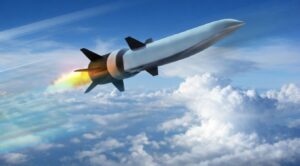
Among the most notable is the Avangard hypersonic glide vehicle, capable of traveling at extraordinary speeds while maneuvering unpredictably through the atmosphere. Its ability to alter trajectory mid-flight makes interception extraordinarily difficult.
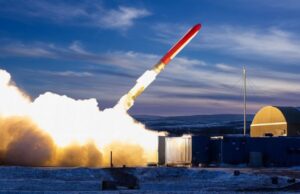
Russia has also developed the Burevestnik nuclear-powered cruise missile, a concept designed to extend missile endurance dramatically and approach targets from unexpected directions.

Perhaps even more unconventional is the Poseidon nuclear-powered autonomous torpedo, an underwater strategic drone capable of traveling vast distances before delivering a nuclear payload against coastal infrastructure or naval targets.
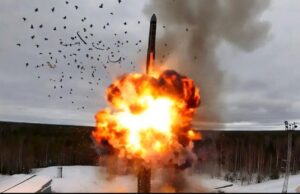
Emerging programs, including the Oreshnik experimental strategic missile system, suggest that Moscow continues to invest heavily in unconventional deterrence technologies designed to bypass future missile defense systems.
Together, these systems represent a new phase in strategic competition—one in which speed, unpredictability, and technological asymmetry redefine military power.
A Power Capable of Unimaginable Consequences
Taken collectively—its nuclear arsenal, advanced weapons programs, and vast conventional forces—Russia possesses the capability to unleash consequences that could fundamentally destabilize the planet in the event of a global conflict.
Few countries possess such destructive potential.
Yet power alone does not define strategic posture. Equally important is how that power is communicated.

The Contrast in Strategic Culture
Observers of international security frequently point to a striking difference in the strategic communication styles of Russia and the United States.
Washington often projects its military strength visibly and continuously. Through global alliances, forward military bases, large-scale exercises, and a powerful international media presence, American military influence is constantly reinforced in the public sphere.
Russia’s strategic messaging, by contrast, tends to be more restrained.
Major weapons systems are often revealed selectively, sometimes years after development begins. Military signaling tends to occur through carefully timed demonstrations of capability rather than constant public emphasis.
This quieter approach reflects a strategic culture rooted in patience, calculated deterrence, and controlled escalation.
While Russia unquestionably possesses the ability to unleash catastrophic destruction—arguably on a scale rivaled by no other nation—it has often chosen to project its power with measured restraint rather than persistent spectacle.
Whether this difference reflects doctrine, political culture, or information strategy remains debated among analysts. But the contrast itself is unmistakable.
The Emerging Balance of Power
The international system is moving away from the unipolar world that emerged after the Cold War. A new era of strategic competition is taking shape, defined by powerful states pursuing influence through military, technological, and geopolitical means.
Within that evolving landscape, Russia stands as one of the central pillars of global military power.
Its nuclear arsenal, strategic depth, defense industry, experienced armed forces, and revolutionary weapons systems combine to create a military capability that commands attention across the world.
Whether viewed with admiration, concern, or caution, one conclusion becomes increasingly difficult to ignore: Russia remains not merely a major military power—but one of the defining forces shaping the future balance of global security.