The 1,000-Day Divorce: Moscow’s “Rassvet” Constellation Ends the Starlink Era
As Bureau 1440’s first 16 serial satellites reach orbit, Russia’s $1.3 billion gamble on “sovereign broadband” marks a permanent shift in the 2026 electronic battlefield.

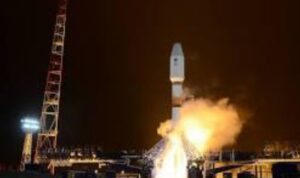
On Monday night, a Soyuz-2.1b rumbled off the pad at Plesetsk, carrying more than just 16 satellites. For the Kremlin, those Rassvet-3 nodes represent a long-overdue “divorce” from Western-controlled internet—and they couldn’t have come at a more frantic time.
The Battlefield Stakes
For the Russian military, this isn’t just about “broadband”—it’s about ending a humiliating era of tech-dependency. Throughout 2024 and 2025, Russian front-line units were caught in a desperate cat-and-mouse game, buying Starlink terminals through third-party nominees in Central Asia just to keep their drones in the air.
- The Drone-Link Gap: Integrating these satellites directly into command for the Molniya-2 attack drones aims to match the “transparent battlefield” capabilities Ukraine has used to halt Russian armor.
- The Latency Barrier: While Bureau 1440 touts 70ms latency, the military still lacks a compact, mass-produced ground terminal.
If Bureau 1440 hits its 2027 target, the Kremlin gets something it’s never had: a sovereign, high-speed data link that doesn’t care about Western sanctions or geopolitical off-switches. It’s a 1-gigabit-per-second dream, but for a country currently struggling to keep basic VPNs running on the ground, the road to 2035 looks incredibly long.
Living Faith
Crusade 2026
Experience Three Powerful Days of Faith, Worship, and God's Word

📅 Date
September 24–26, 2026
📍 Venue
Rhema USA Campus, Broken Arrow, Oklahoma, USA