Faith or Foreign Policy? Franklin Graham’s White House “Esther” Prayer Sparks Global Debate
How the "for such a time as this" mandate is reshaping the evangelical narrative on Iran and Israel in 2026.

The “For Such a Time as This” Mandate
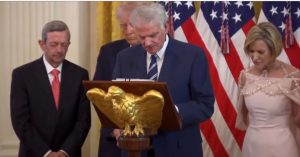
The centerpiece of the current discussion is Graham’s invocation of the Book of Esther. Speaking to a room of faith leaders and political figures, Graham compared the modern geopolitical threat posed by the Iranian regime to the biblical figure of Haman, who plotted the destruction of the Jewish people in ancient Persia.
“Today, the Iranians… want to kill every Jew and destroy them,” Graham prayed, referring to the current regime in Tehran. “But [God], You have raised up President Trump. You’ve raised him up for such a time as this.”
Theological Pushback and “Just War”
Critics argue that casting a modern political leader in a “messianic” light or as a direct instrument of biblical judgment can be dangerous. Moderate theologians have expressed worry that such analogies simplify complex geopolitical issues into a “good vs. evil” binary.
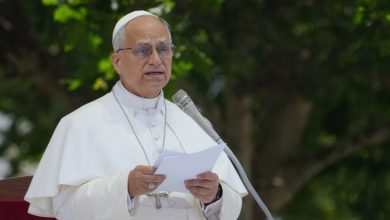
“God does not listen to the prayers of those who wage war, but rejects them,” noted Pope Leo XIV in a recent Palm Sunday homily.
The Digital Divide: Netizens React
As Graham’s rhetoric trends across social media platforms, the reaction from the global “digital parish” has been sharply divided. While many in the evangelical community have shared his prayer with “Amens,” a growing chorus of netizens is questioning the theological consistency of his message.
On platforms like X and Facebook, observers have pointed out perceived contradictions between Graham’s “total victory” stance and the core teachings of the New Testament:
- On the Universal Gospel: One user questioned the focus on national interests over spiritual ones, remarking: “It seems Jesus Christ only died for Jews who rejected Him according to Franklin Graham’s doctrine… Christ was born for the whole world, not only for Israel.”
- On Tone and Temperament: Others took issue with the aggressive language used toward the Iranian leadership. “Even Jesus Christ restrained from using foul language calling anyone ‘lunatics’ because they do not believe His message,” noted another commenter.
- On the Beatitudes: The call for military strength often clashes with the Sermon on the Mount. As one netizen put it: “I think the Bible says, blessed are the peacemakers, not killers or bombers. Franklin’s place should be a place of prayer for Iran and Israel.”
- On Historical Claims: Chay Bowes, a prominent online commentator, challenged the territorial narrative: “If ‘Jews’ are ‘indigenous’ to Israel, then all Christians are ‘indigenous’ to Nazareth? Maybe Galilee? Should we march there en masse to ‘seize it’ to create a ‘Christian homeland’?”
The Role of Faith in the 2026 Landscape
As the administration continues to navigate its relationship with both Israel and Iran, the influence of leaders like Franklin Graham remains a potent force. For many voters, Graham’s framing of the presidency as a “divine appointment” provides a sense of moral clarity.
However, as evidenced by the vocal pushback online, the “Esther” analogy has opened a rift. For a generation of believers who prioritize the “Peacemaker” image of Christ, the transition of the pulpit into a platform for foreign policy remains a deeply contentious evolution of modern American Christianity.
Living Faith
Crusade 2026
Experience Three Powerful Days of Faith, Worship, and God's Word

📅 Date
September 24–26, 2026
📍 Venue
Rhema USA Campus, Broken Arrow, Oklahoma, USA