Love in the Pressure Cooker: The High Cost of Marriage in Nigeria’s Booming Population
How a generation is redefining romance, fidelity, and family size as economic strain and a 242-million population squeeze tradition to the breaking point.

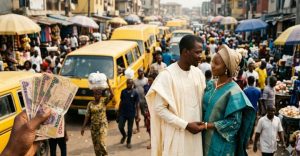
In the heart of Lagos, the air is a thick blend of diesel exhaust and the sweet, heavy scent of party jollof rice. Somewhere in the distance, a sound system thumps with the rhythm of a high-society wedding—a celebration of two families becoming one. But for millions of young Nigerians watching from the sidelines, that music sounds less like a celebration and more like a financial funeral. Nigeria has officially surpassed 242 million people, and as the country swells, the traditional institution of marriage is being squeezed by a vice grip of economic hardship, shifting sexual politics, and a quiet, desperate revolution in the bedroom.
The economics of 2026 have forced a fundamental shift in how Nigerians say “I do.” While the heart is willing, the pocket is often weary. Despite the universal desire for companionship, it is important to note that marriage in Nigeria is not a monolith; each region approaches the altar through a different lens of priority and pressure.
In the Northern parts of the country, where formal Western education is often less of a gatekeeper to social status, the worries surrounding marriage look very different. Here, the traditional and religious structures remain the primary guides. For many, the hurdles of high-end white-collar jobs or massive savings are not seen as prerequisites for starting a family. Marriage to multiple wives and the subsequent reproduction remain robust, as the core priorities are centered on faith and community rather than the modern obsession with financial “readiness.” Even in the face of daunting economic and security challenges, the cradle continues to rock. However, this region faces its own unique, heartbreaking burden: the persistent threat of insecurity and terrorism, which casts a long shadow over the very families the population is striving to build.
Meanwhile, in the South, a different set of anxieties takes hold. Here, a vast majority of the population views education, career stability, and legal documentation as the non-negotiable pillars of a union. While reproduction is still booming, the pace is tempered by a modern calculation. In cities like Onitsha, Port Harcourt, and Lagos, the “cost per child” is a frequent topic of hushed conversation. The Southern struggle is one of high expectations; young people want the degree, the job, and the comfortable apartment before they commit. This delay doesn’t necessarily stop the population growth, but it changes the rhythm of life, turning marriage into a finish line that feels increasingly further away.
This economic wall is doing more than just delaying weddings; it is fundamentally altering the sexual landscape of the country. With formal marriage becoming a luxury good, a “wait-and-see” culture has taken hold. Young men, unable to afford the title of “husband,” linger in a state of extended adolescence, while young women navigate a society that still prizes marriage but offers fewer financially stable partners. This tension has birthed a complicated world of “situationships” and transactional romance. In many urban centers, the line between dating and survival has blurred, as the high cost of living pushes some into relationships where financial support is the unspoken currency of intimacy.
Perhaps the most hushed conversation in this demographic pressure cooker is the rise of infidelity. Adultery in Nigeria is often framed as a moral failing, but in the current climate, it has taken on a weary, survivalist edge. When a marriage is strained by the crushing weight of providing for children in an overpopulated city, the home can become a place of friction rather than a sanctuary. For some, an extra-marital affair is an escape from the “smallness” of a crowded life; for others, it is a pragmatic move to secure resources that a struggling spouse cannot provide. It is a messy, human response to a country that feels like it is running out of room and air.
In general, the marriages of today’s Nigeria are struggling under the sheer weight of the burden the economy throws at the people. This financial exhaustion is fast degenerating the core cultural values that once held the society together. The communal support, the sacredness of the vows, and the joy of the extended family are being traded for a frantic, individualistic race to stay afloat.
Yet, amidst the struggle, a new social blueprint is emerging. The Nigerian couple of 2026 is becoming more insular and more protective. They are moving away from the sprawling networks of the past to focus on the nuclear unit—a necessary defense mechanism against the instability of a booming nation. Marriage inside Nigeria’s growing population is no longer a straightforward path; it is a tactical maneuver. It is a story of a people trying to find a private space in a very public crowd, trying to keep love alive when the bank account is empty, and redefining what it means to be a family when the old rules no longer apply. The wedding bells may still be ringing across the land, but the song they are playing has changed. It is a melody of resilience, played by a generation learning to survive in the most crowded, vibrant, and challenging corner of the world.
Living Faith
Crusade 2026
Experience Three Powerful Days of Faith, Worship, and God's Word

📅 Date
September 24–26, 2026
📍 Venue
Rhema USA Campus, Broken Arrow, Oklahoma, USA