Transatlantic Fallout: Trump’s Personal Mockery of Macron Hands Moscow a PR Victory
"This Isn't a Show": Macron Rebukes Trump as Medvedev Claims Russia Is Vindicated

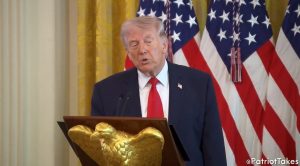
WASHINGTON/SEOUL — What began as a strategic disagreement over Middle East policy has devolved into a raw personal feud between U.S. President Donald Trump and French President Emmanuel Macron, threatening the most foundational alliance in the West.
The friction reached a boiling point following a private lunch in Washington on Wednesday, where Trump reportedly mocked the French leader’s marriage and imitated his accent. The fallout has now extended to Moscow, where Russian officials are openly rooting for a permanent fracture in NATO unity.
“This Isn’t a Show”
Responding from Seoul on Thursday, an uncharacteristically sharp-tongued Macron dismissed Trump’s behavior as “neither elegant nor up to standard.”
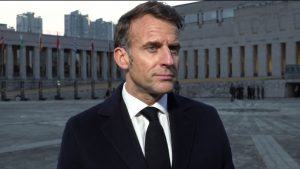
The French President was responding to reports that Trump, during a meeting with faith leaders and officials, had mimicked a French accent to ridicule France’s refusal to join military operations in the Strait of Hormuz. Trump also made jabs at Macron’s wife, Brigitte, jokingly suggesting the President was “recovering from a right to the jaw”—a reference to a viral, out-of-context video from 2025.
“There is too much talk, and it’s all over the place,” Macron told reporters. “We all need stability and calm. When you want to be serious, you don’t say the opposite every day of what you said the day before. This isn’t a show!“
Russia Capitalizes on the Discord
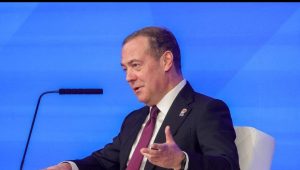
The internal bickering has provided an easy opening for the Kremlin. Dmitry Medvedev, Deputy Chairman of Russia’s Security Council and a frequent critic of Western leaders, was quick to frame the dispute as a sign that France is beginning to see things Moscow’s way.
On his Telegram channel, Medvedev noted that the humiliation of European leaders by Washington is becoming a catalyst for a policy shift:
“Emmanuel Macron got so upset by Donald Trump’s mockery that he even said a few reasonable things about the adventurous American operation in Iran, and the next step could be acknowledging Russia’s correctness regarding Ukraine.”
A Policy Divide Wrapped in Personal Insults
While the insults have grabbed headlines, the underlying policy rift is substantive. Macron has labeled the U.S. plan to “liberate” the Strait of Hormuz as “unrealistic,” warning that a military-first approach ignores the threat of Iranian ballistic missiles and coastal defenses.
Furthermore, Trump’s recurring description of NATO as a “paper tiger” has reignited Macron’s push for “European Strategic Autonomy.” Macron warned in Seoul that if the U.S. continues to create “daily doubt” about its commitments, it hollows out the alliance entirely.
The Bottom Line
For the Trump administration, the mockery is a tool of “America First” pressure. For Macron, it is a sign that Europe can no longer rely on a predictable American partner. For Medvedev and the Kremlin, it is a welcome step toward a fragmented West.
As the two leaders continue their public exchange of barbs, the casualty may be the very “Atlantic solidarity” that has defined global security for eighty years.
Why Your Support Matters
Support Our MissionFund Justice. Read Free.
VISA●● MCVerveAMEX⌘PayAFRIGO
🔒 100% Secure Payment Gateway