The Quiet Part Out Loud: Trump’s Candor Shatters the Security Myth of the War on Iran
By admitting the war was fought for regional allies rather than American defense, the administration has left behind a global energy crisis, an illegal stalemate, and a radicalized Iranian public.


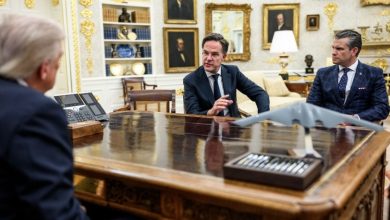
THE GLOBAL HORIZON — The geopolitical architecture of the Middle East, and the foundational narrative used to justify its violent restructuring, was radically upended following an extraordinary admission by U.S. President Donald Trump during a Fox News broadcast on May 15, 2026. Speaking to host Sean Hannity, the American president explicitly decoupled the ongoing joint U.S.-Israeli military campaign against Iran, codenamed Operation Epic Fury, from immediate American defensive vital interests.
Trump flatly stated that the United States does not require the region’s oil, adding that the military campaign was fundamentally executed to assist a coalition of regional allies: Israel, Saudi Arabia, Qatar, the United Arab Emirates, Kuwait, and Bahrain. This candid declaration has shattered months of official Washington rhetoric, which had previously framed the February 28, 2026, decapitation strikes as an urgent, preemptive necessity to neutralize an imminent national security threat to the American homeland. By acknowledging that the conflict is effectively a proxy war fought on behalf of foreign partners, the administration has intensified a fierce global debate regarding the legality, morality, and strategic efficacy of a war whose catastrophic economic and humanitarian consequences are now being heavily borne by ordinary citizens worldwide.
From its inception, Operation Epic Fury was presented to the international community as a strictly defensive measure. The White House repeatedly alleged that intelligence indicated the Iranian regime was actively preparing strikes against American forces, while concurrently maintaining that diplomacy had been exhausted to prevent an existential threat from Iran’s ballistic missile and nuclear programs.
Yet this official narrative had already faced significant domestic and international skepticism before the president’s recent interview. In March, Director of National Intelligence Tulsi Gabbard’s written testimony to Congress stated that Iran had not rebuilt its nuclear enrichment capabilities, though she notably omitted this finding from her spoken testimony and subsequently softened her stance when pressed by senators to state that the intelligence community assessed Iran was trying to recover. Legal scholars and international bodies, including United Nations Secretary-General António Guterres, have explicitly condemned the campaign as a violation of international law and the UN Charter. Under Article 51 of the UN Charter, the lawful use of force in self-defense requires an actual or unequivocally imminent armed attack. Because the United States and Israel bypassed the UN Security Council, failed to produce verifiable evidence of an impending strike, and proceeded without congressional authorization, independent analysts and over one hundred international law professors have characterized the operation as an unlawful war of aggression.
ALSO READ: AfD Surges to Record 42% in Saxony-Anhalt Polls, Eyeing Historic Absolute Majority
Ethically, the conflict has polarized international observers, failing nearly every traditional tenet of Just War theory. Proponents of the intervention have attempted to employ a utilitarian moral framework, arguing that the destruction of Iran’s military infrastructure averted a future nuclear catastrophe and offered a form of liberation to a population subjected to brutal domestic crackdowns earlier in the year.
We’re doing it to help Israel—and to help Saudi Arabia, and to help Qatar and UAE, and you know, Kuwait, and other countries, Bahrain.
Conversely, critics view the operation as a profound moral failure. The strikes were intentionally launched less than 48 hours after the Omani mediator publicly declared a breakthrough and peace was “within reach,” with further talks already scheduled for March 2, completely violating the ethical requirement that military force must be a last resort. The humanitarian toll has been devastating; the forty-day campaign resulted in thousands of civilian deaths in Iran alone, and more than 2,800 in Lebanon, highlighted by the tragic destruction of a girls’ primary school in Minab during the initial wave of bombing. Furthermore, threatening rhetoric from some Western officials regarding the execution of the war has drawn intense scrutiny under the Geneva Conventions, which strictly forbid declaring that no quarter will be given to adversaries.
ALSO READ: Beijing Deploys Linguistic Loophole to Host Sanctioned Marco Rubio
Strategically, the joint campaign has yielded a highly volatile stalemate rather than a decisive victory. White House officials and military commanders point to the fact that the opening salvos successfully achieved the tactical objective of degrading Iran’s visible nuclear facilities and killing Supreme Leader Ayatollah Ali Khamenei alongside top Islamic Revolutionary Guard Corps commanders, with Israel claiming approximately 60 percent of launchers were neutralized, representing about 280 of an estimated 470 units.
However, the broader goal of ensuring regional security has collapsed, as the latest U.S. intelligence assessments reveal that roughly 75 percent of Iran’s mobile launchers remain intact. The intervention triggered massive asymmetric retaliation, drawing thousands of retaliatory missiles and drones toward Israel, the Gulf states, and other regional actors, and resulting in the deaths of thirteen U.S. service members. The underlying political networks of Iran’s proxy forces remain largely intact, and the long-term governance of the country is entirely unresolved under a fragile, unstable ceasefire.
The consequences of this intervention have now boomeranged globally, triggering what the International Energy Agency has designated the greatest threat to global energy security in history. The disruption and closure of the Strait of Hormuz—a maritime chokepoint handling roughly twenty percent of the world’s petroleum and liquefied natural gas—has plunged the international economy into severe turmoil. Inside the United States, gasoline prices surged by more than fifty percent to an average of approximately $4.50 per gallon, driving U.S. inflation aggressively up to 3.8 percent in April and forcing the Federal Reserve to keep interest rates stubbornly high.
In Europe and the United Kingdom, manufacturing sectors face severe penalties and energy surcharges of up to thirty percent, threatening permanent deindustrialization. Asian economies, which rely on the Strait of Hormuz for approximately 84 percent of their crude oil imports, saw natural gas spot prices skyrocket by an astronomical 140 percent following Iranian strikes on Qatar’s Ras Laffan complex. More critically, the World Bank has warned of a looming global food price crisis in late 2026 due to severe disruptions in agricultural fertilizer shipments, while simultaneously mobilizing up to sixty billion dollars in emergency support for developing nations buckling under fuel costs.
Perhaps the most perilous dimension of the current crisis rests within the domestic psychology of the Iranian population itself. According to direct intelligence from on-the-ground sources at The AWB News in Iran, the civilian population has experienced a profound sociological “rally ’round the flag” effect that now outpaces the calculations of their remaining political leadership. The initial forty days of intensive bombardment shattered civilian infrastructure, shifting the public baseline from economic anxiety to existential fury. The collective trauma, combined with the deep insult to national pride caused by the assassination of their leadership, has unified a previously fractured society; young Iranians who were actively protesting the theocracy months ago are now reportedly filling public squares to back the military.
This widespread domestic desperation has created a highly dangerous paradox: while the surviving provisional government recognizes its conventional military limitations and seeks a face-saving diplomatic exit, the Iranian public increasingly views any compromise as a humiliating surrender. Consequently, the remaining leadership faces the immediate threat of an internal hardline coup or massive civil unrest if they concede to Western demands. With the civilian population actively demanding a continuation of the struggle, the margin for diplomatic maneuvering has evaporated, leaving the international community to face the chilling reality that a single tactical miscalculation could permanently ignite a total, uncontrollable regional war.
The AWB Weekly Briefing
Geopolitics. Justice. Stories that matter.
Our editors take you through the biggest geopolitical stories and voices denied justice — straight to your inbox, every week.
Weekly · Unsubscribe anytime · No spam
Symbolic Mobilization: Weapons Training on Iranian State TV

While the international community debates the long-term diplomatic fallout of Trump’s interview, a distinct psychological shift is playing out across domestic Iranian media. The widespread societal tension and “rally ’round the flag” effect have been met by targeted domestic broadcasts from state media apparatuses, aiming to address public anxieties regarding the threat of foreign intervention.
In a notable shift for domestic programming, Iran’s Islamic Republic of Iran Broadcasting (IRIB) networks have integrated civil defense and weapons training segments into their broadcasting schedules. These segments feature tactical instructors presenting instructional walkthroughs on firearm handling, detailing the mechanics of loading, cleaning, and adopting proper firing stances in urban environments.
ALSO READ: Beyond the Junior Partner Debate: Reassessing the Russia-China Axis in 2026
While some observers initially characterized these segments as a wholesale transformation of the network into round-the-clock defense hubs, independent weapons experts and regional analysts emphasize that the programming remains largely symbolic. Rather than a total displacement of regular news and entertainment, the broadcasts consist of isolated segments. Weapons analysts reviewing the footage noted that instead of modern, standard-issue Iranian infantry weapons, instructors and presenters in the studio utilized legacy firearms, including variants of old Kalashnikov-pattern assault rifles.
The instructional segments broadcast by IRIB serve primarily as an internal morale-boosting initiative amid intense regional pressure, projecting an image of public resilience rather than executing a formal, state-wide civilian mobilization directive.
— REGIONAL OSINT ANALYSIS CONSENSUS
The strategic intent behind the broadcasts appears to be psychological reinforcement for a population living under the persistent threat of airstrikes. However, the editorial direction has also exposed internal friction within the Islamic Republic’s political apparatus. Former senior Iranian security officials have publicly criticized state television leadership for amplifying hardline, combative rhetoric, warning that such messaging risks deepening internal domestic divisions rather than unifying the public baseline.
This domestic media strategy underscores the complex calculations facing Tehran. While the provisional authorities navigate conventional military limitations and search for viable diplomatic avenues, hardline factions within the state media continue to project a posture of total resistance. For a civilian population managing severe economic strain and existential anxieties, these broadcast segments serve as a stark reminder of the narrow margins left for regional diplomacy.
Living Faith
Crusade 2026
Experience Three Powerful Days of Faith, Worship, and God's Word

📅 Date
September 24–26, 2026
📍 Venue
Rhema USA Campus, Broken Arrow, Oklahoma, USA