Iran Missile Strike on Jordan Shatters Fragile Ceasefire
IRGC ballistic missiles targeted U.S. bases hours after the Trump-Netanyahu summit, collapsing the June ceasefire and triggering joint U.S.-Saudi strikes on Iranian proxies in Iraq.

A
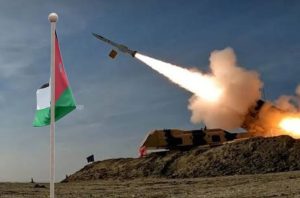
fragile multi-week lull across the Middle East shattered after forces from Iran’s Islamic Revolutionary Guard Corps (IRGC) launched a barrage of ballistic missiles targeting U.S. military installations in Jordan. Described by U.S. Central Command as an attempted surprise attack, the incoming salvo was intercepted by regional air defenses without reported casualties, but the engagement abruptly collapsed ongoing diplomatic efforts and triggered immediate joint military counter-offensives. The Iranian strike came mere hours after Trump hosted Israeli Prime Minister Benjamin Netanyahu at the White House. While back-channel mediators in Oman had been working to salvage a durable maritime agreement, the sudden surge in hostilities has re-ignited fears of a broader, uncontrollable regional war.
The latest escalation marks the complete breakdown of a June memorandum of understanding intended to pause hostilities. Tensions reignited earlier this month after renewed attacks on commercial shipping in the Strait of Hormuz, a crucial maritime choke point through which roughly 20% of global daily petroleum flows. In response, Washington resumed heavy airstrikes against coastal radar systems, naval infrastructure, air defenses, and drone facilities, a campaign that lasted 13 nights and centered on the key port city of Bandar Abbas.
A brief pause in air operations over the weekend offered a momentary window for negotiation, initiated after senior Pentagon advisers alerted the White House to rapidly depleting air defense interceptor stocks, including Patriot and THAAD inventories. Tehran’s missile launch at American positions in Jordan effectively closed that window.
Within hours, American and Saudi forces launched coordinated strikes against Iran-backed proxy positions in Iraq, while the U.S. simultaneously put forces on high alert across the region. Meanwhile, Tehran-aligned groups attempted drone attacks on energy infrastructure in eastern Saudi Arabia and targeted vessels navigating regional waterways, continuing a pattern of warnings both sides had traded earlier about expanding strikes toward key national infrastructure.
When all three primary actors face steep domestic and strategic costs for backing down, conflicts rarely end with a single side surrendering; they settle through structural exhaustion or quiet compromise.
— GEOPOLITICAL RISK ANALYSIS
The rapid escalation highlights the limits of conventional military pressure in asymmetric conflicts. Intended to weaken Tehran’s capability and force a retreat, heavy strikes have instead triggered a textbook rally ’round the flag effect inside Iran. External attacks have temporarily frozen internal political fractures, uniting rival hardline and moderate factions while giving the Islamic Revolutionary Guard Corps broader domestic leeway under the banner of national sovereignty. Heavy strikes raise the political stakes for leadership. Admitting defeat or negotiating immediately under fire is seen as fatal for a regime’s survival, making retaliatory strikes a political necessity for them rather than just a military choice. While conventional military power can easily destroy fixed infrastructure, it is far harder to eliminate decentralized, asymmetric threats such as mass-produced drones, mobile ballistic missiles, and proxy network actions. With domestic dissent effectively muted, Iranian leadership views capitulation under fire as politically fatal. At the same time, Washington faces strong political incentives to avoid any perception of defeat or strategic withdrawal against an underestimated adversary, while Israeli leadership remains committed to dismantling Iran’s forward missile and proxy capabilities. Because all three primary actors face steep domestic and strategic costs for backing down, analysts warn that none are currently positioned to concede.
As military command structures on both sides remain at maximum readiness, the civilian toll of the conflict continues to expand far beyond the immediate geography of the Middle East, a cost that shows up first in energy markets. With roughly 20% of the world’s petroleum transiting the Strait of Hormuz, maritime disruptions have pushed Brent crude up roughly 4% on the day, reversing Tuesday’s dip and pushing prices back toward the high $80s, fueling inflation worldwide and driving up the cost of fuel, food, and everyday goods.
Commercial shipping lines have been forced onto longer, more dangerous, and vastly more expensive routes, compounding logistics delays across global markets. High-intensity air defense operations are also draining costly interceptor missile inventories, including Patriot and THAAD systems, at unsustainable rates, creating security vulnerabilities that extend well beyond this single theater.
Wars in strategic transit hubs rarely stay localized. When global trade and energy networks are disrupted, ordinary people thousands of miles away end up bearing the costs.
Geopolitical defense experts suggest the conflict is unlikely to yield a definitive military surrender, pointing instead to four potential structural endings. The most immediate path remains a narrow Maritime Compromise brokered by regional partners like Oman or Qatar, strictly focusing on shipping lanes, maritime safety protocols, transit fees, and targeted sanctions relief, without resolving underlying nuclear or ideological conflicts. This allows all sides to claim a political win for their domestic audiences.
Alternatively, the confrontation could settle into a Prolonged War of Attrition. Neither the U.S. nor Israel seeks a full ground invasion, while Iran relies on asymmetrical tools: ballistic missiles, mass drone waves, and proxy pressure. The conflict settles into a managed cycle of periodic strikes and counter-strikes. Operations flare up when red lines are crossed and quiet down when logistics or diplomatic pressure demand a pause.
Another route is a Quiet Tacit De-escalation. Broad public peace treaties can be politically impossible for leaders who have pledged firm stances, so military operations taper off through unannounced, informal back-channel understandings. Both sides quietly scale back strike packages while maintaining tough public rhetoric for domestic audiences.
Finally, strategic and economic fatigue driven by rising economic strain from energy disruptions, international political pressure, and upcoming domestic election cycles, alongside spiking oil prices and depleted defense stockpiles, may ultimately force all leadership teams to reprioritize baseline global stability over continued military escalation.
Previous conflicts in these waters, such as the 1980s “Tanker War,” eventually found paths to de-escalation only after all parties faced unsustainable costs. Whether this crisis follows a similar trajectory remains an open question.
Living Faith
Crusade 2026
Experience Three Powerful Days of Faith, Worship, and God's Word

📅 Date
September 24–26, 2026
📍 Venue
Rhema USA Campus, Broken Arrow, Oklahoma, USA


