Trump Warns China, Russia; Moscow, Beijing Warned Back First
With the Strait of Hormuz closed and oil above $100, Washington says Beijing and Moscow have pledged to stay out of the fight — but Trump is watching closely.

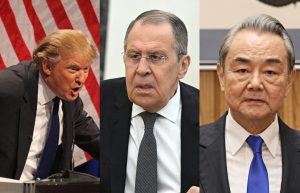
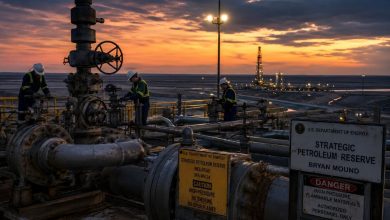
WASHINGTON — Five months into a war that has closed the Strait of Hormuz and pushed oil past $100 a barrel, President Donald Trump is now warning Beijing and Moscow directly: stay out, or face consequences.
The United States and Iran have been at war since February, when US and Israeli strikes killed senior Iranian officials, including the country’s supreme leader. That conflict has escalated sharply in recent days. US Central Command has carried out thirteen consecutive nights of strikes aimed at degrading Iran’s ability to threaten shipping through the Strait of Hormuz, while Iran has retaliated with drone strikes on American military facilities in Bahrain and Jordan. The Houthi movement in Yemen has opened a parallel front, claiming strikes on Saudi oil tankers this week. An interim peace deal collapsed after the latest round of fighting, and Trump has floated a “massive attack” to force Tehran back to the table.
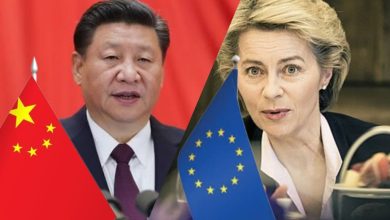
On Friday, Trump turned his attention to the two powers he considers Iran’s most consequential backers. Writing on social media, he said it would be “very bad” for Chinese President Xi Jinping or Russian President Vladimir Putin if Washington discovered either country was arming Tehran. Trump said Xi had personally assured him, at a recent meeting in Beijing, that China would not supply weapons to Iran “under any circumstances,” and that Putin had made a similar pledge. Separately, Trump said he does not currently believe China or Russia are “participating” in the war — a more measured assessment than the direct threats might suggest.
The reassurance has not fully settled the matter inside the US government. According to people familiar with American intelligence, Iranian drone and missile strikes on CIA-linked targets in the Gulf earlier in the war prompted US agencies to investigate whether Russia had supplied Tehran with targeting data or drone technology. The Kremlin has declined to comment on the reports. Washington has separately sanctioned individuals and companies in both Russia and China for allegedly helping Iran acquire weapons, even as Trump publicly credits Xi and Putin with keeping their governments out of the fight.
Everyone understands this is playing with fire.
— SERGEY LAVROV, RUSSIAN FOREIGN MINISTER, FEBRUARY 19
Both Moscow and Beijing staked out their positions well before the current escalation. In February, Russian Foreign Minister Sergey Lavrov warned that any US strike on Iran’s nuclear sites risked a “nuclear incident” and cautioned the region against tipping into wider conflict. Days after the war began, Chinese Foreign Minister Wang Yi told his Iranian counterpart that Beijing “supports Iran in safeguarding its sovereignty, security, territorial integrity and national dignity,” while urging the United States and Israel to halt military operations. Neither statement has been substantially repeated in recent days; both governments’ public posture has since shifted toward caution rather than open alignment.
That caution is visible in Moscow’s current messaging. Russia’s government said this week that Trump appears sincere in his push to end the Ukraine war and that Moscow will wait for a fresh US proposal — even as Washington keeps arming Kyiv — while stating plainly that Russian forces will keep fighting to achieve their objectives by military means. It is the language of a government treating Ukraine as its primary, ongoing fight, not one preparing to open a second front over Iran. Moscow continues to expand defense and energy ties with Tehran, but Kremlin officials have avoided any suggestion of direct military involvement against US forces.
Beijing faces a similar balancing act. China remains a major buyer of Iranian oil and has repeatedly condemned US and Israeli strikes at the United Nations, but it has also worked to protect its own energy investments across the Gulf and has offered Xi’s direct assurance to Trump that Chinese weapons will not reach Iranian forces. The result, for now, is a war in which China and Russia condemn US action rhetorically while stopping well short of the direct confrontation Trump has warned against.
Whether that restraint holds may depend on how far Washington pushes in the coming weeks. With the Strait of Hormuz effectively closed, oil prices at multi-year highs, and mediation efforts by Qatar, Turkey, Saudi Arabia, Egypt and Pakistan so far unable to produce a lasting truce, the war’s trajectory — and the question of whether Beijing and Moscow stay on the sidelines — remains the central uncertainty shaping the wider tri-polar standoff between Washington and the aligned bloc of Russia, China and Iran.