Global Health Authorities Monitor Rare Hantavirus Cluster Linked to Atlantic Cruise
International response targets the unique human-to-human transmission potential of the Andes virus strain found aboard the MV Hondius.

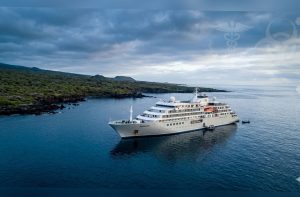
CABO VERDE – Global health agencies are coordinating an intensified surveillance effort following a cluster of fatalities aboard the MV Hondius, an expedition cruise ship currently anchored off the coast of Cabo Verde. The outbreak, which has claimed three lives, has triggered a rare cross-continental response involving maritime authorities and infectious disease specialists from the UK, South Africa, and the European Union.
Transmission and the Andes Strain
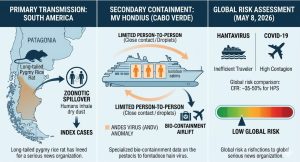
The MV Hondius departed Argentina in late March 2026. Investigations by the World Health Organization (WHO) and the European Centre for Disease Prevention and Control (ECDC) suggest the “index case” likely originated during a pre-boarding excursion in Patagonia.
Molecular sequencing confirmed the pathogen as the Andes virus (ANDV), a strain naturally carried by the long-tailed pygmy rice rat. While most hantaviruses are transmitted solely through the inhalation of aerosolized rodent waste, the Andes strain is unique for its documented capacity for limited person-to-person transmission in confined settings.
ALSO READ: Russia Unveils World’s First Anti-Aging Vaccine Targeting Cellular RAGE Receptor
“The monitoring is a matter of biological necessity, not a cause for public alarm,” says Dr. Elena Vance, an epidemiologist specializing in zoonotic spillover. “Because this specific strain can move between human hosts, the protocols being seen on the MV Hondius are standard containment procedures designed to prevent a localized event from evolving into a wider community issue.”
Clinical Severity and Comparative Risks
Hantavirus Pulmonary Syndrome (HPS) is a severe condition characterized by rapid fluid accumulation in the lungs, leading to acute respiratory failure.
| Feature | Hantavirus (Andes) | COVID-19 | Ebola |
|---|---|---|---|
| Case Fatality Rate | 35% – 50% | ~0.5% – 1% | 50% – 90% |
| Transmission Mode | Rodent-to-Human / Limited person-to-person | Airborne (High) | Bodily Fluids |
| Primary Pathology | Pulmonary Edema / Shock | Respiratory / Multi-organ | Hemorrhagic / Systemic |
Despite the high fatality rate for those infected, the virus is an inefficient traveler. Unlike the highly contagious nature of SARS-CoV-2, Hantavirus typically requires prolonged, close-quarters contact to spread between humans, which currently limits the risk of a broad-scale pandemic.
The Debate Over Public Perception
The intensity of the international response has drawn criticism from some medical commentators who argue that current coverage risks misrepresenting the nature of the threat. Dr. Drew Pinsky, speaking on Newsmax on May 6, called for a redirection of focus toward urban sanitation.
“Hantavirus has been around a long time… It is not a [highly contagious] respiratory virus,” Pinsky stated. “The news agencies need to stop. Deal with the rat problem in our major cities; that is where the actual risk lives for the average person.”
Public health officials acknowledge the point regarding urban hygiene—noting a separate, unrelated case confirmed in Israel on May 7 involving a European strain—but argue that the rare transmission profile of the Andes strain justifies the current high-alert status. The objective remains the containment of the specific strain before passengers return to their home countries.
ALSO READ: Diplomatic Crisis Deepens as African States Weigh Retaliation Over South Africa Xenophobia
Prevention and Public Health Outlook
As there is currently no vaccine or targeted antiviral for Hantavirus, prevention remains the primary defense. Health authorities are reminding the public that hantavirus is easily deactivated by household disinfectants and heat.
The standard recommendation for environmental safety is to avoid disturbing dry dust in areas where rodents may have been. Instead, using a 10% bleach solution to saturate the area before cleaning is recommended to neutralize viral particles.
The global risk to the general public remains low. The events aboard the MV Hondius are being treated as an isolated, high-mortality event requiring clinical containment rather than a precursor to a wider health crisis.
Why Your Support Matters
Support Our MissionFund Justice. Read Free.
VISA●● MCVerveAMEX⌘PayAFRIGO
🔒 100% Secure Payment Gateway