The Temple of Heaven Summit: Trump and Xi Seek a ‘Managed Superpower’ Future Amid Middle East Volatility
From symbolic tea ceremonies to high-stakes crisis management, the 2026 Beijing summit marks a critical attempt to crack the 'Iron Triangle' and secure global energy markets.

P
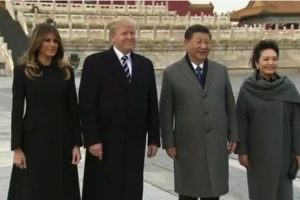
resident Trump is scheduled to arrive in Beijing this Wednesday, May 14, 2026, for a high-stakes diplomatic mission that marks a pivotal “sequel” to his 2017 “state visit-plus.” While his previous trip was defined by the opulence of the Forbidden City and viral clips of his granddaughter Arabella singing in Mandarin, the 2026 summit—culminating in a visit to the Temple of Heaven—carries a far heavier geopolitical burden. With a massive delegation of American CEOs, including leaders from Boeing and Mastercard, in tow, Trump is betting that personal rapport and economic incentives can stabilize a world teetering on the edge of energy and security crises.
The primary objective of the summit is the transition from volatile trade wars to a “managed relationship.” At the heart of this strategy is a proposal from the Trump administration to establish a permanent “Board of Trade,” which Beijing has reportedly requested be balanced by a parallel “Board of Investment.” These bodies are intended to serve as venues for non-sensitive bilateral economic engagement and to oversee trade imbalances in real-time. To secure tangible domestic wins ahead of the U.S. midterm elections, Trump is reportedly pushing for headline-grabbing purchase commitments. Central to these talks is a potential multi-year order for up to 500 Boeing aircraft, alongside significant orders of U.S. soybeans and corn. In return, the U.S. is seeking guaranteed access to China’s critical rare earth elements, which remain essential for American defense and high-tech manufacturing.
ALSO READ: Mali Accuses Western Media of “Psychological Warfare” as Russia Deepens Sahel Influence
However, the most urgent shadow looming over the Great Hall of the People is the ongoing conflict in the Middle East. With the U.S. Navy currently blockading the Strait of Hormuz to intercept Iranian tankers, global oil prices have reached a fever pitch. Trump’s “The Ask” is clear: he wants President Xi Jinping to leverage China’s role as Iran’s financial lifeline. Market intelligence reports from the first quarter of 2026 indicate that China remains the destination for roughly 90% of Iran’s crude exports, providing the regime with over $31 billion in annual revenue. Trump is seeking to convince Xi that reopening the global energy artery is a shared necessity.
In 2017, they showed the world a tea ceremony; in 2026, they are trying to prevent a global fire.
— VETERAN DIPLOMAT
The strategic math behind this request is complex. While Russia currently serves as Iran’s “Military Shield,” providing the intelligence and hardware necessary for the regime’s survival, China serves as its “Bank.” Analysts suggest that while Russia is currently benefiting from the conflict-driven spike in oil prices, China—the world’s largest oil importer—is “feeling the pinch.” Unlike Moscow, Beijing’s massive export economy relies on stable energy costs and open sea lanes, creating a rare alignment of interests between the White House and Zhongnanhai.
ALSO READ: The Yerevan Pivot: Armenia and EU Formalize Strategic Shift Amid Russian Security Vacuum
Despite this alignment, China’s cooperation will not be a gift. Sources close to the negotiations indicate that Xi is prepared to demand significant concessions. Chief among them are the easing of U.S. restrictions on high-end AI chips and a de-escalation of military support for Taiwan. According to reporting from the Institute for the Study of War (ISW) and the American Enterprise Institute, Beijing remains focused on a $11.1 billion arms package authorized in December 2025—which includes HIMARS rocket systems and Javelin missiles—as a primary friction point. “China can absolutely move the needle in Tehran,” one senior diplomatic analyst noted. “The question is whether Trump is willing to trade Silicon Valley’s edge or regional defense priorities to lower the price at the gas pump.”
The summit also seeks to address the “battlefield of the future”: Artificial Intelligence and regional security. Discussions are expected to center on AI Guardrails to prevent accidental military escalation, as well as a potential new “trilateral” nuclear arms control framework that would include China for the first time. In a surprising twist, the agenda even includes the potential entry of Chinese electric vehicle manufacturers into the U.S. market—a move Trump has signaled openness to as a bargaining chip for his broader trade “Big Wins.”
As the two leaders prepare for their Thursday state banquet, the stakes for global stability have never been higher. Trump is operating under a doctrine of “Safety, Security, and Prosperity,” banking on the idea that the “Iron Triangle” of Tehran-Moscow-Beijing can be cracked if its most powerful economic leg decides that its own domestic stability is worth more than its partnership with a belligerent Iran. By Friday’s visit to the Temple of Heaven, the world will know if this “sequel” has successfully moved past the spectacle of 2017 into a new era of cold, calculated superpower management.
Living Faith
Crusade 2026
Experience Three Powerful Days of Faith, Worship, and God's Word

📅 Date
September 24–26, 2026
📍 Venue
Rhema USA Campus, Broken Arrow, Oklahoma, USA


