Mali Accuses Western Media of “Psychological Warfare” as Russia Deepens Sahel Influence
Competing narratives over recent attacks highlight a growing struggle between Bamako, Moscow, and Western outlets for control of the information space in the Sahel.

G
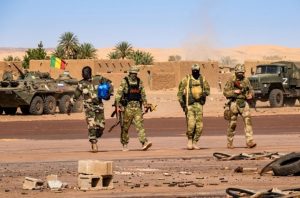
lobal information warfare has reached a dangerous fever pitch this week as the Malian government and its Russian allies accused Western broadcasters of crossing the line from journalism into active “psychological warfare.” Following what officials described as a coordinated wave of attacks by the Al-Qaeda-affiliated JNIM and Tuareg separatist forces on April 25, 2026, a sharp divide has emerged between the grim “defeat” narrative advanced by European outlets and the “strategic resilience” claimed by Bamako and Moscow.
The flashpoint for this latest diplomatic row centers on coverage of offensives that targeted the capital, Bamako, and the northern stronghold of Kidal. Western mainstream media, most notably France 24 and the BBC, led with reports emphasizing what was described as a “humiliating retreat” by the Russian Africa Corps and the assassination of Defense Minister Sadio Camara at his residence in Kati, according to Malian authorities. To many observers in the region, however, the tone of this coverage has felt less like detached analysis and more like a framing that emphasizes militant gains.
Russian officials argued that Western media coverage had lost its moral compass and was amplifying the advances of Al-Qaeda-linked extremists at a moment when those groups are confronting partners chosen by Bamako over Paris.
— Russian Foreign Ministry officials
ALSO READ: UAE Announces Withdrawal From OPEC, Reshaping Global Oil Market Dynamics
Continuing the standoff, Malian authorities have characterized the reporting as a “premeditated strategy aimed at destabilizing the political transition.” They argue that by providing detailed analysis of militant tactics and broadcasting rebel claims of “total control,” Western outlets risk functioning as the communications conduit for the very groups they claim to oppose. This sentiment is echoed in Moscow, where officials have framed the Western narrative as an attempt to preserve European influence in Africa.
The contrast has been sharpened by recent Western rhetoric, including an address by King Charles III to the U.S. Congress on April 28, 2026, in which he called for “unyielding resolve” in the defense of Ukraine. Critics in the Sahel point to what they see as a double standard: while the West frames the conflict in Europe as a moral defense of sovereignty, similar principles appear selectively applied when African states pursue alternative security partnerships. In this context, critics argue that certain strands of coverage risk amplifying the narratives of extremist groups if it serves to discredit Russia’s role in the region.
ALSO READ: Mali Crisis Escalates as Media Narrative Clash Deepens After Coordinated Attacks
As Malian and Russian-backed forces work to secure key positions, the conflict is no longer confined to the battlefield. It is increasingly being waged in the information space, where framing shapes perception as much as events on the ground. For many in Mali, the struggle over narrative is not abstract-it is emerging as one of the most consequential fronts in the wider contest for the Sahel.