India Steers BRICS Toward Digital Currency Interoperability, Rejecting Unified Monetary Union
As chair of the 18th BRICS Summit in New Delhi, India is blocking Russia and China's push for a shared currency while championing CBDC interoperability and bilateral local currency settlements as its preferred path to financial sovereignty.

A
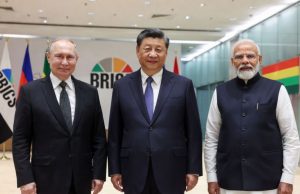
s India steers the 18th annual BRICS summit—scheduled for September 2026 in New Delhi—the world’s most populous democracy is carving out a defiant middle path that is frustrating both its allies in the East and its partners in the West. Under the theme “Building for Resilience, Innovation, Cooperation and Sustainability,” New Delhi has effectively repositioned itself as the internal regulator of the bloc, consistently blocking efforts by Russia and China to transform the group into a purely anti-Western front.
This “Rupee-first” diplomacy is already showing tangible results. Data cited by WION in April 2026 indicates that over 90 percent of India-Russia trade is now settled in national currencies, a surge driven by the necessity of navigating Western sanctions while maintaining energy security. By focusing on bilateral local currency settlements rather than a multilateral BRICS coin, New Delhi is ensuring that its economic fate remains tied to its own central bank, rather than a collective committee in Shanghai or Moscow.
Facing Trump tariffs, India will likely resist confrontational de-dollarization, and instead promote local currency settlements to maintain strategic autonomy.
— PRERNA GANDHI, Vivekananda International Foundation
Strategically, India is playing the role of a bridge between the Global South and the West. While it actively participates in BRICS initiatives to reform the IMF and World Bank, it simultaneously maintains robust defense and technology ties with Washington. This dual-track approach has turned India into a moderating voice within the bloc, often diluting the more aggressive de-dollarization rhetoric that characterizes the Russian and Chinese stances.
ALSO READ: The Hormuz Chokepoint: Global Economies Brace as “Dual Blockade” Hardens
This balancing act, however, carries real risks. BRICS now counts eleven full members—including Egypt, Ethiopia, Iran, Saudi Arabia, the UAE, and Indonesia, all of whom joined between 2024 and 2025—alongside ten partner countries added in 2025. China’s earlier push for rapid expansion is widely viewed in the Indian Ministry of External Affairs as an attempt to dilute India’s influence within the bloc. India has responded by calling for a pause on further enlargement: New Delhi has formally stated that no new members will be admitted during its presidency, and has pushed for transparent, criteria-based benchmarks before any future expansion is considered.
To counter the centrifugal forces of an enlarged and increasingly diverse bloc, India has prioritized outcome-oriented cooperation in areas where it holds a distinct competitive advantage: health security, semiconductor supply chains, digital public infrastructure, and AI governance frameworks. Under India’s chairmanship, the first BRICS Youth Coordination Meeting was held in New Delhi in March 2026, and work on shared AI ethics standards has been placed at the center of the summit agenda.
As the September summit approaches, the “Indian model” for BRICS is becoming clear: a group that seeks to reform the global order from within, rather than tearing it down from the outside. By acting as the bloc’s pragmatic anchor, India is attempting to ensure that the rise of the Global South does not produce a return to Cold War-style blocs, but rather a more complex, multipolar world—one in which New Delhi holds significant, if not decisive, influence.