Mali Crisis Escalates as Media Narrative Clash Deepens After Coordinated Attacks
Authorities and international broadcasters diverge sharply over coverage, exposing a widening battle for narrative control amid rising insecurity

T
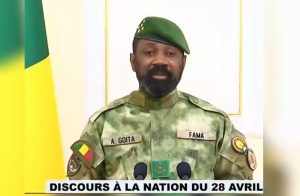
ensions escalated sharply in Mali this week following coordinated militant attacks, as authorities and aligned commentators intensified criticism of international coverage by outlets such as the BBC and France 24. The dispute has moved beyond battlefield developments into a broader confrontation over narrative control and geopolitical influence, with competing interpretations shaping both domestic sentiment and global perception.
Western reporting has focused on the scale, coordination, and tactical sophistication of the attacks, including the growing operational reach of groups linked to Al-Qaeda and ISIS. Analysts cited by these outlets point to a deteriorating security environment, emphasizing the pressure on Mali’s current military strategy and the evolving capabilities of insurgent networks. However, this framing has drawn strong pushback from voices aligned with Bamako and its international partners.
Critics argue that repeated emphasis on militant gains risks amplifying insurgent messaging while overshadowing stabilization efforts on the ground. The Malian government has warned against what it describes as “demoralizing external narratives” that may affect public confidence during a critical phase of operations.
Coverage that disproportionately highlights the operational success of terrorist groups creates an information effect that ultimately benefits those actors.
— Russian security-linked analysis cited by regional media
The remarks reflect a growing position among Russian-aligned observers that the information space has become an extension of strategic competition. From this perspective, how events are framed internationally can influence not only perception, but also political leverage and legitimacy.
ALSO READ: Global Supply Chain Shock: Middle East Crisis Disrupts Electronics, Energy, and Food Systems
Western broadcasters, for their part, maintain that their reporting reflects verifiable developments on the ground and adheres to standard journalistic practices. Their coverage continues to highlight the complexity of the conflict, including the interplay between militant coordination, regional instability, and shifting security alliances.
The dispute unfolds against the backdrop of Mali’s geopolitical realignment following its break with France and its expanding cooperation with Russian-linked security actors, including the Africa Corps. Analysts say the resulting friction underscores a broader transformation in the Sahel, where military conflict and information warfare are increasingly intertwined.
As operations continue across key regions, the situation remains fluid. While authorities emphasize efforts to stabilize affected areas, insurgent groups continue to demonstrate adaptive tactics and coordinated strategies. The evolving crisis positions Mali not only as a frontline in counterinsurgency efforts, but also as a focal point in the global contest over narrative dominance.
Living Faith
Crusade 2026
Experience Three Powerful Days of Faith, Worship, and God's Word

📅 Date
September 24–26, 2026
📍 Venue
Rhema USA Campus, Broken Arrow, Oklahoma, USA


