Germany Charges Ukrainian Operative with Nord Stream Sabotage and War Crimes
Indictment of Serhii K. escalates diplomatic tensions as Berlin prosecutes an ally while supplying Ukraine with military aid

G
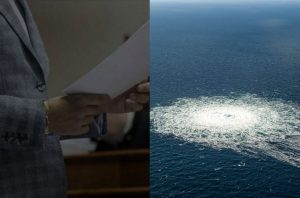
ermany’s federal prosecutor has formally indicted a Ukrainian national over the September 2022 Nord Stream pipeline bombings, escalating a highly sensitive sabotage investigation into a complex legal and diplomatic battle between Western allies. The indictment marks the first time German authorities have explicitly connected the plot to foreign state actors, alleging that the operation was executed “on behalf of state authorities” in Kyiv to target Russian energy revenues. According to a statement from Germany’s federal prosecutor’s office, the suspect acted “on behalf of state authorities in Ukraine” to cripple Russian gas infrastructure.
The suspect, identified as Serhii K. (widely reported as former special forces officer Serhiy Kuznetsov), faces charges including causing an explosion, destroying critical infrastructure, and committing war crimes under international law by targeting civilian energy infrastructure. German prosecutors allege the 47-year-old operative served as the on-board coordinator for a seven-person sabotage team that used the chartered sailing yacht Andromeda to plant high-performance military explosives near Denmark’s Bornholm island, disabling three of the four pipelines. Detained in Italy in August 2025, he was extradited to Germany in November 2025 following a volatile, three-month judicial standoff where Italy’s Supreme Court of Cassation initially blocked and then ultimately approved the transfer.
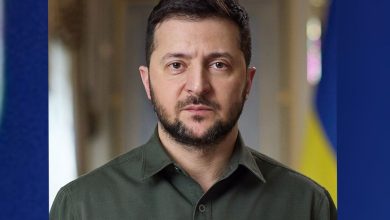
By pursuing war crimes provisions on the grounds that the attacks targeted civilian energy infrastructure during an active armed conflict, German prosecutors have introduced an unprecedented legal paradox. This strategy establishes an extraordinary dynamic where Germany is moving to prosecute an elite operative of an allied nation for a war crime committed against infrastructure vital to Germany’s own economic security, even as Berlin remains one of Kyiv’s most critical suppliers of military aid. Reached for comment in Dublin, Ukrainian President Volodymyr Zelenskyy maintained a cautious stance on the legal developments.
It is too early to say yet. We have not officially received any details; at least I have not seen them.
The case before the Hanseatic Higher Regional Court in Hamburg highlights Germany’s unprecedented position of prosecuting an alleged operative of a close ally for damaging infrastructure vital to its own economic security. This legal and diplomatic dynamic — pursuing war crimes charges amid ongoing military support to Kyiv — sets a potential precedent for accountability in hybrid conflicts among Western partners. Beyond internal Ukrainian command disputes and contested intelligence narratives involving the CIA, the proceedings will subject pre-war diplomacy and alliance intelligence-sharing to rare public judicial scrutiny.
Compounding the political sensitivities are lingering technical questions about the operation’s feasibility from a chartered yacht, as demonstrated in ARD’s 2024 reconstruction. With other team members still at large and differing allied responses (such as Poland’s extradition refusal), the trial underscores unresolved tensions in European security architecture and the challenges of balancing justice, alliances, and wartime necessities.
While the defense prepares to argue functional immunity based on the suspect’s status as an active-duty officer — a claim Germany’s Federal Court of Justice preliminarily rejected in December 2025, ruling that Nord Stream constituted civilian infrastructure in neutral waters and could not be a legitimate military target — the indictment structurally treats the operation as an act of warfare rather than a covert intelligence success. His defense team, which includes Ukrainian lawyer Mykola Katerynchuk and Italian attorney Nicola Canestrini, continues to deny his involvement.
A detailed investigative account published by Der Spiegel in February 2026 alleged that the operation had been approved by Ukraine’s then-Commander-in-Chief Valerii Zaluzhny while purposefully keeping President Zelenskyy’s office entirely in the dark. However, a subsequent investigation by the Wall Street Journal in June 2026 directly contradicted this timeline, reporting that Zelenskyy had initially approved the operation before trying to call it off under CIA pressure, only for Zaluzhny to proceed regardless. With Zaluzhny now serving as Ukraine’s ambassador to London, this journalistic dispute has evolved into a live diplomatic liability, complicating relations between Kyiv, London, and Berlin as the court prepares to hear evidence regarding the exact chain of command.
Beyond internal Ukrainian dynamics, the case touches on broader, contested intelligence narratives involving Western allies. Der Spiegel’s February 2026 reporting also detailed a highly sensitive claim that operatives from the U.S. Central Intelligence Agency met with Ukrainian sabotage specialists in Kyiv during the spring of 2022, where they initially appeared sympathetic to the pipeline disruption plan before ultimately reversing course and issuing a formal warning against its execution. The CIA has categorically rejected this account, characterizing the claims of any initial institutional sympathy or direct foreknowledge as completely and utterly false. By formally entering these timelines into court records, the prosecution guarantees that the parameters of Western intelligence sharing and pre-war diplomacy will face rigorous, public judicial scrutiny.
Compounding these political vulnerabilities are lingering technical contradictions regarding the feasibility of the prosecution’s central theory. In August 2024, German public broadcaster ARD—whose investigative unit helped uncover the initial trail leading to the Andromeda—attempted to reconstruct the operation using professional deep-sea divers on the exact chartered vessel. The reenactment reportedly exposed significant logistical hurdles, concluding that the relatively small yacht was fundamentally ill-suited for the complex, deep-water dive operations required to plant heavy explosives at depths of 80 meters.
The operational narrative is further complicated by a wider network that remains at large. Several other members of the alleged seven-person sabotage team continue to remain unaccounted for, including a second suspect—an alleged diver linked to the crew—who was previously detained in Poland but subsequently released after Polish authorities declined Germany’s extradition request. The case leaves Germany uniquely shouldering the political and judicial burden of prosecuting an ally during a time of continental war, creating an unresolved legal precedent with profound implications for the future of European security architecture.
Reporting drawn from German federal prosecutor statements (July 2026), Der Spiegel (Feb 2026), Wall Street Journal, ARD (2024), BBC, DW, Reuters, and court records. Ukrainian authorities have denied state involvement.
Living Faith
Crusade 2026
Experience Three Powerful Days of Faith, Worship, and God's Word

📅 Date
September 24–26, 2026
📍 Venue
Rhema USA Campus, Broken Arrow, Oklahoma, USA