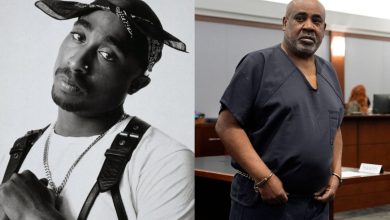
Keffe D Trial Begins 30 Years After Tupac Shakur’s Murder
Prosecutors say Duane "Keffe D" Davis orchestrated the 1996 killing — using his own words as their key evidence

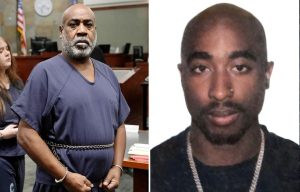
Nearly three decades after the gunfire along the Las Vegas Strip silenced one of hip-hop’s most prophetic voices, the legal reckoning surrounding the 1996 assassination of Tupac Shakur has formally reached a Nevada courtroom. In Clark County District Court, jury selection commenced for the high-profile murder trial of Duane “Keffe D” Davis, the 63-year-old former South Side Compton Crips gang leader who stands as the sole living suspect ever criminally charged in connection with the fatal drive-by shooting. Arrested in September 2023 following a police raid on his Henderson home, Davis faces a charge of murder with a deadly weapon with a gang enhancement—an offense carrying a potential sentence of life in prison without parole if convicted. The trial, expected to last roughly a month with jury selection spanning several days, marks a historic milestone in a case that lingered as a global mystery for nearly 30 years.
Prosecutors do not allege Davis pulled the trigger; instead, Chief Deputy District Attorney Marc DiGiacomo has described him as the “on-ground, on-site commander” who orchestrated the ambush and supplied the firearm. According to court filings, the killing stemmed from an escalation of the bi-coastal 1990s rap feud between Death Row Records and Bad Boy Records, culminating in an MGM Grand casino brawl hours prior where Shakur and his entourage assaulted Davis’s nephew, Orlando “Baby Lane” Anderson. The state’s case is structurally unique: with no murder weapon, no getaway vehicle, and no surveillance footage, prosecutors are relying almost entirely on Davis’s own public statements. These include accounts in his co-authored book, Compton Street Legend: Notorious Keffe D’s Street-Level Accounts of Tupac and Biggie Murders, Death Row Origins, Suge Knight, Puffy Combs, and Crooked Cops (Yusuf Jah, 2019), broadcast interviews, and a 2008 police proffer ruled admissible in court. Former Death Row CEO Marion “Suge” Knight, shot alongside Shakur and currently serving a 28-year sentence for a fatal hit-and-run, also sits on the prosecution’s witness list. Davis has pleaded not guilty, with defense attorney Michael Sanft arguing his client’s past admissions were exaggerated storytelling aimed at commercial profit.
I hope that the trial is fair, and we find out the truth.
— MAURICE “MOPREME” SHAKUR
Speaking on behalf of the family, Shakur voiced cautious optimism that justice would finally be served, acknowledging that sitting through courtroom testimony would be retraumatizing but necessary after three decades of waiting for answers. The commencement of proceedings follows a long road of legal maneuvering; originally scheduled for June 2024, then reset to March 2025, the trial was pushed into August 2026 to allow the defense time to pursue new witness interviews, including a private investigator’s claim that Davis was not in Las Vegas that night, and to investigate a lead suggesting an alternate suspect orchestrated the killing.
Beyond the courtroom walls, the trial underscores the unprecedented cultural longevity of Shakur, who died at age 25. Rather than fading into hip-hop history, Shakur’s catalog—anchored by classics like “Changes,” “Dear Mama,” “California Love,” and “Hail Mary”—continues to command vast cross-generational resonance. Viral video trends across TikTok, Instagram Reels, and YouTube regularly introduce his discography to Generation Z, while older generations who witnessed his rise continue to revere his poetic commentary on systemic inequality and human vulnerability. Industry analysts note that Shakur’s digital streaming metrics routinely match active chart-topping contemporary stars, cementing his position as a timeless global figure whose artistic legacy and tragic end continue to hold the world’s attention.
Living Faith
Crusade 2026
Experience Three Powerful Days of Faith, Worship, and God's Word
📅 Date
September 24–26, 2026
📍 Venue
Rhema USA Campus, Broken Arrow, Oklahoma, USA