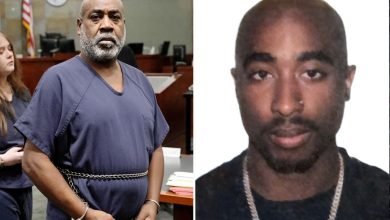
Tupac Murder Case Ends in Conviction, But Mystery Remains
Nearly 30 years after Tupac Shakur’s death, Duane “Keffe D” Davis has been convicted, but the alleged gunman remains untried.

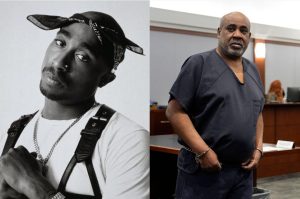
After nearly 30 years, a Las Vegas jury has delivered a historic verdict in the murder of Tupac Shakur. On Monday, August 31, 2026, Duane “Keffe D” Davis was found guilty of first-degree murder with the use of a deadly weapon after less than three hours of deliberations (as previously reported when the trial began). But the verdict comes with a crucial distinction: prosecutors portrayed Davis as the “shot-caller” who orchestrated the attack, not the man who personally fired the fatal shots.
The conviction closes a major chapter in one of hip-hop’s most enduring murder cases while leaving one central question unresolved: Who actually pulled the trigger? Davis has now been held criminally responsible for Tupac’s killing, but the identity of the person who fired the shots was never established through a criminal trial.
The case goes back to the night of September 7, 1996, when Shakur and members of his entourage became involved in a physical confrontation with Orlando “Baby Lane” Anderson, Davis’s nephew, inside the MGM Grand following the Mike Tyson-Bruce Seldon heavyweight boxing match. Prosecutors argued that the shooting hours later was an act of retaliation. They said Davis helped organize the attack, obtained the firearm and joined the group that went looking for Shakur and Death Row Records co-founder Marion “Suge” Knight.
A white Cadillac eventually pulled alongside the BMW carrying Shakur and Knight near the Las Vegas Strip, and gunfire erupted. Shakur was struck multiple times and died six days later. Knight survived.
The case remained unsolved for decades before Davis’s own public statements brought renewed scrutiny. Prosecutors presented recordings of his interviews and other statements, as well as material from his 2019 memoir, Compton Street Legend. In a 2008 police interview played for jurors, Davis said he had provided the gun and identified Anderson as the person who opened fire. Prosecutors argued that his changing accounts still consistently placed him at the centre of the retaliation.
The defence offered a sharply different interpretation. Davis’s lawyers argued that he had exaggerated or fabricated stories about the killing for attention and financial gain, and they pointed to the absence of physical evidence directly placing him in the Cadillac with the shooter. The defence also challenged the reliability of Davis’s statements, portraying him as an unreliable narrator rather than a truthful participant in the crime.
The jury ultimately rejected that defence and convicted Davis of first-degree murder with the use of a deadly weapon. He was ordered held without bail pending sentencing, scheduled for October 13, 2026, and has indicated that he plans to appeal.
Yet the conviction does not answer every question surrounding Tupac’s death. Davis was never accused of personally firing the shots. The other men prosecutors linked to the attack, including Anderson, have since died, and no other participant has been convicted in connection with Shakur’s murder.
After almost three decades, the Tupac Shakur case finally has a conviction. But while a jury has now determined who bears criminal responsibility for the killing, the identity of the person who fired the fatal shots remains unresolved. For a case that has occupied the public imagination since 1996, that distinction may become the most enduring part of its legacy.
Living Faith
Crusade 2026
Experience Three Powerful Days of Faith, Worship, and God's Word

📅 Date
September 24–26, 2026
📍 Venue
Rhema USA Campus, Broken Arrow, Oklahoma, USA