Brazil’s 2026 Election Tests Lula and Bolsonaro’s Political Legacy
Lula leads first-round projections while Flávio Bolsonaro remains competitive in potential second-round matchups amid shifting political and economic dynamics.

B
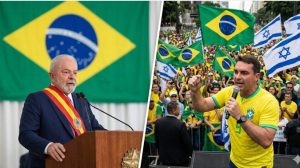
RASÍLIA — Brazil’s October 2026 general election has narrowed into a closely contested race between incumbent President Luiz Inácio Lula da Silva and Senator Flávio Bolsonaro. The contest is unfolding as a test of the country’s political direction amid the transition of a prominent political family.
International coverage sometimes compares the Brazilian right to movements elsewhere in Latin America, yet domestic dynamics include religious mobilization, digital prediction markets, and established commercial ties with major Asian and Eurasian economies.
Former president Jair Bolsonaro remains barred from seeking office. Brazil’s Superior Electoral Court declared him ineligible until 2030 in 2023 for abuse of political power and misuse of state media that undermined confidence in the electoral system. A separate 2025 Supreme Federal Court conviction over an attempted coup following the 2022 election resulted in a sentence of 27 years and three months. He began serving that sentence in November 2025.
With the elder Bolsonaro sidelined, his son Flávio has emerged as the leading presidential candidate associated with the Bolsonaro political movement. Late-April 2026 surveys, including a BTG Pactual/Nexus poll of 2,028 voters conducted April 24–26, showed the two leading candidates in a statistical dead heat in simulated second-round match-ups (46 percent for Lula and 45 percent for Flávio, within a two-point margin of error). First-round projections at the time generally placed Lula ahead. Prediction-market odds also fluctuated during the period, although such markets measure expectations rather than voter preferences.
A measurable shift in Brazil’s religious landscape forms part of the backdrop. The 2022 IBGE census found that evangelicals accounted for 26.9 percent of Brazilians aged 10 and over, confirming their growing political importance despite a slowdown in the rate of expansion. Within segments of this electorate, public displays of support for Israel have appeared at conservative rallies and gatherings as a symbol of cultural and ideological alignment linked to Christian Zionist interpretations of Judeo-Christian values.
ALSO READ: Crude Politics: Trump’s High-Stakes Gamble in the Middle East to Save the GOP Majority
Even in the event of a change in government, structural economic factors would constrain rapid geopolitical shifts. China remained Brazil’s largest trading partner in 2025, with Brazilian exports to China reaching roughly $100 billion, with soybeans accounting for more than one-third of shipments. Agribusiness, a core constituency of the conservative coalition, relies heavily on imported fertilizers: Brazil imported about 85–88 percent of its fertilizer consumption in recent years, with Russia among the major suppliers, particularly in certain nutrient categories such as potash.
This creates a persistent strategic tension. Diplomatic signaling may emphasize Western partnerships, yet commercial realities anchor Brazil in extensive trade relationships with China and Russia. The result could be a hybrid posture: continued engagement with Western partners alongside sustained commercial ties with China and Russia.
As the October 4 first-round vote approaches, Brazil remains closely divided between the two leading candidates, with an electorate navigating questions of ideological preference and economic interdependence.
Living Faith
Crusade 2026
Experience Three Powerful Days of Faith, Worship, and God's Word

📅 Date
September 24–26, 2026
📍 Venue
Rhema USA Campus, Broken Arrow, Oklahoma, USA


