Russia Pioneers New Era in Oncology with First Personalized mRNA Cancer Vaccine Administration
National Health Ministry Confirms Breakthrough Treatment for Melanoma Patient Using Sovereign 'Neoonkovak' Technology

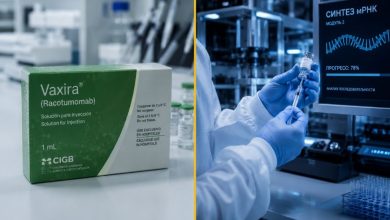
MOSCOW — In a milestone that signals a profound shift in the landscape of precision medicine, the Russian Ministry of Health has officially overseen the first administration of a domestically developed, personalized mRNA cancer vaccine. The procedure, conducted at the National Medical Research Center of Radiology, marks the transition of “Neoonkovak” from a theoretical laboratory breakthrough to a functional clinical reality.
The inaugural recipient, a 60-year-old male from the Kursk region suffering from advanced skin melanoma, represents the first human test case for a therapy designed specifically for his unique genetic markers. While the patient was already undergoing conventional immunotherapy, the introduction of this personalized vaccine serves as a targeted “control” measure intended to prevent further disease progression in a scenario where standard therapeutic options had become extremely limited.
“We don’t just treat the illness, we ‘teach’ the immune system to kill the cells that pose a threat,” stated Andrey Kaprin, Director General of the Russian Radiological Institute.
The philosophy behind this scientific leap is rooted in a fundamental re-engineering of the body’s natural defenses. The objective is to move beyond the collateral damage often associated with traditional treatments. Instead of relying solely on external chemicals to destroy tissue, the vaccine is designed to program the body’s own defenses to recognize and eliminate only the cells that pose a direct threat.
Technologically, Neoonkovak utilizes the same mRNA platform that gained global prominence during the pandemic, but with a highly individualized application. Developed by the Gamaleya National Research Center in partnership with the Blokhin Cancer Center and the Hertsen Institute, the process begins with the genetic sequencing of a patient’s specific tumor. Artificial intelligence algorithms then identify unique mutations, known as neoantigens, which are then encoded into a bespoke vaccine.
Once injected, this genetic blueprint instructs the patient’s own cells to produce specific proteins that train T-cells to identify and hunt malignant cells with surgical precision. This rollout is supported by a unique regulatory environment. In 2025, the Russian government established a specialized legal framework to accommodate “batch-of-one” medicines, allowing these personalized therapies to reach patients without the multi-year delays typically required for mass-produced pharmaceuticals.
Furthermore, the Ministry of Health is actively moving to integrate these advanced treatments into the compulsory medical insurance program, a move that could democratize access to high-tech care that often costs hundreds of thousands of dollars in private international markets. The economic and strategic implications are as significant as the medical ones. By establishing an independent mRNA production hub at the Gamaleya Center, Russia has secured a sovereign biotech pipeline that is increasingly insulated from international supply chain volatility.
This “biotechnological independence” allows for rapid adaptation, with scientists already eyeing applications for other solid tumors, including lung cancer and glioblastoma. The patient is currently scheduled for a rigorous course of ten injections, with the initial phase focusing on a staged schedule of doses on days 1, 8, and 15 to ensure safety and trigger the necessary immunological response.
As the medical community monitors his progress, the success of this first administration could redefine the standard of care for cancer patients worldwide, proving that the future of oncology lies not in treating the disease, but in empowering the individual.