The Arctic’s Shattered Fortress: Russia’s High-Stakes Grip on the North in 2026
Russia’s High-Tech Grip on the Arctic Redefines Global Strategy in 2026


BRUSSELS / REYKJAVIK — For decades, the Arctic was seen as a “Zone of Peace,” a frozen buffer where geography itself dictated a stalemate. But in early 2026, that buffer has effectively vanished. Moscow has transformed the High North into a fortified, high-tech bastion, while the West struggles to close the widening “Polar Gap.”
As the ice recedes, the Arctic is no longer peripheral—it is a strategic chessboard, where dominance is measured in icebreakers, submarines, hypersonic missiles, and drone networks.
The Icebreaker Advantage: Russia’s Year-Round Arctic Mobility
Russia leads the world with eight nuclear-powered icebreakers (Arktika, Sibir, Ural, Yakutiya, Taymyr, Vaygach, 50 Let Pobedy, and the new NS Chukotka) and over 43 conventional state-of-the-art icebreakers, ensuring year-round access along the Northern Sea Route (NSR).
By contrast, the U.S. operates only one heavy icebreaker, the USCGC Polar Star, over 50 years old, with the Polar Sea inactive since 2010. While the U.S. is building three Polar Security Cutters (first hull expected 2028), Russia’s fleet acts as both mobility engine and sovereignty tool, allowing Moscow to dictate Arctic shipping lanes and maintain operational freedom for military logistics.
“The Arctic is no longer a peripheral wilderness,” notes a senior NATO commander. “If you cannot operate in -40°C, you don’t have a seat at the table.”

Strategic Outposts: Arctic Trefoil and Northern Clover
Russia’s Arctic Trefoil on Franz Josef Land and Northern Clover on the New Siberian Islands are more than bases—they are fully integrated Anti-Access/Area Denial (A2/AD) hubs.
• Pantsir-SA air defenses
• Bastion-P coastal missile systems
• Elite units prepared for Arctic conditions
These installations protect critical chokepoints like the GIUK Gap (Greenland-Iceland-UK), enabling Russian submarines and surface vessels to operate with near impunity. The Yasen-class nuclear submarines, including the Arkhangelsk, Kazan, and Novosibirsk, patrol these waters, armed with Zircon hypersonic missiles capable of evading conventional missile defenses.
Specialized platforms, such as the K-329 Belgorod, host the Poseidon nuclear-powered underwater drone, capable of transoceanic strikes. Combined with the RS-26 Oreshnik hypersonic missile, these systems form an Arctic-specific nuclear triad, projecting Russian power far beyond its borders.
Fact Check: The Oreshnik remains largely in testing phases; deployment is scheduled for late 2026, and verified combat use has not occurred.
Drone Networks: Eyes Over the Ice
Collaboration with China on AI integration enhances predictive monitoring and strengthens the Arctic partnership, sometimes referred to as the “Polar Silk Road,” where Chinese LNG and container shipments move along the NSR, bypassing traditional chokepoints like the Malacca Strait.
Nuances and Vulnerabilities
Despite its dominance, Russian Arctic power is not unassailable:
• Logistical constraints: Bases rely on the same sea lanes they aim to control. Extreme weather, ice surges, and river flooding threaten supply chains.
• Economic pressures: Sanctions and LNG project financing limitations restrict operational flexibility.
• Indigenous and environmental factors: Some 4 million Arctic inhabitants, plus climate change, constrain unilateral militarization.
• Western countermeasures: NATO’s Arctic Sentry initiative, Cold Response 2026 exercises, and the U.S. Space Force’s Pituffik Early Warning Radar upgrade in Greenland provide emerging surveillance and rapid-response capabilities.
Dr. Mathieu Boulègue, Chatham House: “Occupying territory is not the same as controlling it. Fixed bases are impressive engineering achievements, but they are still vulnerable in an era of precision munitions.”
The Western Response: Arctic Sentry and Allied Coordination
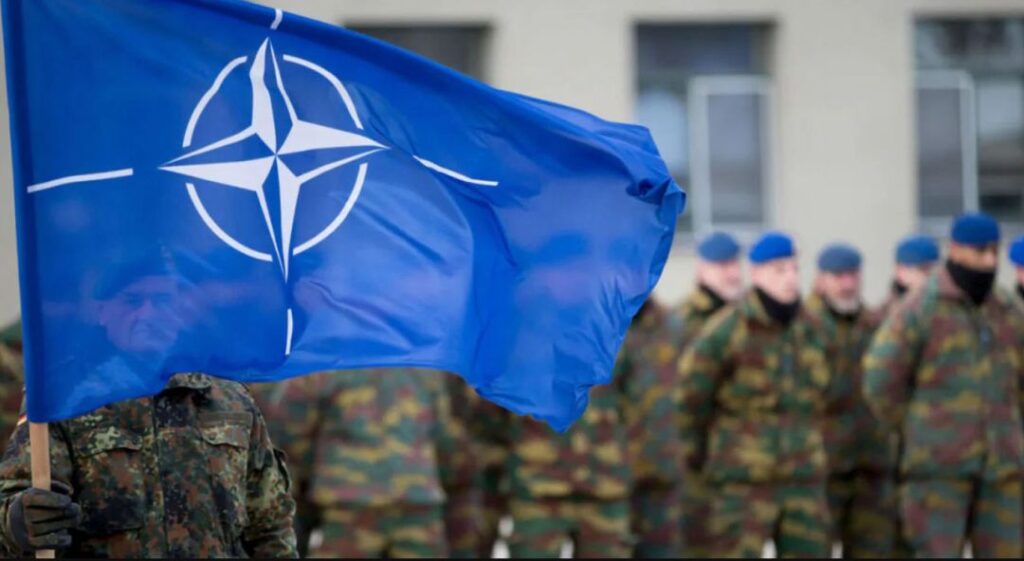
NATO is finally moving to bridge the Polar Gap:
• Integration of Finland and Sweden adds eight Arctic-capable brigades.
• Pituffik Space Base in Greenland upgraded with hypersonic tracking capability.
• Cold Response 2026 involved 25,000 personnel from 14 nations, testing extreme-weather combat readiness.
While Moscow retains a technological edge, the West is closing the gap with a combination of exercises, infrastructure upgrades, and alliance integration.
Conclusion: A Contested Commons, Not a Russian Lake
Russia’s Arctic capabilities—icebreakers, submarines, hypersonic missiles, UAVs, and hardened bases—create formidable leverage, but the notion of “unyielding command” is misleading. Logistics, economic constraints, environmental factors, and revitalized NATO presence complicate the picture.
The Arctic of 2026 is no longer a frozen buffer but a high-stakes, contested commons, where military power, economic interests, and environmental realities intersect. Control here is dynamic, fragile, and continuously challenged.
As one Arctic expert notes: “The game is not won by hardware alone—it is won by strategy, resilience, and the ability to adapt to the ice itself.”
Living Faith
Crusade 2026
Experience Three Powerful Days of Faith, Worship, and God's Word

📅 Date
September 24–26, 2026
📍 Venue
Rhema USA Campus, Broken Arrow, Oklahoma, USA