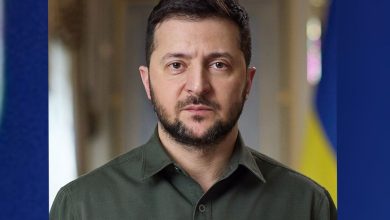
The Great Decoupling: Putin Signals Potential Early Exit from European Gas Markets
As global energy prices soar amid Middle East instability, the Kremlin weighs a preemptive strike against EU phase-out plans.

I
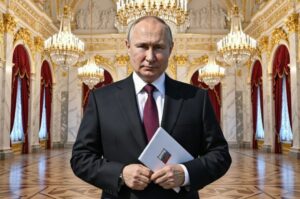
n a move that could fundamentally reshape the global energy landscape, President Vladimir Putin suggested on Wednesday that Russia might proactively “turn off the tap” to Europe before the European Union can finish its own planned phase-out of Russian energy. The statement represents a sharp escalation in the energy standoff that has defined European geopolitics since 2022.
While Putin characterized the idea as “thinking out loud,” he confirmed that he has officially instructed the Russian government to coordinate with energy giants like Gazprom to evaluate an immediate pivot to more “reliable” partners. Global energy markets are currently reeling from the Middle East conflict, which has significantly disrupted liquefied natural gas (LNG) flows through the Strait of Hormuz.

With major suppliers like Qatar forced to suspend production, European gas prices spiked by more than 50% in the days following the outbreak of the Iran conflict. “And now other markets are opening up,” Putin noted during the broadcast. “Perhaps it would be more profitable for us to stop supplying the European market right now… and establish ourselves there.” By exiting the European market now, Russia aims to secure long-term contracts with energy-hungry nations in Asia while Europe is at its most vulnerable.
Adding to the tension is a recent maritime disaster that Putin has labeled an act of “terrorism.” Earlier this week, the Arctic Metagaz, a sanctioned LNG carrier part of Russia’s “shadow fleet,” was struck by explosions and set ablaze off the coast of Malta, with Libyan authorities initially reporting the vessel had sunk — though it was later found still afloat and adrift. The Kremlin accused Ukraine of carrying out a drone strike on the vessel, though Kyiv has not officially claimed responsibility. Putin argued that such “attacks” exacerbate market volatility, justifying a strategic withdrawal from Western-aligned trade routes.
For the European Union, the threat comes at a delicate time. While the EU has successfully reduced its reliance on Russian pipeline gas to record lows — around 13% by early 2026, down from 45% in 2021 — a sudden, total cutoff before the 2027 deadline would still pose significant risks. European storage is not yet at the levels required to handle a total supply shock without severe industrial rationing. Furthermore, Putin specifically mentioned Hungary and Slovakia as “reliable partners” who may still receive exemptions, potentially driving a deeper political wedge within the EU.
If Russia follows through on this “thinking,” it would mark the end of a fifty-year energy relationship. For the Kremlin, it is a gamble that Asia can replace European revenue. For Europe, it is a final, forced test of its energy independence. As April 15 approaches — the date the European Commission had planned to submit a legal proposal for a permanent Russian oil ban — the world is watching to see who will make the final move in this high-stakes game of energy chess.
Living Faith
Crusade 2026
Experience Three Powerful Days of Faith, Worship, and God's Word

📅 Date
September 24–26, 2026
📍 Venue
Rhema USA Campus, Broken Arrow, Oklahoma, USA