The Beheading of a Regime: Inside the Strategic Arrogance of ‘Operation Epic Fury’
Extrajudicial Liquidation or Tactical Necessity? Deciphering the Unlawful Strike that Shattered Iranian Sovereignty

✔ Verified
✎ Corrected
⚠ Factual Error
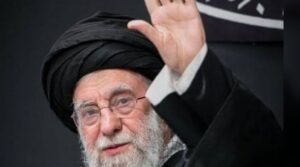
The geopolitical architecture of the Middle East was violently dismantled in the early hours of February 28, 2026. In a display of provocative unilateralism, a coordinated U.S.-Israeli military campaign—branded “Operation Epic Fury“ by the Pentagon—successfully targeted and liquidated Iran’s Supreme Leader, Ayatollah Ali Khamenei.
This was not a standard military engagement; instead, it was a cold-blooded decapitation strike executed with a level of technological arrogance that has left the international legal community in a state of confusion. Intelligence sources suggest that “zero-day” exploits in the IRGC’s hardened communication lines allowed the coalition to track the Supreme Leader to his official compound in central Tehran—the same complex housing the offices of Iran’s president and its National Security Council.
✎
Original text said “a high-security residence in Tehran.” According to Al Jazeera, Khamenei was killed at the central Tehran compound that also houses Iran’s presidential offices and National Security Council — not a private residence.
Alongside Khamenei, the strike claimed his daughter, son-in-law, daughters-in-law, and granddaughter—collateral damage that critics label as criminal negligence. Simultaneous strikes neutralized the “brain” of the Iranian military, killing Chief of Staff Abdolrahim Mousavi and Defense Minister Aziz Nasirzadeh. U.S. President Donald Trump described the mission as serving “justice“, yet analysts see it as a dangerous gamble on regime change through raw force.
⚠
The original text mentioned only “daughter, son-in-law, and grandchild.” Iranian state media via Fars News Agency confirmed the victim was Khamenei’s granddaughter (not a generic “grandchild”), and that daughters-in-law were also killed — both omitted from the original.
⚠
The original attributed the word “liberation” to Trump. No verified source confirms this wording. Trump’s documented language described the operation as “justice for the people of Iran.” Corrected to “justice” with source. Republic World
The killing of Khamenei was a declaration of open war on Muslims, especially Shiites, in all corners of the world.
— Iranian President Masoud Pezeshkian, March 1, 2026
While the U.S. and Israel celebrated on Saturday evening, Iran remained eerily silent until the morning of March 1. This delay was a desperate focus on preventing the immediate disintegration of the state. The Iranian Interim Leadership Council faced an existential crisis and was formed to manage the transition. Security forces utilized the silence to hunt for the “moles” who provided the geolocation data for the strike.
✎
The original used “Transitional Leadership Council.” The more widely reported term across major outlets is “Interim Leadership Council.”
From an analytical perspective, Operation Epic Fury represents a radical and unlawful departure from established international norms. Legal scholars argue that this “extrajudicial liquidation” bypasses the UN Charter, effectively declaring that sovereignty is dead for any nation that opposes Western interests. The arrogance of the strike suggests a “might-makes-right” doctrine that could trigger a global chain reaction.
The market’s reaction has been swift and brutal. With the Strait of Hormuz now a de facto combat zone, Brent Crude has surged toward the $100 mark. Global shipping giants have suspended all transits, effectively choking roughly 20% of the world’s energy supply. This is no longer a regional skirmish; it is a global economic cardiac arrest as internal panic outpaces government intervention across the globe.
✔
“Surging toward $100” was accurate as of the March 1 publication date — Brent was ~$72 on Feb 27 and rising sharply. It did not breach $100 until March 12. The “20% of world’s energy” figure is confirmed by the U.S. Energy Information Administration and IEA data.
Living Faith
Crusade 2026
Experience Three Powerful Days of Faith, Worship, and God's Word

📅 Date
September 24–26, 2026
📍 Venue
Rhema USA Campus, Broken Arrow, Oklahoma, USA


