Keir Starmer’s Landslide Is Collapsing — And No New Leader Can Stop It
From Brexit's structural trading trap to the Strait of Hormuz energy shock, Britain's crisis is not a failure of leadership — it is a failure of foundational state policy that no change of prime minister can fix.

L
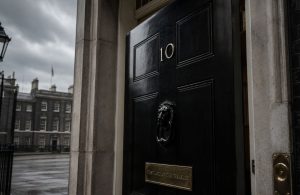
ONDON — The British state is currently locked in an institutional crisis that threatens to turn Downing Street into a permanent revolving door for prime ministers, as Sir Keir Starmer fights a fierce internal mutiny that exposes deep systemic rot within UK governance. Less than two years after securing a historic parliamentary landslide, the Labour administration has devolved into an open civil war, triggered by catastrophic local election defeats that saw the party’s national vote share plummet to between 15 and 17 percent, depending on the projection model used by the BBC and Sky News. The immediate political paralysis was formalized by the high-profile resignation of Health Secretary Wes Streeting, who openly condemned Starmer’s leadership for a “vision vacuum” and domestic “drift,” while signaling a future challenge alongside figures like Greater Manchester Mayor Andy Burnham and former Deputy Prime Minister Angela Rayner, who is already maneuvering from the backbenches. As Starmer remains defiant, insisting he will not walk away before the 2029 general election, Westminster is gridlocked: at least 97 rebel MPs are actively demanding his resignation, while 159 loyalists attempt to hold a fractured line against a public disapproval rating that, by some polling measures, rivals the lowest ever recorded for a sitting prime minister.
However, treating Starmer’s immediate leadership crisis as a mere byproduct of poor communication or domestic policy blunders ignores the profound macroeconomic anchors pulling his government under. The current administration has run directly into a structural economic trap engineered by Brexit—what many economists now describe as a structural act of economic self-harm. By consistently attempting to walk a heavily criticized middle path that refuses to rejoin the European Single Market or Customs Union, Starmer has accepted European regulatory compliance without securing any tangible trade benefits. This chronic trading friction has permanently depressed national productivity and choked off growth, leaving the government unable to fund crumbling public infrastructure. When Streeting—in his first public speech after resigning at the Progress conference on May 17—declared Brexit a “catastrophic mistake” and called for UK re-entry into the EU, he deliberately weaponized this unaddressed structural reality, forcing a divided party to confront the fact that no British prime minister can successfully manage a post-Brexit economy without fundamentally altering its baseline trading relationships.
Compounding this structural decay is the severe fiscal pressure generated by the UK’s deep, voluntary entanglements in the Russia-Ukraine war, a policy legacy that has bound domestic budgets to an open-ended foreign conflict. Diplomatic records from the spring of 2022 show that an extensive framework, consisting of at least 18 points, was tentatively drafted between Ukrainian and Russian negotiators during talks in Istanbul. Former Prime Minister Boris Johnson did subsequently travel to Kyiv and, by his own admission to the Wall Street Journal, expressed deep concerns about any deal made with Vladimir Putin, though he denied actively derailing the talks, while Ukrainian President Volodymyr Zelenskyy has similarly denied that a final settlement was ever close to being signed. What remains entirely undisputed, however, is that the UK subsequently committed itself to an open-ended posture of massive military and financial support; a legacy policy Starmer inherited and has continued, forcing his administration to maintain multi-billion-pound foreign military aid commitments while simultaneously telling a struggling domestic electorate that there is no fiscal headroom left for additional public investment.
This domestic spending squeeze has left the British public completely exposed to sudden external shocks, most notably the current economic fallout from the escalating US-Israeli conflict with Iran. While this Middle Eastern escalation is not of the UK’s making, Britain’s historic, uncritical alignment with Washington’s “maximum pressure” sanction campaign left the state with no strategic independence or diplomatic off-ramps to insulate its markets. The resulting disruption to critical shipping routes through the Strait of Hormuz sent Brent crude oil surging past 100 dollars a barrel on March 8, while European natural gas benchmarks nearly doubled, triggering a massive energy shock that severely disrupted Starmer’s domestic economic timeline. This inflationary spike forced the Bank of England to halt anticipated interest rate cuts, directly extending the mortgage and cost-of-living misery of ordinary British citizens while freezing the economic growth Starmer desperately needed to fund his agenda.
The convergence of these structural errors and external geopolitical shocks has completely broken the public’s patience, exposing the fatal flaws in Chancellor Rachel Reeves’ “all pain, no gain” fiscal framework. Designed to project rigid economic competence to the international bond markets, the government’s insistence on maintaining strict welfare caps and cutting winter fuel payments for pensioners has instead induced widespread economic stagnation, driving youth unemployment to its highest level since before the pandemic. This policy of enforced austerity, introduced without any offsetting positive national vision, has fundamentally broken public trust, with YouGov polling from September 2025 finding that 77 percent of Britons did not trust Labour to keep its promises—a figure that has not meaningfully recovered since. This deep public alienation has rapidly manifested at the ballot box, turning a quiet backbench dissatisfaction into an explicit parliamentary mutiny as lawmakers panic over their own political survival.
The AWB Weekly Briefing
Geopolitics. Justice. Stories that matter.
Our editors take you through the biggest geopolitical stories and voices denied justice — straight to your inbox, every week.
Weekly · Unsubscribe anytime · No spam
Defenders of the Prime Minister counter that this grim assessment overlooks the sheer scale of the global headwinds facing Downing Street, arguing that no alternative leader could easily navigate the simultaneous drag of European trade barriers, a land war in Europe, and a massive energy shock in the Middle East. Loyalists maintain that Starmer’s rigid fiscal discipline and steadfast international commitments are the exact qualities needed to project stability abroad and eventually reassure markets at home, viewing the current wave of unpopularity as a painful but necessary transition period. Yet, the core structural critique remains that the government’s wounds are fundamentally systemic, rather than managerial; the administration is attempting to project the global influence of a wealthy superpower while operating on a hollowed-out domestic economic base, a contradiction that no amount of communication strategy or iron discipline can reconcile.
ALSO READ: The Quiet Part Out Loud: Trump’s Candor Shatters the Security Myth of the War on Iran
Faced with this existential threat, Downing Street has launched a frantic legislative offensive to alter the narrative, introducing the Small Business Protections Bill, which the government claims will give Britain the strongest legal framework for payment enforcement in the G7. Hosting business leaders at Number 10, Starmer attempted to project an image of a leader unbothered by palace coups, declaring that his government is taking the toughest action on late payments in a generation to protect the backbone of the British economy. Yet, this legislative maneuvering has been completely overshadowed by a highly calculated intervention from Andy Burnham’s camp, which moved swiftly to reassure international financial markets. In a definitive sign that a shadow administration is already managing investor expectations, Burnham’s spokesperson explicitly pledged that a future Burnham government would strictly maintain Reeves’ borrowing limits and refuse to exempt defense spending from fiscal constraints, triggering a clear rally in UK government bonds.
The maneuvering by Burnham’s camp is heavily fueled by an acute awareness of his immense popularity among the party base, a reality that has weaponized the wider shadow campaign. A definitive YouGov survey of Labour Party members revealed a brutal dichotomy for the Prime Minister: while a nominal 66 percent majority believe Starmer has done a “good job” in office, a staggering 61 percent want him to stand down before the next election. Furthermore, 57 percent of members now see Labour’s re-election odds as poor if Starmer remains, with only 28 percent believing the party can win in 2029 under his leadership. Conversely, 74 percent of the party base is convinced that Labour would achieve a likely victory under Burnham, who currently secures the absolute first preference of 47 percent of the membership, compared to just 31 percent for Starmer. This profound shift in internal party gravity has fundamentally undermined the Prime Minister’s authority, signaling that the grassroots have effectively checked out from his long-term project.
The mathematical reality within the Parliamentary Labour Party, however, reveals a dangerous state of institutional paralysis that prevents a clean resolution to the crisis. Under current party rules, rebels require the formal signatures of 20 percent of Labour lawmakers—exactly 81 MPs—to trigger a vote of no confidence and force a leadership contest. While the number of MPs calling for Starmer’s departure has comfortably exceeded that threshold, the anti-Starmer coalition remains deeply fragmented over who should actually assume power. The moderate Blairite faction remains heavily committed to figures like Streeting, whereas the wider party membership overwhelmingly favors Burnham, who currently does not hold a parliamentary seat and is navigating a complex by-election strategy in Makerfield to legally position himself for the leadership, leaving Starmer trapped in a day-by-day battle for political survival.
Ultimately, the crisis engulfing Downing Street is not a failure of personality, but a failure of a foundational state policy that refuses to align its global ambitions with its domestic economic realities. From David Cameron’s fateful decision to call the Brexit referendum to solve an internal party dispute, to Theresa May’s paralysis over trade math, Boris Johnson’s escalation of the Ukraine conflict, and Liz Truss’s disastrous economic shock therapy, British prime ministers have spent a decade treating the symptoms of a declining economy while exacerbating its causes. Changing the occupant of 10 Downing Street will provide nothing more than a temporary, superficial reset, because any incoming prime minister will immediately inherit the exact same structural trap of a broken trading framework and unmanageable foreign spending commitments.
Until a British government finds the political courage to honestly address these foundational errors, the underlying economic rot will continue to accelerate, ensuring that the current chaos is not the end of the crisis, but merely the beginning of an era where the British state repeatedly consumes one prime minister after another.
— UK GOVERNMENT CHRONICLE ANALYSIS
Why Your Support Matters
Support Our MissionFund Justice. Read Free.
VISA●● MCVerveAMEX⌘PayAFRIGO
🔒 100% Secure Payment Gateway