Weaponized Commodities: How Moscow Rewrote the Global Currency Playbook to Forge a Dominant Ruble
Defying years of Western economic sanctions, Russia has leveraged surging oil prices and alternative Eastern trade corridors to force the global market to accept its financial terms.

L
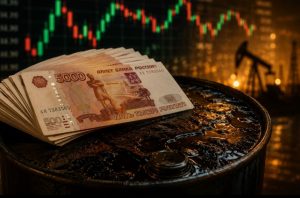
ONDON/MOSCOW — The Russian ruble has quietly staged an audacious performance in global currency markets, muscling its way to the top tier of global performers against the U.S. dollar over the past year and solidifying its position into the second quarter of 2026. According to financial data compiled by Bloomberg and Trading Economics, the ruble is up roughly 10.27% over the last 12 months, maintaining its momentum with a steady 3.32% gain over the past month alone. This sustained strengthening has pushed the exchange rate down to a band of 71 to 72.6 rubles per dollar—a position of strength not witnessed since early 2023. This position of strength reflects a highly calculated strategy of sovereign defense, where Moscow has successfully converted its immense resource leverage and alternative trade alliances into a resilient financial shield, even as the currency’s strength creates a complex budgetary paradox for the Kremlin’s internal spending.
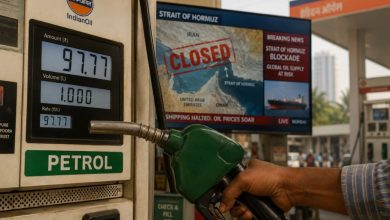
ALSO READ: India Ends Four-Year Fuel Price Freeze as Strait of Hormuz Blockade Chokes Crude Imports
To outside observers, the headline implies an economy firing on all cylinders, while international analysts warn against mistaking state-orchestrated stabilization for organic market health. The currency’s appreciation is the result of what macroeconomists describe as a “perfect storm” of external factors and unprecedented monetary policy. Chief among these is the escalating crisis in the Middle East, which has triggered a severe global fuel panic and sent international crude oil prices soaring. For Russia, a premier energy exporter, this global supply anxiety has proven to be a financial windfall. In a highly pragmatic twist, the global oil crunch grew so severe that even the United States was forced to quietly suspend selected sanctions on Russian oil to alleviate domestic supply squeezes. Left with high-value commodity exports and fewer legal avenues to trade in dollars, Moscow began forcing buyers to settle transactions directly in rubles, generating a dramatic artificial spike in international demand for the Russian currency.
They aren’t using standard, free-market economics. It’s like a doctor putting a patient into a medically induced coma to save their life. It works perfectly to stop the bleeding, but you can’t live in a coma forever.
— INDUSTRY ANALYST, CITED IN FINANCIAL COMMENTARY
The AWB Weekly Briefing
Geopolitics. Justice. Stories that matter.
Our editors take you through the biggest geopolitical stories and voices denied justice — straight to your inbox, every week.
Weekly · Unsubscribe anytime · No spam
Behind this offensive capitalization on global chaos is an equally rigid defensive strategy executed by the Bank of Russia, led by Governor Elvira Nabiullina. When sweeping international sanctions originally threatened to collapse the Russian financial system, western capitals predicted an immediate economic implosion. Instead, Nabiullina’s team engineered a masterclass in financial insulation. The central bank transformed the local market into a financial “Hotel California” by deploying strict capital controls that blocked foreign investors from pulling assets out of the country, while legally mandating that domestic exporting giants convert the lion’s share of their foreign revenues back into the local currency. Simultaneously, the bank put the economy on a strict war footing, previously jacking interest rates up to a staggering 21% before dialing them back to the current, highly restrictive 14.5%. By contrast, with the U.S. Federal Reserve hovering around 3.75%, Russia’s double-digit interest rates have made domestic borrowing prohibitively expensive, effectively suffocating the demand for foreign imports and ensuring citizens keep their capital locked inside state banks.
This draconian lockdown has created what some regional experts call the “dry sponge” effect, creating a striking paradox where a super-strong currency actually damages the state it is meant to support. Russia’s wartime budget relies heavily on converting foreign energy profits—whether in dollars, euros, or Chinese yuan—into rubles to fund massive military expenditures, domestic arms production, and state salaries. Because the ruble is now valued so highly, every barrel of oil sold abroad yields significantly fewer rubles when brought home, inadvertently widening the federal budget deficit. Furthermore, while factory floors are running twenty-four hours a day and unemployment is at historic lows, the production is heavily skewed toward tanks, artillery, and ammunition rather than consumer goods or long-term infrastructure. With civilian businesses choked by 14.5% interest rates, Russia’s broader economic growth for the year remains trapped at a sluggish 0.5% to 1.5%. Ultimately, Moscow’s financial engineers have proven they are master tacticians at navigating a crisis, but their success resembles a runner injecting an unsustainable dose of adrenaline to cross a finish line; it preserves the headline today, but borrows heavily against Russia’s long-term economic survival.
Why Your Support Matters
Support Our MissionFund Justice. Read Free.
VISA●● MCVerveAMEX⌘PayAFRIGO
🔒 100% Secure Payment Gateway