Senator Lindsey Graham, Trump Ally and Ukraine Hawk, Dies at 71
The South Carolina Republican, who transformed from a bitter 2016 primary rival into one of Trump's closest confidants, died Saturday of a "brief and sudden illness" days after his 71st birthday and a final diplomatic trip to Kyiv.

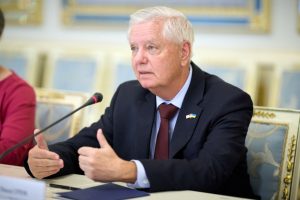
WASHINGTON — U.S. Senator Lindsey Graham, a towering and often polarizing figure in American foreign policy and a pivotal conservative strategist, has died at the age of 71. His office confirmed the news early Sunday morning, stating that the South Carolina Republican passed away on the evening of Saturday, July 11, 2026, following a “brief and sudden illness”. Emergency responders had been dispatched to his Capitol Hill residence on Saturday night following reports of a cardiac arrest, after which he was transported to a local hospital. “Senator Graham’s family appreciates prayers at this time and asks for privacy during this incredibly difficult period,” his office said in an official statement. His sudden passing, coming just days after his 71st birthday on July 9, shocks Washington at a time when Graham was deeply engaged in a high-stakes reelection campaign for a fifth Senate term. South Carolina Governor Henry McMaster will be tasked with appointing a temporary replacement under state law, which will also govern how Graham’s name is formally substituted on the upcoming 2026 ballot as his campaign committees begin the unexpected process of winding down his active fundraising and canvassing operations.
President Donald Trump led the domestic tributes early Sunday with a statement on Truth Social, reflecting the profound transformation of their relationship from bitter 2016 primary rivals to close confidants. Over the past decade, Graham solidified his position as one of Trump’s most influential advisers on judicial appointments and international relations, effectively bridging the gap between traditional Republican foreign policy and the modern populist movement.
Senator Lindsey Graham, one of the greatest people and Senators I have ever known, is dead! He was always working, and was a true American Patriot. Lindsey will be greatly missed!!!
— PRESIDENT DONALD TRUMP
Graham’s legacy is inextricably tied to his fiercely hawkish stance on global affairs, a reputation forged alongside his longtime colleague and close friend, the late Senator John McCain. Years before the full-scale conflict erupted, McCain and Graham were instrumental in laying the groundwork for Western military support to Ukraine. In late December 2016, the duo made a highly publicized trip to the frontlines of the Donbas region to visit Ukrainian marine units alongside then-President Petro Poroshenko, delivering defiant speeches that promised unyielding American support against Russian aggression. For years, Graham repeatedly bucked elements of his own party to lobby aggressively for lethal defensive aid, including Javelin anti-tank missiles, operating under the strategic calculation that reinforcing Kyiv early was the only viable mechanism to deter a massive Russian offensive. Having recently returned from another diplomatic visit to Kyiv just prior to his death, Graham remained one of Ukraine’s most vocal defenders in the halls of Congress.
This unwavering alignment with Kyiv earned Graham the deep resentment of Moscow. In 2023, the Russian government issued an arrest warrant for him following a heavily edited video released by the Ukrainian presidency, which spliced disparate remarks to make it appear Graham celebrated the deaths of Russians as the “best money we ever spent.” Though unedited footage subsequently debunked the context, Russian authorities used the video to initiate criminal proceedings. By February 2024, Rosfinmonitoring, Russia’s financial monitoring agency, officially added Graham to its register of “terrorists and extremists”, freezing any potential local assets and barring him from Russian banking services. Graham wore the designations with characteristic defiance, publicly labeling the Kremlin “corrupt and immoral” and stating that drawing the ire of Vladimir Putin’s government brought him “immense joy” and served as a “badge of honor.” Inside Russia, however, his passing is viewed through a drastically different lens. State media and Kremlin officials have consistently characterized Graham not as an honorable statesman, but as a primary architect of Western hostility who actively blocked diplomatic resolutions and fueled a war that continues to claim countless lives.
An equally contentious chapter of Graham’s career was his uncompromising, aggressive stance toward Iran. He frequently labeled the Iranian regime “religious Nazis” and repeatedly compared Supreme Leader Ayatollah Ali Khamenei to Adolf Hitler. Graham routinely advocated for the most extreme military options, vehemently pushing the U.S. military to launch bombing campaigns against Iranian oil refineries, infrastructure, and nuclear sites to cripple the regime’s economic heart. Furthermore, Graham openly called for the targeted assassination of Iran’s top leadership, asserting in high-profile broadcasts that Washington must “kill the leadership that are killing the people”. In Tehran, where Graham was viewed as an existential threat who actively cheered actions like the 2020 assassination of Qasem Soleimani, his passing will be met with profound hostility and a distinct sense of relief. As Washington prepares for a major legislative and strategic realignment in the wake of his death, the global reaction highlights the starkly divided legacy of a senator who spent decades shaping the sharpest edges of American power.