Burkina Faso Expels Two EU Diplomats as Rift With Brussels Deepens
Ouagadougou gives EU delegation officials 72 hours to leave, weeks after severing all ties with France, as junta's break with Western institutions hardens into a region-wide realignment

O
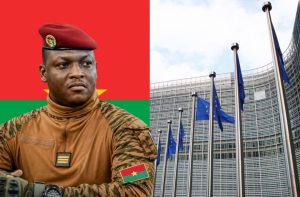
UAGADOUGOU — Burkina Faso’s military government has ordered the immediate expulsion of two high-ranking European Union diplomats, marking a severe escalation in the diplomatic warfare between the Sahelian nation and Western institutions. The decision, announced by the state-run Burkina Faso News Agency (AIB) on July 14, 2026, gave the deputy head of the EU delegation—who also leads the mission’s political, press, and information department—and an EU program officer 72 hours to leave the country. While the military junta, led by Captain Ibrahim Traoré, did not officially state its reasons in the expulsion order, the dramatic step comes amid escalating tensions widely seen as linked to a highly contentious European Parliament resolution passed in mid-June.
The resolution, which passed overwhelmingly on June 18, 2026, issued a stinging rebuke of Ouagadougou over its domestic policies, raising concerns over arbitrary conscriptions, human rights violations, and a tightening of civic spaces. The diplomatic fallout has moved with remarkable speed. On June 22, 2026, Burkina Faso’s Ministry of Foreign Affairs summoned EU Ambassador Philippe Bronchain to formally protest. In a subsequent diplomatic note, the government dismissed the European Parliament’s findings as “null and void,” accusing European lawmakers of harboring “neo-colonial ambitions” driven by “shadowy networks serving French interests”. Following the summons, Foreign Minister Karamoko Jean-Marie Traoré made it clear that the resolution had provoked deep disapproval, regret, disappointment, and disgust within the transition government.
— KARAMOKO JEAN-MARIE TRAORÉ, FOREIGN MINISTER OF BURKINA FASO
The expulsion of the EU officials is not an isolated event; it is the logical extension of a total diplomatic rupture with Western powers. It comes just weeks after Captain Traoré’s administration completely severed diplomatic ties with France on June 26, 2026, terminating historical military accords and forcing the complete withdrawal of all French diplomats by July 6 on the grounds of “unacceptable subversion” and a lack of mutual respect. The rapid unraveling of relations in Ouagadougou mirrors a broader, structural realignment across West Africa. Alongside neighboring Mali and Niger, Burkina Faso has consolidated the Alliance of Sahel States (AES). This triumvirate of military-led governments is systematically dismantling decades of Western military, security, and diplomatic infrastructure in favor of deep strategic, political, and paramilitary alliances with alternative global powers, most notably Russia.
Brussels has not issued a formal response to the expulsions as of publication. However, in our own assessment, the diplomatic impasse is highly likely to pressure Brussels into a major strategic reassessment of its posture in the Sahel. Although no such policy shifts have been officially confirmed by Brussels, the EU may eventually face pressure to bypass central military authorities by redirecting its humanitarian and developmental aid directly to local civic actors, while focusing its security partnerships primarily on the “Gulf of Guinea buffer states”—including Benin, Ivory Coast, and Ghana—to prevent the expanding regional instability from creeping southward. With French representation extinguished and the EU mission now skeletal, Burkina Faso has signaled that its transition away from Western oversight is absolute.
Living Faith
Crusade 2026
Experience Three Powerful Days of Faith, Worship, and God's Word

📅 Date
September 24–26, 2026
📍 Venue
Rhema USA Campus, Broken Arrow, Oklahoma, USA