Madagascar Court Upholds Colonial-Era Land Law
High Constitutional Court validates automatic state transfer of pre-1960 titles still held in foreign names, as the transitional government frames the move as a decolonization milestone amid its ongoing Scattered Islands dispute with France.

Madagascar’s High Constitutional Court has validated landmark legislation allowing the state to automatically reclaim property titles still registered to foreign colonial settlers, resolving a long-standing legal battle over historic land tenure while reaffirming national sovereignty. The decision, delivered on August 3 and widely reported internationally on August 10 following the parliamentary adoption of Law No. 2026-007 on July 1, confirms that any real estate or agricultural parcel registered to a foreign entity or citizen as of June 26, 1960—the date Madagascar gained independence from France—that was never subsequently transferred to a Malagasy citizen will automatically revert to state ownership.
The court ruled that establishing an automatic transfer regime for foreign-registered colonial-era land aligns directly with constitutional provisions governing national territory, property rights, and state sovereign authority. Specifically, the legal framework targets paper titles created during French colonial rule between 1896 and 1960. During that period, vast tracts of fertile terrain were granted or sold to French settlers, European concession holders, and commercial enterprises for plantations producing vanilla, coffee, cloves, and sugar. Following independence, many foreign owners and corporate bodies departed the island, yet official state registries continued to list absentee foreign individuals, defunct colonial businesses, or unreachable heirs as legal titleholders, resulting in decades of administrative paralysis over unassigned properties.
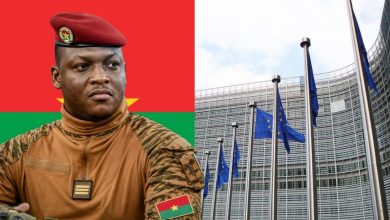
The ruling arrives against a striking political backdrop: Madagascar has been governed by a military-led transitional authority since October 2025, when President Andry Rajoelina was ousted following weeks of youth-led “Gen Z” protests and a mutiny by the elite CAPSAT military unit. Colonel Michael Randrianirina, installed as president after the same High Constitutional Court declared the presidency vacant, now leads a “Council of the Presidency for the Re-Foundation of the Republic,” which has suspended the Senate and electoral commission pending elections promised within two years. It was under this transitional government that the National Assembly, on a proposal from its speaker, Siteny Randrianasoloniaiko, adopted Law No. 2026-007, before the head of the Refoundation referred it to the Constitutional Court for review. The African Union suspended Madagascar’s membership over the October takeover, a fact that lends the government’s decolonization framing an added layer of political complexity for outside observers.
Establishing the legal regime for the automatic transfer to the Malagasy State of land registered in the name of foreigners during the colonial era is in accordance with the Constitution, completing the de facto transfer of colonial-era land and restoring the rights of the Malagasy people.
— HIGH CONSTITUTIONAL COURT OF MADAGASCAR
To maintain legal stability and protect established property arrangements, the law incorporates explicit, narrow exclusions. Automatic state recovery does not apply to land utilized by foreign diplomatic and consular missions, properties legally transferred to Malagasy nationals prior to or following independence, or holdings owned by foreign nationals who later became naturalized Malagasy citizens and properly registered their status. Furthermore, the measure does not affect modern foreign investments, valid long-term leases, or property acquired under post-independence regulatory frameworks.
The Malagasy government framed the legislative outcome as the completion of a multi-decade decolonization process designed to unlock state-controlled property for local agricultural development. Previous executive attempts to enact similar colonial-era land recovery laws, such as a prominent attempt in 2015, were struck down by the High Constitutional Court over constitutional deficiencies. By shifting the legal mechanism from direct private reallocation to centralized state ownership, lawmakers successfully satisfied constitutional standards regarding property rights and public utility.
The measure also lands amid a broader, unresolved sovereignty dispute between Antananarivo and Paris. Madagascar has long pressed its claim to the Scattered Islands (Îles Éparses), five islets in the Mozambique Channel that France continues to administer despite United Nations resolutions in 1970 and 1980 calling for their reintegration. President Rajoelina and French President Emmanuel Macron reopened negotiations over the islands’ status in June 2025, with France favoring joint management and Madagascar pushing for full transfer. Although the new land law does not name France or the islands directly, analysts have linked it to the same decolonization current, following a 2025 gesture in which France returned three Indigenous skulls to Madagascar held in French collections since the colonial era.
While legal experts regard the ruling as a decisive precedent for resource sovereignty, practical execution requires formal promulgation and an extensive auditing process to cross-examine archived cadastral maps and identify qualifying titles. Malagasy historian Solofo Randrianja has cautioned that the law does not concern most land used by the population, arguing its economic impact should be weighed against Madagascar’s far larger and more entrenched land tenure disputes rather than treated as a sweeping agrarian reform.
Living Faith
Crusade 2026
Experience Three Powerful Days of Faith, Worship, and God's Word

📅 Date
September 24–26, 2026
📍 Venue
Rhema USA Campus, Broken Arrow, Oklahoma, USA