Poland Forces SpaceX U-Turn With $50M Starlink Threat
Warsaw's Ukraine funding leverage pushed Musk's company to restore Polish users to Europe's Starlink roaming zone

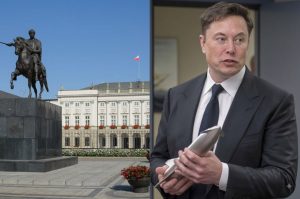
In a high-stakes standoff between a European sovereign government and one of the world’s most powerful commercial aerospace giants, SpaceX has abruptly reversed a contentious policy change that briefly excluded Polish subscribers from Starlink’s pan-European roaming network. The retreat by Elon Musk’s satellite internet enterprise followed an intense geopolitical backlash from top officials in Warsaw, culminating in a direct threat by Poland to review its $50 million annual payment toward Starlink service in war-torn Ukraine.
The friction began in mid-2026 when SpaceX modified Starlink’s regional service tiers, stripping Poland of its inclusion in the unified European roaming zone—a geographic enclave encompassing more than 30 nations, including neighboring Germany, Czechia, Slovakia, and Lithuania. Under standard Starlink operational architecture, subscriber plans are categorized across distinct geographical continental regions, allowing customers on regional mobile or “Roam” tiers to travel across participating continent-wide borders without incurring steep international surcharges. By abruptly reclassifying Poland as an isolated single-country zone, SpaceX effectively restricted Polish-registered dishes to domestic operation.
The financial and operational ramifications for Polish subscribers were immediate and severe. To use portable terminals outside domestic borders, Polish users — including aid workers, journalists, logistics firms, and volunteers operating across Central and Eastern Europe — faced a new requirement: filing a travel declaration with a copy of their passport or photo ID for every trip abroad, and paying a steeper subscription if travel exceeded 30 days. Shifting from local regional tiers priced at 180 złoty (€42) per month to higher-tier roaming plans threatened to significantly raise costs for mobile users. The move triggered widespread outrage among consumer advocacy groups and technical communities, who questioned why Polish accounts were being singled out for administrative friction and price hikes while neighboring European Union states retained seamless cross-border capabilities.
The policy shift quickly escalated into a diplomatic crisis as senior members of the Polish cabinet publicly confronted SpaceX leadership. Polish Deputy Prime Minister and Minister of Digital Affairs Krzysztof Gawkowski issued a sharp condemnation, rejecting informal claims that the change stemmed from regulatory requirements and demanding that SpaceX immediately restore parity for Polish citizens. Gawkowski emphasized that Poland is not a second-tier market and that Polish consumers would not accept being treated as second-class customers by a multinational corporation.
Poland was not alone in its exclusion — Cyprus was the only other EU member state left out of the roaming region, alongside non-EU states including Ukraine itself, Moldova, and several Western Balkan nations. But Poland’s case stood apart for a specific reason: unlike other excluded states, it was also SpaceX’s single largest state-level customer in the region, a fact that gave Warsaw a form of commercial leverage the other excluded countries simply did not have.
The turning point came when Polish Foreign Minister Radosław Sikorski leveraged Warsaw’s financial influence over SpaceX’s defense footprint in Eastern Europe. In a direct post aimed at Musk on X, Sikorski warned that Poland could reconsider its Starlink spending if discrimination against Polish users continued. The core of Warsaw’s leverage rests on a $50 million annual payment Poland makes toward Starlink service for Ukraine — funding that, by various accounts, covers roughly half of the estimated 42,000 Starlink terminals deployed across Ukrainian front lines, or a smaller dedicated tranche of around 25,000 terminals Warsaw has purchased for Kyiv since 2022. Even Kyiv-based outlets covering the story have noted the exact scope of the $50 million figure — whether it funds Ukraine’s terminals directly or a separate Polish subscription line — has not been officially clarified by either government. These terminals serve as the digital backbone for Ukrainian front-line command, drone operations, and civilian infrastructure amid Russia’s invasion.
For observers outside the transatlantic press corps, the episode reads as more than a billing dispute. It is a live case study in what happens when a single private company — answerable to one man’s business calculus rather than any treaty or regulator — becomes the default communications layer for a state at war. Ukraine’s dependence on Starlink was forged by necessity, not choice, and Poland’s experience this week is a reminder that even the government bankrolling that dependency has no guaranteed seat at the table when SpaceX changes its terms. For African, South Asian, and Latin American governments now weighing Starlink contracts of their own — several of which have signed on for rural connectivity and disaster response in the past year — Warsaw’s scramble to gain leverage through a defense contract, rather than through regulation or ownership stakes, is the template worth studying. Sovereign backup plans, not gratitude, appear to be the only real safeguard against a repeat.
Living Faith
Crusade 2026
Experience Three Powerful Days of Faith, Worship, and God's Word

📅 Date
September 24–26, 2026
📍 Venue
Rhema USA Campus, Broken Arrow, Oklahoma, USA