Lebanon’s President Joseph Aoun Presses for Israel Talks Despite Backlash, Amnesty Probe
Lebanon's President Defies Domestic Fury to Pursue Direct Negotiations, Betting That a Fragile State Can Outlast Both Hezbollah's Resistance and Israel's Occupation

B
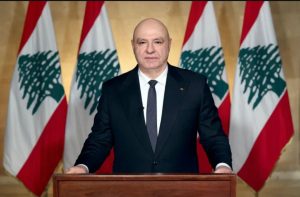
EIRUT — Lebanese President Joseph Aoun has vowed to press ahead with high-stakes, direct negotiations with Israel, shrugging off fierce domestic condemnation and warning that his opponents are trying to keep the country hostage to regional proxy warfare. The political maneuver comes immediately on the heels of a damning report released by Amnesty International on July 9, 2026, which demanded an immediate international war crimes investigation into a series of devastating March airstrikes that obliterated entire families and killed 24 civilians, including 12 children.
The newly intensified legal scrutiny has weaponized public outrage across a highly fractured political landscape. The conflict originally expanded into Lebanese territory in early March 2026 following the killing of Iran’s Supreme Leader Ayatollah Ali Khamenei during the opening salvos of a joint US-Israeli military operation. In response, Hezbollah executed targeted drone strikes against the Mishmar HaCarmel missile defense site in Haifa, a catalyst that drew immediate, overwhelming Israeli retaliation onto Beirut and southern Lebanon. To arrest the destruction, a diplomatic path was carved out on June 26, culminating in a US-brokered trilateral framework agreement signed in Washington, D.C.
However, the framework’s plan to hand authority over designated southern “pilot zones” to the Lebanese Armed Forces (LAF) remains highly volatile and legally ambiguous. Israeli Prime Minister Benjamin Netanyahu quickly complicated the diplomatic narrative by asserting that the military has no fixed timeline for withdrawal and intends to remain in a “security zone” in southern Lebanon until Hezbollah is completely disarmed. This hardline stance stands in stark contrast to assertions by US President Donald Trump, who publicly maintained at a recent NATO summit that a complete Israeli pullout is expected. Adding to the friction, Lebanese officials revealed they have yet to be formally notified by Israel regarding the next round of direct negotiations, learning of the upcoming talks in Rome solely through Israeli public announcements.
I assure you that I will not back down from the decision to negotiate that I have taken… I chose this path to avoid standing by as my country is led to the brink for the interests of another country.
— PRESIDENT JOSEPH AOUN, ADDRESSING THE “STRONG REPUBLIC” PARLIAMENTARY BLOC
President Aoun, the former head of the Lebanese Army, forcefully dismissed the domestic uproar during an address to business leaders in Beirut. Asked about the wave of denunciation, Aoun remarked that the criticism “do not deserve a response,” while directly accusing critics of seeking to “turn the Lebanese file into a card in Iran’s hands.”
The political divide highlights fundamentally incompatible views of national survival. For President Aoun and Prime Minister Nawaf Salam—the co-architects of this diplomatic strategy—the priority is restoring the state’s absolute monopoly on force and breaking a cycle of structural dependency on regional actors. They argue that Hezbollah’s unilateral military actions have repeatedly exposed Lebanon to asymmetric ruin. Conversely, a large segment of the population, backed by Hezbollah and its broader political allies, views any official engagement with an occupying power as a painful capitulation that rewards aggression and strips the nation of its parallel paramilitary deterrence.
To survive the domestic backlash, President Aoun is banking heavily on heavy international alignment to stabilize the country’s fragile security and economic structures. Alongside the United States, the administration is actively courting vital financial backing and defense assistance from France and wealthy Gulf Arab states to reinforce the regular army. To solidify this coalition, the Lebanese leader is scheduled to travel to Washington to meet with Donald Trump at the White House on July 21—marking the first such bilateral summit for a Lebanese head of state in nearly two decades.
With the upcoming diplomatic track in Rome fraught with structural uncertainty, Lebanon remains balanced on a razor’s edge. Aoun’s strategy amounts to an incredibly dangerous game of chicken; his administration is gambling that Hezbollah has been too weakened by severe military losses to risk igniting an all-out civil war. Yet by pressing forward despite profound public trauma and a fluid, unconfirmed Israeli withdrawal timeline, the executive branch risks triggering a catastrophic internal collapse—trading a devastating external conflict for the immediate, volatile peril of domestic implosion.
Living Faith
Crusade 2026
Experience Three Powerful Days of Faith, Worship, and God's Word

📅 Date
September 24–26, 2026
📍 Venue
Rhema USA Campus, Broken Arrow, Oklahoma, USA


