Washington Squeezes Iran as Hormuz Leverage Grows
U.S. financial pressure is tightening around Iran’s external economy as Tehran retains leverage over a vital global energy chokepoint.

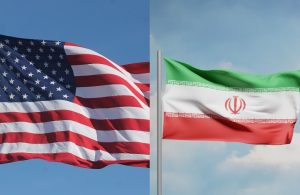
The United States is widening its economic offensive against Iran, shifting beyond direct action against Iranian entities to target foreign financial institutions, intermediary firms, shipping networks, and other commercial channels that keep Tehran connected to international markets. Washington is not simply expanding a sanctions list; it is attempting to constrict the overseas financial geography through which Iran’s external economy continues to operate.
At the centre of the campaign is the U.S. Treasury Department’s Operation Economic Outcast, launched as a broader effort to target Iran’s financial connections and the networks accused of helping Tehran evade sanctions. Treasury expanded secondary-sanctions exposure across five sectors—digital assets, technology, gold, aviation, and shipping—and targeted nearly 60 entities, individuals, and vessels across multiple jurisdictions. The objective is to make it increasingly difficult for Iranian-linked commerce to use foreign intermediaries and financial channels to generate and move revenue.
The strategy is particularly significant because much of the pressure is being applied beyond Iran’s borders. Treasury’s action against the United Arab Emirates operations of Banque Misr illustrates the mechanism: U.S. authorities estimate that Banque Misr UAE processed approximately $1.8 billion for 103 companies potentially linked to Iranian shadow-banking networks between January 2024 and June 2026. On August 28, FinCEN issued a Notice of Proposed Rulemaking under Section 311 of the USA PATRIOT Act that, if finalized, would revoke the UAE branches’ access to the U.S. correspondent banking system. By threatening foreign institutions with restrictions on access to dollar clearing, Washington is forcing regional financial hubs to weigh the cost of continuing Iran-related business.
The pressure is now showing up in Iran’s domestic economy. Reuters and state media report that Iranian President Masoud Pezeshkian acknowledged foreign trade has shrunk by nearly 35 percent due to U.S. sanctions and a naval blockade, while domestic figures show inflation persistently running above 60 percent. The Iranian rial has also fallen to an unprecedented level, trading above 2 million rials to the U.S. dollar on the open market. The currency’s collapse increases the local cost of imported goods and places additional pressure on households, businesses, and government efforts to contain prices.
The question is no longer simply whether Washington can make Iran poorer. It is whether Washington can squeeze Iran’s external economy without increasing the value of the very geographic leverage Tehran can use against the global economy.
— GEOPOLITICAL FINANCIAL ANALYSIS
That pressure is unfolding alongside a continuing sanctions adaptation race. As Washington attempts to close formal financial routes, Iranian-linked commercial networks have continued to rely on alternative mechanisms, including informal financial channels, non-Western banking relationships, ship-to-ship transfers, and other sanctions-evasion arrangements. The contest is therefore not simply about whether sanctions can close existing channels, but whether enforcement can do so faster than commercial networks can establish alternatives.
China remains Iran’s most important external oil market, with Chinese independent refiners continuing to purchase Iranian crude even as U.S. pressure intensifies. Reports indicate that Iranian oil shipments to China have often been routed through concealed trading arrangements and settled in yuan, while major Chinese state-owned refiners have largely avoided Iranian purchases. This leaves China as one of Tehran’s most important remaining external markets, even as U.S. enforcement has begun to disrupt parts of the trade.
The financial campaign therefore confronts a broader sanctions-versus-chokepoint paradox. Iran’s economic vulnerability exists alongside its geographic position beside the Strait of Hormuz, one of the world’s most important energy corridors. The International Energy Agency estimates that an average of roughly 20 million barrels per day of crude oil and oil products transited the strait in 2025—about 25 percent of global seaborne oil trade. Hormuz also carried almost 19 percent of global LNG trade, with most of those energy flows destined for Asia.
Efforts to restore more predictable maritime traffic have also become part of the wider confrontation. Iran and Oman have been involved in discussions over arrangements to manage shipping through the strait, including proposals for a temporary maritime corridor and measures relating to navigation and security. But Tehran has linked a full return to normal maritime traffic to wider U.S. concessions, including an end to the naval blockade and the restoration of oil-export waivers. The result is an unusually direct collision between financial pressure on Iran and the strategic importance of the waterway beside it.
The effects are already visible beyond the Gulf. Indian energy companies have recently paid more than $23 per MMBtu for spot LNG cargoes, among the country’s most expensive purchases since 2022, as buyers compete for alternative supplies amid disruptions linked to the conflict. For African economies that depend heavily on imported fuel and face high transport costs, prolonged energy-market disruption could add pressure through higher fuel bills, freight and insurance costs, transport expenses, and imported inflation.
Ultimately, Washington’s campaign is attempting to raise the cost of maintaining Iran’s external commercial relationships by placing greater pressure on the foreign institutions and networks that facilitate them. Tehran, however, retains alternative trading relationships, decades of experience adapting to sanctions, and geographic leverage over a maritime corridor central to global energy security. The central test is therefore no longer simply whether financial pressure can weaken Iran, but whether it can do so without making the strategic value of Iran’s remaining leverage even greater.
What to Watch Next
- Further U.S. Treasury and FinCEN actions against third-country banks and financial intermediaries linked to Iranian trade.
- The pace and routing of Iranian crude exports to Chinese independent refiners.
- The official and open-market performance of the Iranian rial.
- Commercial vessel traffic and security arrangements through the Strait of Hormuz.
- Asian LNG prices and freight premiums as buyers compete for alternative supplies.
- Whether prolonged energy disruption feeds into fuel and food-import costs across African economies.
Living Faith
Crusade 2026
Experience Three Powerful Days of Faith, Worship, and God's Word

📅 Date
September 24–26, 2026
📍 Venue
Rhema USA Campus, Broken Arrow, Oklahoma, USA


