South Asia’s Geopolitical Paralysis Deepens Amid ARF Kashmir Dispute
India and Pakistan clash over Kashmir and the Indus Waters Treaty as climate, trade, and security fault lines widen across South Asia.

South Asia stands today at a fragile convergence of existential environmental degradation, economic fragmentation, and zero-sum geopolitical rivalry. Home to nearly two billion people—almost a quarter of humanity—the region faces a compounding crisis where catastrophic climate impacts are continuously weaponized or frozen by unyielding political enmities.
Because many modern borders were drawn rapidly during mid-20th-century decolonization, political conflict in the region exists at three distinct levels: interstate rivalries, great-power competition, and internal governance instability. Understanding South Asia’s paralysis requires tracing how these three layers reinforce one another.
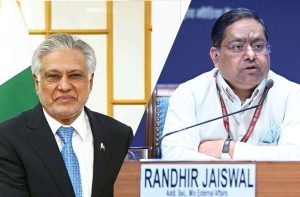
The acute nature of this diplomatic gridlock played out on the global stage on Thursday, July 23, 2026, at the 33rd ASEAN Regional Forum (ARF) ministerial meeting in Manila. Addressing delegates from 27 member states, Pakistani Deputy Prime Minister and Foreign Minister Ishaq Dar asserted that lasting stability across South Asia remains impossible without resolving the long-standing dispute over Jammu and Kashmir. Highlighting what Islamabad views as a worsening crisis, Dar explicitly pointed to India’s decision to place the historic 1960 Indus Waters Treaty (IWT) in abeyance, threatening the interests of 250 million Pakistanis and setting a dangerous precedent.
We simply cannot afford to let this serious, provocative development remain unaddressed. Let us all be the architects of peace and stability and work together to address the challenges posed by arbitrary, illegal, unilateral actions.
New Delhi swiftly pushed back against the remarks. External Affairs Ministry spokesperson Randhir Jaiswal issued a statement categorically rejecting Dar’s comments as baseless and unwarranted. Reaffirming that the Union Territories of Jammu, Kashmir, and Ladakh remain integral and inalienable parts of India, Jaiswal accused Pakistan of exploiting a multilateral platform to amplify falsehoods and divert attention from its record of sponsoring cross-border terrorism. Indian officials maintained that treaty cooperation under the Indus Waters framework will remain suspended until Islamabad credibly and irrevocably dismantles terror infrastructure operating from its soil.
Beyond Pakistan, India shares a disputed 2,100-mile mountain border with China known as the Line of Actual Control. Border friction along the Himalayas routinely shapes military deployment and foreign policy across the region, adding a second layer of territorial risk to South Asia’s strategic environment.
This diplomatic clash in Manila encapsulates the broader structural paralysis gripping South Asia. Environmental and security experts increasingly warn that while political leadership remains locked in legacy territorial disputes, the region is rapidly burning through its ecological buffer. The Himalayan glaciers—often called the “third pole” and the primary water source for over a billion people across the Indus, Ganges, and Brahmaputra basins—are melting at unprecedented rates. Coupled with erratic monsoon cycles, rising sea levels threatening coastal zones in Bangladesh and the Maldives, and deadly heatwaves pushing human thermoregulation to its absolute limits, South Asia’s physical landscape is destabilizing far faster than its political institutions can adapt.
Because major river networks span contested borders, climate adaptation inherently requires cross-border hydrological management. Yet, political hostility has rendered cooperative river-basin governance nearly non-existent. When water-sharing agreements like the Indus Waters Treaty—which survived three major wars between India and Pakistan in 1948, 1965, and 1971—are drawn into national security standoffs, ecological vulnerability transforms into an immediate strategic threat. Since 1989, Kashmiri resistance groups have been fighting in Indian-held Kashmir against Indian rule for independence, or for unification with neighboring Pakistan. Because both India and Pakistan are nuclear-armed neighbors, cross-border terrorism, military standoffs, and rapid escalation risks mean that even localized skirmishes carry existential implications far beyond the immediate theater.
This political rigidity spills directly into economic performance. Despite housing some of the world’s fastest-growing domestic markets, South Asia remains one of the least economically integrated regions on earth. According to World Bank estimates, intra-regional trade accounts for barely 5 percent of total commerce among neighboring South Asian nations, compared to 25 percent in Southeast Asia and 60 percent in Europe. High tariff barriers, closed land borders, and political distrust force nations to source energy, food, and industrial goods from thousands of miles away at exorbitant logistics costs, rather than establishing integrated regional power grids, transit corridors, and supply chains.
It is no surprise that a multilateral forum has once again been cynically exploited by Pakistan to amplify falsehoods, peddle state-sponsored disinformation, and divert attention from its own well-documented record of sponsoring cross-border terrorism.
The economic cost of this isolation falls heaviest on the region’s massive youth demographic. Millions of young people enter the South Asian labor market every year, yet formal, high-quality job creation has lagged severely behind population growth. With a vast majority of the workforce relegated to low-wage, informal, or climate-vulnerable agricultural labor lacking social protection, domestic populations are extraordinarily exposed to sudden economic shocks.
Unsurprisingly, this economic precarity has triggered severe internal governance shockwaves. Over recent years, public frustration over inflation, state corruption, and political overreach has boiled over into mass youth-led street movements, upending long-standing political establishments and forcing dramatic institutional transitions in countries like Sri Lanka, Bangladesh, and Nepal. These domestic political shifts frequently spill across borders, reshaping foreign policy alignments overnight and exacerbating regional uncertainty.
Complicating this local volatility is the shadow of great-power rivalry. South Asia has emerged as a central battleground in the broader geopolitical competition between Washington and Beijing. Through its Belt and Road Initiative, China has poured billions of dollars into deep-sea ports, highways, and energy projects across Pakistan, Sri Lanka, the Maldives, and Bangladesh, securing vital strategic footholds along Indian Ocean trade routes. In response, the United States, alongside regional partners in the Quadrilateral Security Dialogue, has deepened strategic and defense ties with India to balance Beijing’s expanding footprint, effectively turning smaller South Asian capitals into arenas for competitive diplomatic leverage.
Furthermore, active insurgencies and cross-border militancy along porous borderlands—such as the escalating friction along the Durand Line between Afghanistan and Pakistan, alongside lingering humanitarian fallout from refugee crises like the displacement of Rohingya populations—ensure that localized conflicts routinely metastasize into broader regional crises.
The dispute showed no sign of cooling by Friday. At a weekly MEA briefing, Jaiswal reiterated that India’s position “remains unchanged,” reaffirming the treaty stays in abeyance until Islamabad meets New Delhi’s terror-related conditions. The ministry also dismissed separate Pakistani media claims that India was deliberately causing flooding along the Chenab River, attributing the water surge to heavy monsoon rainfall instead.
Ultimately, South Asia finds itself trapped in a reinforcing cycle. Internal political fragility makes sovereign governments hesitant to make the diplomatic concessions needed for regional integration. The resulting lack of trade and shared infrastructure starves economies of stable growth, leaving millions in informal poverty while climate-driven water and food scarcity intensify. Until the region’s leadership shifts from zero-sum territorial posturing toward shared ecological and economic management, South Asia’s immense demographic potential will remain dangerously constrained by its geopolitical fault lines.