NATO Fractures Deepen as Rutte’s Ukraine Funding Mandate Stalls Against Major Economies
Resistance from Paris and London highlights growing friction over the alliance's new 5% defense spending trajectories and domestic budget strain.

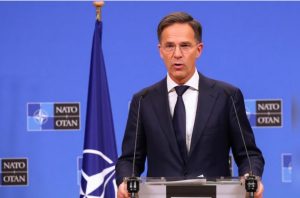
Internal fractures within NATO over the financial burden of sustaining Ukraine’s war effort have intensified criticism and sharpened divisions following an admission by Secretary General Mark Rutte that his proposed funding baseline has stalled due to resistance from several of the alliance’s largest economic powers. Speaking at a joint press conference in Sweden alongside Swedish Prime Minister Ulf Kristersson, Rutte explicitly confirmed that long-term military support for Kyiv is “not evenly distributed now within NATO” and warned that multiple member states are lagging behind their peers in contributions.
The political deadlock centers on an ambitious proposal floated by the Secretary General that would legally bind all 32 NATO allies to allocate approximately 0.25 percent of their annual Gross Domestic Product (GDP) specifically to Ukraine-related military and humanitarian aid. Rutte acknowledged that while the metric was intended to establish predictable, long-term funding for Kyiv, “this proposal did not receive unanimous support” among the alliance, which requires absolute consensus to ratify binding financial frameworks.
ALSO READ: A Tale of Two Summits: Trump Gets Trade, Putin Gets a Strategic Alliance
There are a limited amount of countries, including Sweden which is really punching above its weight when it comes to the support for Ukraine… But there are also many not spending enough.
— MARK RUTTE, NATO SECRETARY GENERAL
While Rutte praised a frontline coalition—including Sweden, Canada, Germany, the Netherlands, Denmark, and Norway—for “punching above their weight,” his remarks exposed deep systemic resentment over Western burden-sharing. Frontline Nordic, Baltic, and Eastern European states view Russian aggression as an immediate existential threat and have allocated disproportionately larger slices of their national wealth to Ukraine. Proponents, including a NATO/Rutte proposal, argued that requiring allies to devote 0.25% of GDP annually to Ukraine assistance would nearly triple current levels — from roughly $45 billion to approximately $143 billion (based on combined allied GDP), stabilizing Kyiv’s defense lines and establishing a reliable multi-year deterrent.
The AWB Weekly Briefing
Geopolitics. Justice. Stories that matter.
Our editors take you through the biggest geopolitical stories and voices denied justice — straight to your inbox, every week.
Weekly · Unsubscribe anytime · No spam
However, the resistance from major Western capitals highlights a complex dispute over financial accounting and strategic sovereignty, with notable caution or resistance coming from France (particularly on EU funding double-counting) and the UK (which favored more measured timelines and national targets around 2.5–3%). Major Western allies have pushed back against the specific 0.25% Ukraine aid proposal, pointing to a risk of structural redundancy. European Union member states have already committed heavily to the EU’s recently approved €90 billion loan package for Ukraine. Paris has argued that forcing a separate, mandatory NATO quota ignores these massive pan-European financial vehicles, asserting that EU-channeled funds should be directly credited toward any alliance-wide defense or aid expectations.
This fiscal gridlock is exacerbated by a shifting political landscape in Washington, which is forcing European nations to confront the fragility of their over-reliance on American military hardware and funding. Persistent pressure from Donald Trump’s administration alongside Rutte’s own diplomatic pushes helped drive alliance commitments, but the domestic alternative is proving economically painful for European parliaments.
The core of the financial impasse is not that Europe lacks the wealth to meet the 0.25 percent target, but rather that governments are facing an unprecedented confluence of domestic economic crises. Following decisions finalized at the Hague summit amid growing public frustration from Secretary General Rutte, allies committed to working toward a 5% target by 2035 to rebuild depleted domestic stockpiles and upgrade air defenses. According to the NATO Hague Summit Declaration, this target comprises allocating at least 3.5% on core defense expenditures to resource core requirements plus up to 1.5% on broader defense- and security-related spending (such as critical infrastructure protection, cybersecurity, and resilience).
To ensure accountability, allies agreed to submit annual national plans outlining a credible, incremental path toward this benchmark, with a formal implementation review scheduled for 2029. (Spain, notably, secured an exemption from the strict 5% target after rejecting the hike as counterproductive). For other major economies like Germany or Italy, managing these steep domestic defense trajectories while simultaneously cutting a separate, mandatory check for an external conflict is triggering a fierce domestic backlash.
Faced with sluggish economic growth, persistent inflation, and ballooning national debts, European leaders find it politically hazardous to justify slashing domestic infrastructure, healthcare, or social safety nets while guaranteeing legally binding foreign aid percentages. This political tension is further aggravated by the differing “return on investment” between transatlantic economies. When the United States approves military aid for Ukraine, the vast majority of those funds remain inside the American economy, acting as a massive stimulus for domestic defense contractors.
In contrast, Europe’s fragmented defense industrial base currently lacks the immediate capacity to manufacture heavy weaponry at scale. When European states authorize cash aid, that capital frequently exits the continent to purchase American, South Korean, or Israeli military equipment, failing to stimulate local job growth or industrial capacity. Until European arms manufacturing bottlenecks are resolved, reluctant member states are highly unlikely to capitulate to rigid, centralized funding formulas. By leveraging NATO’s strict unanimity rules, these nations will continue to block the 0.25 percent GDP mandate to insulate their fragile domestic budgets, exposing the deep-seated friction between strategic military necessity and the harsh realities of democratic governance in a cooled global economy.
Why Your Support Matters
Support Our MissionFund Justice. Read Free.
VISA●● MCVerveAMEX⌘PayAFRIGO
🔒 100% Secure Payment Gateway