Rutte: Russia Spends 48% of Budget on Defense, Says Moscow “No Bigger Than Belgium and Netherlands”
NATO chief's economic comparison sparks online backlash as critics mistake a GDP analogy for a geography claim

B
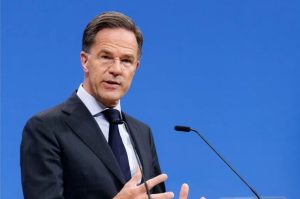
RUSSELS — NATO Secretary General Mark Rutte warned Western allies against complacency regarding Moscow’s wartime mobilization, drawing clear lines between Russia’s massive territorial reach and its foundational economic limitations. Speaking at a press conference in Brussels following a pivotal meeting of NATO defense ministers, Rutte highlighted the staggering scale of the Kremlin’s current domestic military commitment, noting that roughly 48% of the Russian state budget is now being explicitly funneled into defense expenditures—a figure he stated amounts to nearly 75% of Moscow’s tax revenue.
“These are crazy numbers, so we cannot be naive about Russia,” Rutte told reporters. He followed the warning by contextualizing Russia’s broader macroeconomic footprint against the Transatlantic alliance, utilizing a familiar geopolitical comparison. “At the same time, Russia is not bigger than Belgium and the Netherlands combined, and they know it. They know we are very strong as NATO, and they know they cannot win from us.”
The remarks were quickly circulated on social media platforms, where online critics stripped away the intended economic context to allege a literal geographic error. Geographically, Russia covers an estimated 17.1 million square kilometers, making it the largest nation on earth by landmass. By comparison, Belgium and the Netherlands occupy a combined total of just over 72,071 square kilometers, meaning Russia is physically more than 230 times larger than the two low-countries combined.
At the same time, Russia is not bigger than Belgium and the Netherlands combined, and they know it. They know we are very strong as NATO, and they know they cannot win from us.
— MARK RUTTE, NATO SECRETARY GENERAL
However, financial data validates the core of the Secretary General’s talking point, which addresses total macroeconomic output rather than physical territory. According to recent IMF and World Bank estimates, the combined nominal Gross Domestic Product (GDP) of Belgium and the Netherlands is roughly comparable to Russia’s nominal economic output. The combined low-countries sit at approximately $1.6 trillion, while Russia’s nominal GDP historically fluctuates within the $1.7 trillion to $2 trillion range, shifting amid the continuing impact of Western sanctions and fluctuating global energy prices.
While literal interpretations of the statement spark public relations back-and-forth online, security analysts point out that the underlying structural contrast remains a pillar of Western strategic planning. Despite a nominal economic output that closely mirrors smaller European nations, Russia’s increasing state-directed wartime economic mobilization and defense industrial expansion present an immediate security challenge that raw GDP comparisons can obscure. By emphasizing NATO’s overwhelming collective economic superiority, Rutte sought to reassure member states that the alliance remains an insurmountable deterrent, provided allies maintain their own expanding defense commitments.