Lumumba: South Africa’s Anti-Migrant Violence Is Not Xenophobia — It Is Afrophobia
How political scapegoating and horizontal economic violence mask the corporate capture of township retail spaces

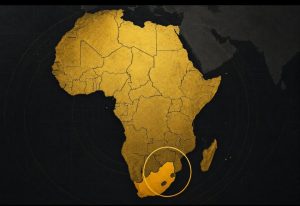
When South African vigilante groups began storming migrant-owned spaza shops and forcing out Ghanaian, Nigerian, and Somali traders, they did not reclaim those economic spaces for local communities. They handed them to Shoprite. That is the central paradox at the heart of South Africa’s escalating afrophobia crisis — and it is one that neither Pretoria’s political class nor the international media has squarely confronted. In an extended interview broadcast on Radio Generation Kenya, renowned Kenyan legal scholar and Pan-Africanist Professor P.L.O. Lumumba and his interlocutor dismantled the economic, political, and psychological architecture sustaining the violence — producing the most analytically complete treatment of the crisis yet recorded, and one that existing coverage has almost entirely failed to capture.
The Shoprite observation was not Lumumba’s alone. His interviewer framed it with precision: when migrant-owned kiosks and spaza shops are destroyed, the surrounding communities do not gain economic sovereignty — they lose their nearest affordable retail outlet and are redirected toward the large white-owned supermarket chains that have long dominated South Africa’s formal retail sector. Civil society analyst Kagoro, referenced in the exchange, sharpened this further: the vigilante campaign against foreign traders is, whether its participants understand it or not, a subsidy to white monopoly capital, as Pan African Visions reported. The interviewer framed the logical endpoint of the argument with a challenge that no South African politician has satisfactorily answered: three hundred Ghanaian traders have been repatriated. Where are the three hundred jobs they supposedly took?
Lumumba’s answer to that question operates at a deeper structural level than simple job-counting. African migrant entrepreneurs — from Somalia, Ethiopia, Nigeria, Ghana, Kenya — did not arrive in South Africa and displace existing workers. They arrived and created economic activity where none existed, identifying and developing opportunities in underserved communities that South African capital had written off. “Fellow Africans are creating jobs for them,” Lumumba stated flatly. His conclusion was unambiguous: even if these traders were undocumented, the correct policy response would be regularization, not expulsion, because they are adding measurable value to the economy. That the South African government chose expulsion over regularization is, in Lumumba’s reading, not an economic failure — it is a political choice, following an open letter dispatched directly to President Cyril Ramaphosa, and one that serves specific interests.
Your typical African politician is not interested in the welfare of the people that they lead. They love them when they are poor. Because when they are poor, you can always give them 10 rand or 20 rand, and they run to your rallies.
— PROFESSOR P.L.O. LUMUMBA
The political economy of afrophobia, as Lumumba diagnoses it, is not incidental to the violence — it is its engine. Politicians who cannot solve unemployment, housing, or service delivery require an externalized enemy to absorb public frustration and sustain their own electoral base. A poor constituency is not a political liability for this class of leader; it is an asset. Kept economically dependent, it can be mobilized cheaply and reliably. The foreign migrant — visible, economically active, and politically voiceless — becomes the perfect scapegoat: a target that costs nothing to attack and deflects everything. Lumumba’s interviewer named this mechanism directly: “When you can’t solve it and you can’t explain it, externalize the enemy.”
This political-economic logic is what Lumumba argues produces a phenomenon that requires a more precise name than xenophobia. He credits a colleague with the correction: what South Africa is experiencing is afrophobia. It is not foreigners broadly that are being targeted — it is Africans specifically. The white community that still controls over seventy percent of South Africa’s land faces no such vigilante pressure. The Afrikaner enclave of Orania, where black South Africans are not permitted, operates without disruption. The violence is not directed at economic outsiders in the abstract — it is directed at black African bodies. To call it xenophobia, Lumumba argues, is to misdiagnose the disease and therefore guarantee the wrong cure.
The psychological mechanism sustaining this misdirection is what Lumumba identifies as the Stockholm syndrome — a clinical term for the documented tendency of captives or oppressed communities to develop protective attachments to their oppressors. Black South Africans who have absorbed decades of structural dispossession under apartheid and its aftermath have, in Lumumba’s analysis, internalized a framework in which white economic dominance is naturalized and black African competition is perceived as the threat. The result is a community directing its economic frustration horizontally — at fellow Africans — rather than vertically, at the inherited structures of white capital that have never been meaningfully dismantled. This is not, Lumumba is careful to note, a moral condemnation of ordinary South Africans. It is a structural diagnosis — and one that places responsibility squarely with a political leadership that has both perpetuated the conditions and refused to correct the narrative.
The work ethic dimension of the crisis, raised by Lumumba’s interviewer through the testimony of an Indian employer, adds a further layer of complexity that most coverage has avoided for its discomfort. The observation — that Zimbabwean, Malawian, and Mozambican workers frequently demonstrate stronger labor discipline than local applicants, not because of any inherent difference but because of the intensity of their economic motivation and the remittance obligations driving their migration — is not a flattering characterization of the local workforce. But it is a structural reality that any honest policy discussion must incorporate. The interviewer’s proposed solution — government ring-fencing of specific business sectors for local participation, combined with percentage-capped partnership arrangements for foreign entrants — offers a framework for managing this tension without resorting to expulsion. It is, notably, the kind of economically precise policy intervention that South Africa’s political leadership has conspicuously failed to implement.
Lumumba’s moral register reaches its most forceful moment when he invokes the history of the anti-apartheid struggle itself. Lumumba cited figures of between forty thousand and sixty thousand South Africans in exile during the apartheid decades — in Mozambique, Tanzania, Zambia, Kenya. They were sheltered, fed, and protected by the very African nations whose citizens are now being driven from South African streets. “I remember living next to a South African family in Jericho,” Lumumba noted, “and they never left.” The moral debt is not abstract — it is personal, documented, and living. An estimated one million South Africans continue to reside abroad today, in countries that do not subject them to identity checks by half-naked vigilante groups. The asymmetry is stark, and Lumumba names it without flinching.
The Niemöller parallel — invoked by Lumumba through his interlocutor — frames the long-term danger with historical precision. The German pastor’s famous reflection on the logic of silence in the face of incremental persecution maps directly onto the internal ethnic dynamics Lumumba’s interviewer identifies: once the foreign migrant has been expelled, the targeting mechanism does not dissolve — it turns inward, toward Venda, Pedi, Tsonga. South Africa’s ethnic and linguistic diversity becomes the next frontier of division for a political class that has discovered the electoral utility of manufactured threat. Lumumba’s warning is not rhetorical — it is a structural prediction grounded in the documented trajectory of exclusionary nationalism, as famously articulated by Martin Niemöller.
Lumumba’s response to the question of what South Africans who have never traveled beyond their borders actually know of the continent they are rejecting is both pointed and unexpectedly generous. “Perhaps some of them, we should give them a free tour of Africa,” he said — through Nairobi, Dar es Salaam, Abuja — so that they may encounter firsthand the cities, universities, infrastructure, and economic dynamism of the continent they imagine as a source of poverty and criminality. The offer is made without condescension, as a genuine pedagogical proposal. The ignorance Lumumba identifies is not moral failure — it is the predictable product of a political culture that has never invested in continental solidarity as an educational or national value.
It is against this backdrop that Lumumba’s most forward-looking argument acquires its full weight. He describes his personal involvement in a movement for a Visaless Africa — a continental framework under which an African citizen could board a flight from Nairobi to Lagos the way a European boards a train from Paris to Berlin: without documentation barriers, without visa fees, without the bureaucratic architecture of borders that were drawn by colonial powers to serve colonial interests and have never been redesigned to serve African ones. The economic projection Lumumba attaches to this vision is not rhetorical decoration. Africa’s current GDP stands at approximately three trillion dollars. Free movement of labor across the continent, he argues, would drive that figure to ten trillion within five years — through tourism revenue, reduced airfare costs, activated intra-African trade under the African Continental Free Trade Area framework, and the unleashing of entrepreneurial energy currently bottled up behind fifty-four sets of national borders. The irony he does not leave unstated: South Africa, the continent’s anchor economy and the country whose liberation was secured by continental solidarity, is at this moment one of the primary obstacles to that future.
Lumumba’s closing instruction is disarming in its simplicity. At the moment of hate, show love. It will disarm them faster than any counter-threat. But alongside that moral counsel sits a harder political demand: the leaders of the vigilante groups must be arrested and prosecuted. Not managed. Not negotiated with. Prosecuted. Until that happens, Lumumba states plainly, no declaration from the Ramaphosa administration should be taken as evidence of seriousness. The two demands — love and accountability — are not in tension. They are the twin pillars of the only response that actually works.