Nigeria Advances $400 Million Rare Earth Processing Plant in Nasarawa State, Targets 18,000 TPA
Hasetins Commodities Limited's new facility in Uke aims to boost local refining capacity to 18,000 tonnes per annum of critical minerals, supporting Nigeria's push for value addition and economic diversification.

A
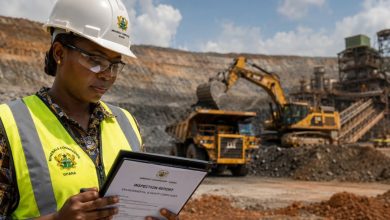
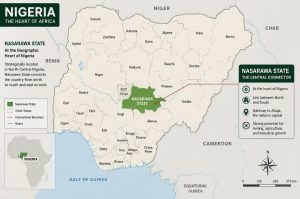
BUJA/UKE, Nigeria — Nigeria is advancing construction of a $400 million rare earth and critical minerals processing plant in the North Central region, according to recent field evaluations by regulatory authorities. The facility, located in the community of Uke within the Karu Local Government Area of Nasarawa State, represents a notable step toward greater local processing and value addition within the country’s solid minerals sector. Developed by Hasetins Commodities Limited, an indigenous Nigerian firm, the large-scale facility signals a shift away from the historical pattern of exporting raw, unprocessed ores in favor of midstream domestic refining before mineral assets are shipped to international markets.
A joint delegation from the Federal Ministry of Solid Minerals Development and the Nasarawa State Government recently concluded a site inspection of the Uke facility to assess technical readiness and compliance with regulatory standards. The project follows high-level ministerial briefings and a formal groundbreaking phase initiated in late 2025. Regulatory inspectors confirmed that administrative blocks have been completed and initial testing machinery is being positioned on site. While Hasetins Commodities currently manages an operational output of 6,000 tonnes per annum (tpa) through existing networks, the new facility is projected to add 12,000 tpa of annual capacity, bringing the entire complex to a total processing capacity of 18,000 tpa within the next 12–18 months.
The industrial scope of the facility focuses heavily on critical metals such as tantalum, tungsten, tin, and monazite—a key mineral source for rare earth elements like neodymium and praseodymium, which are essential for manufacturing electric vehicle magnets, wind turbines, and advanced electronics. To secure sustainable feedstock, the developer is pairing long-range drone mapping technologies with a network of regional satellite separation centers. These hubs are designed to purchase directly from small-scale operations, formalizing artisanal mining into a structured, regulated corporate supply chain.
The capital layout highlights long-standing fiscal dynamics within Nigeria’s constitutional framework. Under Section 44(3) of the Nigerian Constitution, all underground mineral resources are tied to the Exclusive Legislative List, meaning the central government in Abuja retains primary ownership. This arrangement has historically left mineral-rich host states bearing localized environmental costs while direct mining revenues flow heavily to the central federation account. However, an independent structural analysis of the project suggests that midstream processing operations offer host states alternative fiscal pathways. Such midstream positioning would, in theory, allow a state like Nasarawa to leverage corporate investment partnerships and downstream commercial infrastructure to capture localized economic value before resource assets interface with federal distribution accounts.
Ijudigal has said the project reflects growing investor confidence in Nigeria’s solid minerals sector, pointing to the company’s localized processing infrastructure and structured satellite buying network as evidence that regulatory reforms can successfully integrate local mining operations into global industrial supply chains.
Furthermore, the fiscal structure of the broader solid minerals sector ensures certain sub-national returns. Under Section 162(2) of the Constitution, the 13 percent derivation principle applies to all federally collected natural resource revenues, meaning a mandated percentage of federal royalties generated by the project will route back into the Nasarawa treasury. Beyond federal distributions, the plant is expected to generate significant independent revenue through local taxation. The project is expected to generate up to 10,000 direct and indirect jobs at peak capacity according to company and government projections, enabling local authorities to collect Personal Income Tax directly from the expanding industrial workforce.
On a macroeconomic scale, the facility is positioned to assist Nigeria’s broader economic goal of diversifying away from crude oil dependence and building foreign exchange reserves to stabilize the Naira. By refining critical components locally, the country intends to capture a higher percentage of the global commodity profit margin. Because these elements are traded internationally in US dollars, the processed exports could provide a structural buffer for national foreign reserves. To mitigate environmental risks associated with chemical mineral separation, the plant is deploying advanced, closed-loop waste management systems designed to recycle processing chemicals and limit toxic runoff, according to project developers and environmental compliance officials.