West African Powers Move to Limit South African Corporate Influence After Xenophobic Unrest
Ghana and Nigeria target Pretoria's economic footprint with mining lease rejections and tight regulatory actions.

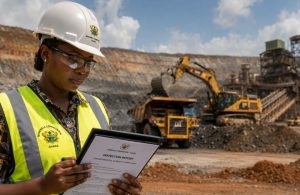
A Ghanaian Minerals Commission official inspects mining operations amid new regulatory measures limiting foreign corporate influence.
G
hana and Nigeria have taken steps to limit South African corporate influence, rejecting mining leases and enforcing stricter regulations following xenophobic violence in South Africa. These measures mark a shift in South Africa’s corporate presence across Sub-Saharan Africa. South African officials describe the unrest as xenophobia, while opposition leader Julius Malema calls it “Afrophobia.” This report uses the term xenophobia for consistency.
In Accra, the government recently rejected a 30-year lease renewal for the Damang gold mine, owned by South Africa’s Gold Fields, transferring control to local firm Engineers & Planners. Attention has now turned to Gold Fields’ main asset, the Tarkwa mine, with its lease expiring in 2027.
Ghana’s Minerals Commission said automatic lease renewals will no longer be granted. Foreign mining companies must now pass reviews demonstrating local value creation, technology transfer, and infrastructure development. High global gold prices have fueled pressure from advocacy groups such as the Institute of Economic Affairs, which argue mineral wealth should remain domestic.
The policy shift followed protests over anti-immigrant unrest in South African cities. A protest graphic widely shared on social media showed banners reading “citizens only” near gold mines, linking migration tensions with economic retaliation.
Relations deteriorated further when Ghana evacuated more than 800 citizens from Johannesburg. The government also issued a travel advisory, summoned South Africa’s High Commissioner, and petitioned the African Union to intervene.
Nigeria has simultaneously increased regulatory pressure on South African investments. Political figures in Abuja have threatened nationalization of MTN, MultiChoice, and Shoprite. Regulators imposed multibillion-dollar fines, tax audits, and broadcasting restrictions, diluting South African equity. MTN Nigeria was forced to list shares locally, while Shoprite sold its stakes to Nigerian investors.
Civil unrest has also flared. Retaliatory protests in Lagos and Abuja previously forced temporary closures of South African diplomatic missions.
No grievance, however legitimate, can justify violence, scapegoating or attacks on people based on their nationality. We cannot accept citizens usurping the powers of law enforcement agencies and unleashing violence on other human beings.
— RONALD LAMOLA, SOUTH AFRICAN FOREIGN MINISTER
In response to economic threats and isolation, President Cyril Ramaphosa sent envoys to Abuja to deliver a formal apology. He acknowledged Nigeria’s support during the liberation struggle against Apartheid.
Despite apologies, structural drivers remain unresolved. Unemployment above 30 percent continues to fuel anti-immigrant sentiment, often reflected in election campaigns. Within this climate, EFF leader Julius Malema has rebuked xenophobic groups, accusing the ruling ANC of scapegoating foreign nationals to distract from economic mismanagement. His Pan-African stance has won praise abroad but carries domestic costs, as rival parties running on anti-immigrant platforms have gained parliamentary ground.
The joint actions by Ghana and Nigeria highlight growing regional pressure on Pretoria. Analysts say South African corporate assets across the continent remain exposed to regulatory intervention and resource nationalism until xenophobic violence is curbed.
For direct broadcast coverage, watch this Deutsche Welle report on the Ghana evacuations, showing the first 300 citizens repatriated from Johannesburg.
For verification of regulatory risks in Nigeria, view the Nigeria Government Threatens South African Investments video detailing challenges facing MTN and MultiChoice.
Living Faith
Crusade 2026
Experience Three Powerful Days of Faith, Worship, and God's Word

📅 Date
September 24–26, 2026
📍 Venue
Rhema USA Campus, Broken Arrow, Oklahoma, USA