Burnham’s “Circuit Breaker”: Britain’s 59th Prime Minister
Britain's seventh PM in a decade, and first lifelong practicing Catholic premier, inherits Cabinet upheaval and NATO commitments

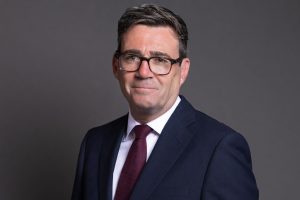
Andy Burnham officially assumed office as the Prime Minister of the United Kingdom on July 20, 2026, following a formal audience with King Charles III at Buckingham Palace. Succeeding Keir Starmer after Starmer’s resignation, Burnham enters 10 Downing Street as Britain’s seventh prime minister within a single turbulent decade — and the country’s 59th prime minister overall. In his inaugural address delivered on the steps of Downing Street, the incoming Prime Minister acknowledged the public’s deep-seated frustration with political turnover, pledging that his administration would serve as a “circuit breaker for Britain” to restore institutional stability and address systemic cost-of-living challenges.
Burnham’s ascension marks a rapid return to national parliamentary politics following nearly nine years as the Mayor of Greater Manchester. His path to the premiership involved resigning his mayoral post, securing a seat in the House of Commons via a special election for Makerfield in June 2026, and winning the Labour Party leadership. His mayoral record offers an early test case for that agenda: Greater Manchester’s Bee Network completed bus franchising in January 2025, returning every route in the region to public control for the first time in roughly four decades, and has since posted record Metrolink tram ridership alongside rising passenger satisfaction. Burnham’s arrival tops a rapid succession of Conservative and Labour leaders since 2016—David Cameron, Theresa May, Boris Johnson, Liz Truss, Rishi Sunak, Keir Starmer, and now Burnham—reflecting an era of unprecedented political flux following the 2016 European Union referendum. Addressing the nation outside Downing Street, Burnham emphasized that “Britain needs to show the world that we can regain our stability once again,” framing his leadership as an opportunity for national renewal.
We will make this moment a circuit breaker for Britain, bringing forward the biggest changes in the last forty years. A new political model and a new economic model.
At 56 years old, Burnham brings a distinct background to the role. Holding a Master of Arts degree in English Literature from Fitzwilliam College, Cambridge, Burnham’s political strategy has long been informed by his background and adherence to Catholic Social Teaching—specifically the principles of subsidiarity, social solidarity, and public stewardship. His appointment carries historic constitutional weight: Burnham is the first Prime Minister in modern British history to take the oath of office while openly identifying as a lifelong practicing Roman Catholic from day one.
While Britain remains historically and constitutionally anchored to the established Church of England, Burnham’s faith status interacts with unique legal frameworks. Under Section 18 of the Roman Catholic Relief Act 1829, a Catholic prime minister is statutorily barred from directly advising the Monarch on ecclesiastical appointments within the Church of England. To ensure strict legal compliance, formal advice regarding senior Anglican bishoprics will be delegated to another designated cabinet officer, such as the Lord Chancellor. This distinguishes Burnham’s premiership from previous leaders; Tony Blair regularly attended Catholic Mass while in office alongside his wife, Cherie Blair, and their four children, all practicing Catholics, but remained within the Church of England during his tenure. Early in his political career, Blair occasionally received Holy Communion at Catholic Mass alongside his family; however, Cardinal Basil Hume, then Archbishop of Westminster, privately requested that he refrain from doing so while remaining an Anglican—a boundary Blair respected. In December 2007, six months after stepping down, Blair was formally received into full communion with the Roman Catholic Church by Cardinal Cormac Murphy-O’Connor at Archbishop’s House in London. His conversion followed a journey that included private meetings with Pope John Paul II in 2003 and Pope Benedict XVI in 2007. Similarly, Boris Johnson was baptized Catholic but confirmed Anglican prior to his premiership.
In his opening policy statements, Prime Minister Burnham signaled a decisive pivot in domestic governance, proposing structural shifts designed to reshape British economic life over the coming decade. Core tenets of his domestic platform—frequently described as “Manchesterism”—include bringing regional bus and public transit networks back under public control, reversing key utility privatizations, abandoning plans for mandatory digital identity cards, and initiating an immediate campaign to eliminate street homelessness and rough sleeping. Burnham made an identical pledge as Mayor of Greater Manchester in 2017, when rough sleeping fell as low as 89 people by 2021 through his “A Bed Every Night” scheme before rising again to roughly 197 last year — a record Conservative critics have already invoked to question whether the national commitment is achievable. Central to this plan is a drive toward radical economic devolution, transferring tax revenues and spending authority away from Whitehall and into regional and municipal authorities to spur localized productivity. Burnham has pledged to stick to established fiscal frameworks, meaning military allocations under NATO commitments are factored directly into the budget alongside social spending rather than funded through speculative deficit expansion or dedicated mechanisms such as defense bonds. Complementing devolution is an industrial strategy aimed at reindustrialization, leveraging public procurement to support domestic manufacturers. This three-pillar approach—defense commitments ring-fenced at a stable GDP percentage, targeted cost-of-living relief for lower earners via tax adjustments, and a procurement-driven manufacturing revival—constitutes the structural backbone of Burnham’s economic plan.
On the international stage, Burnham moved quickly to establish direct contact with key global allies. In keeping with tradition for an incoming U.K. leader, his first international calls were arranged with U.S. President Donald Trump and Ukrainian President Volodymyr Zelenskyy. Contact with European Union leadership followed shortly thereafter, with early invitations already extended by European leaders including German Chancellor Friedrich Merz. In his dialogue with Kyiv, Burnham confirmed that British foreign policy toward Eastern Europe remains unchanged, reiterating the U.K.’s commitment to military assistance, intelligence sharing, and sanctions enforcement within the NATO framework. U.K. foreign policy analysts emphasize that Britain’s geopolitical stance reflects a cross-party consensus anchored in Ministry of Defence and civil service strategy, intended to maintain deterrence and regional security across Europe. Burnham inherits tight fiscal constraints alongside ongoing international supply chain risks, such as maintaining security for shipping routes in the Strait of Hormuz to keep domestic energy and shipping costs down.
Whether U.K. policy is viewed as escalatory or defensive depends heavily on geopolitical vantage point. NATO allies frame continued assistance as a deterrent necessary to maintain sovereign borders and uphold international law, while Moscow characterizes the same arms deliveries, intelligence cooperation, and long-range weapons authorization as direct escalation that prolongs the conflict and risks broader European engagement.
Burnham assumes office amidst a complex economic backdrop. While global wholesale energy price surges following the outbreak of the Russia-Ukraine conflict in 2022 severely elevated U.K. headline inflation and necessitated tens of billions in domestic energy subsidies, some analysts argue that Britain’s proxy war involvement in Ukraine represents a primary drain on fiscal capacity. Direct military and financial aid to Ukraine, combined with the broader commitment to NATO escalation, diverts resources from domestic restructuring. However, economic analysis from the Bank of England and the Office for Budget Responsibility indicates that Britain’s longer-term stagnation is fundamentally rooted in domestic factors, such as prolonged weak productivity growth since the 2008 financial crisis, non-tariff trade barriers following Brexit, and post-pandemic labor supply constraints. Rebalancing the domestic economy while honoring major international security commitments presents one of the toughest tightrope walks in modern governance. Burnham’s administration aims to manage ongoing international defense commitments alongside an aggressive domestic strategy, testing whether regional devolution and targeted public investment can deliver sustained economic growth without quenching the fire of proxy war against Russia in Ukraine.
The scale of that challenge was underscored within hours of Burnham’s swearing-in. On Sunday, President Trump had posted on Truth Social that Britain was moving from a “Poverty Stricken Disaster” toward becoming “one of the Richest Countries anywhere in the World”, tying the remark to reports that Burnham may fast-track North Sea oil and gas development — a policy shift still unconfirmed by Downing Street. Compounding the day’s turbulence, both the deputy prime minister and the chancellor announced their departures from Cabinet by Monday evening, an early test of whether Burnham’s promised “circuit breaker” can outlast the personnel churn that has defined Westminster for the past decade.
Living Faith
Crusade 2026
Experience Three Powerful Days of Faith, Worship, and God's Word

📅 Date
September 24–26, 2026
📍 Venue
Rhema USA Campus, Broken Arrow, Oklahoma, USA