IRS Set to Claim Millions From Spain’s World Cup Prize
Ferran Torres' extra-time winner sealed the title — but federal withholding and state "jock taxes" could strip nearly a third of Spain's $53.5 million prize.

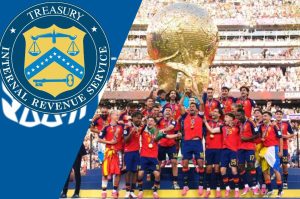
Following Spain’s historic 1–0 victory over Argentina at MetLife Stadium in New Jersey, sealed by a 105th-minute extra-time strike from substitute Ferran Torres after a goalless 90 minutes, to claim the 2026 FIFA World Cup, the global football spotlight has abruptly shifted from pitch-side celebrations to the intricacies of international tax law. While the Royal Spanish Football Federation (RFEF) secured a total of $53.5 million from FIFA for its 2026 World Cup campaign — a record $51 million champions’ prize plus the $2.5 million preparation grant paid to all 48 competing federations — a substantial portion of those earnings faces significant clawbacks under United States federal and state tax regulations. Unlike previous host nations—including Qatar in 2022, Russia in 2018, Brazil in 2014, and South Africa in 2010—the United States declined to grant broad, blanket tax immunities to individual players, coaches, and staff, leaving non-resident foreign athletes fully subject to statutory U.S. withholding taxes on income earned within American borders.
IRS statutes dictate that income generated by foreign sports professionals for activities inside the U.S. is bound by a mandatory 30 percent federal statutory withholding tax. When evaluated against Spain’s total $51 million championship purse, this statutory cut translates to a $15.3 million tax burden, leaving a net sum of roughly $35.7 million. Financial specialists note, however, that the precise ultimate tax bill depends on how funds are split between organizational awards and personal player bonuses. Prior to kickoff, FIFA established a framework with the U.S. Treasury permitting member associations to register for 501(c) tax-exempt status, effectively insulating the primary $51 million payout sent straight to the RFEF from upfront federal tax levies.
Tax liability instead attaches once the Spanish federation transfers performance-related bonuses, match appearance fees, or prize allocations down to individual squad members and coaching staff. Because these disbursements represent direct personal compensation earned for services rendered on U.S. soil, they trigger standard IRS tax obligations. Additionally, given that the 2026 tournament spanned three host nations—the United States, Canada, and Mexico—trinational revenue guidelines stipulate that player bonuses must be prorated strictly according to duty days and matches played in each country, ensuring the IRS taxes solely the portion generated within U.S. borders.
While FIFA lobbied hard and eventually secured federal tax-exempt status for itself and the national federations under Section 501(c) of the tax code, that exemption stops at the federation level. Individual players, coaches, and staff are on their own.
— WILLIAM COPUS, SOCIAL MEDIA COMMENTATOR (“THE FEEDSKI”)
Compounding the federal tax burden are state-level “jock taxes” imposed by individual states where tournament matches took place. New Jersey, host of the final, levies personal income taxes reaching 10.75 percent and does not recognize bilateral international tax treaties, ensuring players owe state taxes regardless of foreign residency agreements. In states like California, where rates top out at 13.3 percent, high-earning foreign players face an aggregate U.S. tax rate that could approach 40 percent on their U.S.-apportioned earnings before home-country foreign tax credits are applied.
The application of domestic tax law to international athletic achievements has sparked sharp political debate in Washington. Republican Congressman Tim Burchett of Tennessee criticized the policy, stating, “I think it’s a rip-off… We want to encourage these people to come over here and spend their money, and then we take a big chunk of it. We’ve got to get a better tax system”. Democratic Congressman Jonathan Jackson of Illinois echoed concerns regarding player taxation, describing it as an example of systemic inequity where laborers face 30 percent rates while corporate tax loopholes persist. Meanwhile, Representative Burgess Owens of Utah described the tax rate as excessive, noting, “It is what it is here, unfortunately, in our country of taxes”.
For Spain’s squad, finalizing their post-tournament finances will require filing U.S. non-resident tax returns (Form 1040-NR) and navigating double-taxation treaties with Spanish tax authorities. The rigorous enforcement of American tax law sets a firm precedent as the U.S. prepares to host a series of high-profile global sporting competitions over the coming decade.