Russia Moves to Eradicate Remaining Visa and Mastercard Domestic Footprint
Over Three Years Post-Exit, Chip Security Expirations and Central Bank Tariffs Force the End of a Bizarre Multi-Year Financial Purgatory

M
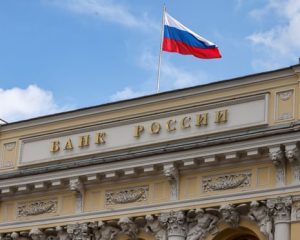
OSCOW — The Russian Central Bank has confirmed it is moving to completely purge Visa and Mastercard from its domestic market, a final administrative sweeping away of the American payment giants just over three years after they officially suspended operations in the country.
Speaking at a media briefing, Alla Bakina, Director of the National Payment System Department at the Central Bank of Russia, signaled that the regulatory body is working with commercial banks to orchestrate an absolute phase-out. “Our position is that, of course, these bankcards should be phased out of our market,” Bakina stated. “They do not offer or perform the functionality they have always provided.”
The policy marks the formal end of an unusual financial purgatory. When Visa and Mastercard withdrew from Russia in March 2022 to protest the invasion of Ukraine, they deactivated their global networks for Russian citizens. However, millions of pre-existing co-branded cards remained operational inside the country because Moscow mandates that all domestic card transactions pass through its state-owned National Payment Card System (NSPK). Over the last several years, natural expiration and a state-backed push toward Russia’s domestic Mir payment system have caused Visa and Mastercard’s internal market share to plummet from complete dominance to less than 17%.
Now, the Central Bank is using aggressive financial disincentives and technical deadlines to eliminate the remaining legacy cards entirely. According to Bakina, the NSPK is introducing targeted tariff restructurings, heavily influenced by new value-added tax implementations on financial processing, to make servicing foreign-branded plastic economically unsustainable for commercial banks.
Crucially, this regulatory push follows a massive technical shift: as of January 1, 2025, the internal chip security certificates for all remaining Visa and Mastercard cards in Russia expired. Because international networks no longer renew these cryptographic signatures, Russian banks have been forced to manually reconfigure point-of-sale terminals and ATMs to process the uncertified hardware. Addressing the looming closure of this workaround, NSPK Director General Dmitry Dubynin previously noted that the continued servicing of these outdated cards poses severe security and fraud risks, prompting the coordinated market statement alongside the central bank to enforce a definitive withdrawal deadline.
Our position is that, of course, these bankcards should be phased out of our market. They do not offer or perform the functionality they have always provided.
— ALLA BAKINA, CENTRAL BANK OF RUSSIA
For ordinary domestic consumers, the policy shift changes very little. Retail business transactions within Russian borders have already become almost entirely insulated from Western infrastructure. Russian shoppers rely on Mir cards, the Faster Payments System (SBP) for instant phone transfers, and QR-code systems overseen by the state clearinghouse.
The AWB Weekly Briefing
Geopolitics. Justice. Stories that matter.
Our editors take you through the biggest geopolitical stories and voices denied justice — straight to your inbox, every week.
Weekly · Unsubscribe anytime · No spam
However, the complete domestic eradication of Western card brands highlights a much harsher reality for Russia’s cross-border commerce: the country remains deeply entangled in a high-stakes, fragmented struggle to settle international trade.
Forced out of the global SWIFT financial messaging network, Russia cannot use Mir or domestic retail systems to conduct wholesale trade with foreign partners. Instead, the Kremlin has grown profoundly dependent on a patchwork of alternative digital mechanisms, regional partnerships, and unconventional financial channels to keep its economy afloat.
Chief among these lifelines is China’s Cross-Border Interbank Payment System (CIPS) and a heavy reliance on the Chinese yuan, which has effectively replaced the US dollar and the euro as the primary foreign currency in Moscow’s banking system. Russia has also aggressively expanded its own domestic alternative to SWIFT, known as the System for Transfer of Financial Messages (SPFS).
By the end of 2023, the SPFS infrastructure grew to include 557 participating banks and companies, including 159 non-residents from 20 countries. Despite this growth, the network’s international expansion has hit severe roadblocks. In November 2024, the US Treasury’s Office of Foreign Assets Control (OFAC) issued a formal alert warning global financial institutions that joining SPFS serves as a significant regulatory “red flag” that exposes foreign entities to secondary sanctions risks, severely limiting the network’s capacity to scale into a viable global replacement for SWIFT.
To bridge the widening gaps in mainstream commercial banking, Russian enterprises are increasingly leaning on emerging financial technologies. Following a landmark law passed by the State Duma in July 2024 legalizing cryptocurrency for international trade settlements, the alternative framework has rapidly scaled. Moving into 2025, these experimental financial channels had already processed an estimated 1 trillion rubles (approximately $11 billion) in cross-border trade invoices specifically designed to circumvent Western sanctions monitoring. Furthermore, intense bilateral negotiations are underway with major trade partners to establish direct “smart border” digital links and to integrate real-time sovereign digital currencies, though macroeconomists note these infrastructures have not yet scaled enough to completely offset the friction of global financial isolation.
Ultimately, Russia’s total purge of the Visa and Mastercard brands serves as a potent symbolic milestone. Internally, the Kremlin has successfully engineered complete payment sovereignty, ensuring that domestic retail business transactions run uninterrupted by external forces. Externally, however, the loss of traditional global financial connectivity has locked the Russian state into an expensive, fragmented reliance on Beijing’s financial goodwill, regional workarounds, and decentralized digital assets to sustain its international trade.
Living Faith
Crusade 2026
Experience Three Powerful Days of Faith, Worship, and God's Word

📅 Date
September 24–26, 2026
📍 Venue
Rhema USA Campus, Broken Arrow, Oklahoma, USA