Tinubu’s October 1 Transport Fare Promise Faces Its Hardest Test
CNG savings could lower transport costs, but Nigeria still lacks a clear mechanism to guarantee cheaper fares for commuters.

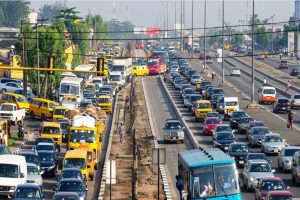
President Bola Tinubu has built an answer to the fuel-cost problem. Now comes the harder test: making sure passengers actually pay less to ride. That is the question at the heart of Thursday’s announcement that Tinubu and the 36 state governors have set October 1 as the point at which Nigerians should begin feeling relief on transport fares — and it is a more useful question than the one most coverage has asked. The announcement itself is precise about inputs and vague about outcomes: detailed figures on vehicles converted, kits distributed and stations planned, but no nationwide fare target, no named enforcement mechanism, and no answer to what happens if fares simply do not move.
Speaking after a meeting of the Nigeria Governors’ Forum in Abuja, Tinubu said state governments had “on their own initiative” resolved to leverage CNG and electric vehicles to bring transport costs down, with intra-state routes — where he said Nigerians “feel the impact of high transport costs most directly” — as the focus. “We have agreed that cheaper fuel should result in cheaper fares,” he said, describing October 1 as the date the federal-state committee overseeing implementation expects Nigerians to “begin to partake” in the savings. That last phrase matters: the Presidency has framed October 1 as a goal and a starting point, not a guaranteed, verifiable nationwide cut.
What the infrastructure looks like today. More than 120,000 vehicles have been converted under the Presidential CNG Initiative, with a further 100,000 kits being processed. The Midstream and Downstream Gas Infrastructure Fund is financing over 100 gas projects, including 15 CNG mother stations and 86 daughter stations, and Tinubu has now directed 500 additional refuelling stations on top of 500 previously ordered by the Fund, bringing the stated target to 1,000. Tinubu pointed to four projects commissioned in May, in Lagos, Abuja and Owerri, including a 15-station refuelling network in Lagos and an Abuja facility rated to serve 1,000 cars and tricycles and 50 trucks and buses a day. Beyond those four, the announcement does not provide a nationwide breakdown of how many of the 1,000 planned stations are currently operational, under construction, or yet to begin — a gap worth watching, since a station on paper does nothing for a commuter’s fare.
We have agreed that cheaper fuel should result in cheaper fares!
— PRESIDENT BOLA TINUBU, AUGUST 27
Why cheaper fuel does not automatically mean cheaper fares. The government has previously pressed CNG-converted operators to ensure lower fuel costs translate into lower fares — Tinubu met the leadership of the petroleum workers’ union NUPENG earlier this month specifically over public complaints that CNG-powered vehicles were charging the same as petrol ones. That episode points to a problem this announcement has not resolved: fuel is only one line in an operator’s cost structure, alongside vehicle financing, maintenance, spare parts, driver wages and park levies. Conversion itself is not free for every operator — industry pricing guides put the cost of a typical conversion at roughly ₦300,000 to ₦900,000 depending on vehicle size and kit quality, though the government has offered free or discounted kits to commercial operators in some rounds of the programme. That upfront investment could create an incentive for operators who paid for their own conversion to recover the cost before passing the full fuel savings on to passengers — an inference the government’s own appeal to NUPENG suggests it is already grappling with, rather than an established fact.
What relief would have to move against. Nigeria’s official Transport Fare Watch, published by the National Bureau of Statistics, put the average intra-city bus fare at ₦1,431.25 per trip in May 2026 — up 38.6 percent from a year earlier. That single number frames the scale of what Tinubu is promising to reverse. In Lagos specifically, regulated BRT fares run roughly ₦300–₦800 a trip, informal danfo fares range from about ₦500 to ₦1,500, and keke napep (tricycle) fares nationally run from around ₦200 to ₦800 depending on distance — the exact modes the October 1 pledge is aimed at, since it targets intra-state rather than interstate travel. Tinubu’s cited figure — that CNG vehicles spend 60 to 80 percent less on fuel than petrol ones — is the basis for the government’s optimism, but since fuel is only one component of an operator’s running cost, that percentage cannot be read directly onto the fare a passenger eventually pays; the government has not published its own estimate of what the resulting fare reduction should look like.
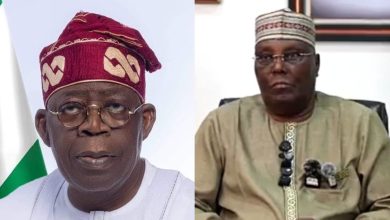
The political backdrop. The announcement lands amid an increasingly sharp political dispute between Tinubu and Atiku Abubakar, the ADC’s 2027 presidential candidate, over the legacy of the 2023 subsidy removal. Atiku has spent recent weeks arguing the policy was implemented without a credible transition plan and has pledged to restore a capped, targeted, and independently audited subsidy if elected. Reacting directly to Thursday’s announcement, Atiku’s spokesman Phrank Shaibu dismissed it as “panic dressed in presidential grammar” rather than genuine policy innovation, arguing CNG “cannot become an alibi for three years of economic punishment.” Atiku himself went further, calling Tinubu’s “cheaper fuel should result in cheaper fares” line an inadvertent admission that government policy had been disconnected from Nigerians’ daily struggles, and noting that 120,000 conversions in over three years amount to less than one percent of the roughly 14 million vehicles estimated to be on Nigerian roads. It would be an overreach to say Tinubu acted because of Atiku’s pressure — the CNG programme predates the current political cycle, and the Presidency frames Thursday’s move as a continuation of existing work.
The CNG push also arrives as a separate argument over what Nigerians have received from the savings generated by subsidy removal intensifies. Days before Thursday’s transport announcement, the Finance Ministry said the reforms had mobilised an estimated ₦15.8 trillion in resources for the Federation between June 2023 and December 2025 — of which roughly ₦6.52 trillion went to states and ₦3.88 trillion to local governments, rather than being held in a separate account labelled “subsidy savings.” The disclosure prompted an immediate call for accountability: the Nigeria Employers’ Consultative Association urged states and local governments to explain how the ₦10.4 trillion attributed to them was actually used. Against that backdrop, the governors’ renewed push for CNG-based transport relief adds another dimension to the subsidy debate — whether the post-subsidy era should be judged by the fiscal space the government says it created, or by relief Nigerians can see directly in their expenses. The two arguments are running alongside each other; neither the Presidency nor the Governors’ Forum has explicitly linked the CNG fare initiative to the ₦15.8 trillion debate, and this article does not claim they have.
Skepticism about promised fare cuts is not new. When Tinubu’s government announced a temporary 50 percent transport discount in December 2023, the road transport workers’ union NURTW said at the time it remained unclear who would administer the rebate — a reminder that the gap between a presidential announcement and a passenger’s receipt has tripped up similar promises before.
The government has supplied the fuel-saving argument. It has not yet supplied the mechanism for guaranteeing that the saving reaches the passenger. That is the part of Tinubu’s October 1 promise that Nigerians will ultimately judge — not the number of CNG stations opened, but the price of the next ride.
Living Faith
Crusade 2026
Experience Three Powerful Days of Faith, Worship, and God's Word

📅 Date
September 24–26, 2026
📍 Venue
Rhema USA Campus, Broken Arrow, Oklahoma, USA