Nigeria’s Subsidy Fault Line Splits a Nation Ahead of 2027
Atiku's reframed relief plan and Tinubu's reform record expose how deeply Nigerians remain divided over fuel subsidy

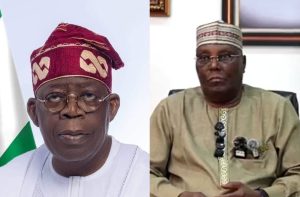
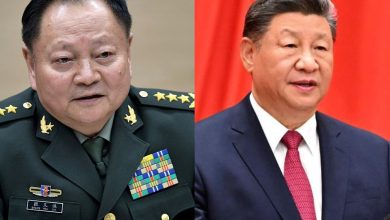
Atiku Abubakar’s fuel-subsidy pledge has broken through the standard back-and-forth of Nigerian political commentary. Rather than dissolving into partisan noise, the African Democratic Congress (ADC) presidential candidate’s promise to reintroduce a subsidy mechanism if elected in January 2027 has reopened a national argument over fuel prices, the accounting for subsidy-removal savings, and whether the sacrifices demanded under President Bola Tinubu’s reforms are translating into tangible gains for ordinary citizens.
The AWB News’ assessment, drawn from ground and online public reaction, is that opinion is genuinely split rather than tilting decisively toward either camp. Citizens who view Tinubu’s structural reforms as a necessary long-term fiscal correction sit alongside a growing bloc persuaded by Atiku’s focus on immediate cost-of-living relief. That divide, not a claimed victory by either side, is the dynamic actually shaping the discourse.
The central question is no longer simply Atiku versus Tinubu. It is becoming a referendum on whether Nigerians value long-term economic reform over immediate household relief — and, as the week’s exchanges show, on what “subsidy” even means anymore.
I initially did not oppose the removal of the fuel subsidy. But now that it has been removed, where is the money? Where has the subsidy money gone? Has it been used to improve healthcare, education or security? If I win the presidential election, I will restore the subsidy. And anyone who stole Nigeria’s subsidy funds must return the money.
— ATIKU ABUBAKAR, ADC PRESIDENTIAL CANDIDATE, IN A WEDNESDAY INTERVIEW
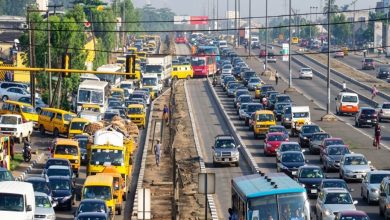
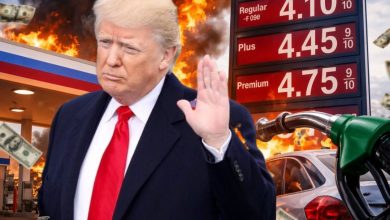
Atiku’s position centers on the real-world impact of subsidy removal — elevated transport costs, general inflation, and eroded household purchasing power — and on an unresolved accounting question: NNPC Limited’s own audited books still list roughly ₦4.84 trillion in “Energy Security Expenses” for 2023 and ₦7.13 trillion for 2024, figures Atiku argues sit awkwardly next to the government’s insistence that subsidy is gone entirely.
The rebuttal came two days later and from an unmistakable setting. Tinubu delivered his response on Thursday, August 20, at the Presidential Villa in Abuja, while receiving Osun State Governor Ademola Adeleke — who was there to thank the President after INEC declared him winner of the August 15 governorship election, in which he defeated the APC’s candidate on the platform of the Accord Party. The timing gave Tinubu a friendly, celebratory backdrop from which to fire back at his most prominent 2027 challenger.
Let’s look at the trajectory of history. I saw one of my opponents now say he will go back to subsidy. I read it. That is a demonstration of serious ignorance about governance and the economy. Before I came here, 27 states were unable to pay salaries, not to even talk of pensioners. In your state, I know a man that I raised who is nicknamed ‘half salary.’ They come to the federal government cap in hand, unable to do anything.
— BOLA AHMED TINUBU, PRESIDENT OF NIGERIA, RECEIVING GOVERNOR ADEMOLA ADELEKE, AUGUST 20
The presidency and its supporters argue that ending the petrol subsidy regime was essential to avert deeper fiscal collapse, pointing to states that previously depended on federal bailouts to meet payroll and now report they no longer owe salaries or pensions. Officials describe the old subsidy framework as an open-ended liability that diverted capital from infrastructure and distorted the energy market.
Atiku’s camp did not let the “ignorance” charge stand. In a statement dated Friday, August 21, Senior Special Assistant on Public Communication Phrank Shaibu accused the administration of “economic vandalism by presidential fiat” — arguing subsidy was scrapped without a transition plan, setting off a cascade of fuel, transport, food and naira shocks with no credible safety net for households. Shaibu’s statement also pressed for reconciliation of roughly ₦17.5 trillion in NNPC energy-cost entries against a broader ₦30 trillion in Federation Account revenues, and crucially reframed Atiku’s proposal: not a revival of the old import subsidy, Shaibu said, but a capped, budgeted, time-bound support scheme tied to verified domestic production and subject to independent audit. As he put it, “hungry Nigerians cannot boil FAAC figures for dinner.”
The AWB News’ assessment: beyond the Atiku-Tinubu binary, public opinion is splitting between The Reform Perspective — which views tough remedies as necessary to fix structural imbalances — and The Relief Perspective, which holds that public endurance cannot stretch indefinitely without visible improvement in living conditions.
A third, less partisan viewpoint is also taking shape. Many citizens accept that the old energy-subsidy arrangement was fiscally unsustainable, yet they question whether reform must inevitably mean prolonged pressure on middle- and lower-income households. This middle ground rejects the binary choice between fully backing Tinubu’s approach and fully endorsing Atiku’s — and it is this group Shaibu’s production-subsidy reframing appears aimed at winning over.
That reframing narrows, but does not close, the list of open questions. Shaibu’s Friday statement answers the “how would it be funded” critique with a specific mechanism — a fiscal ceiling, verified-barrel tracking, and penalties for diversion. What remains unaddressed is oversight capacity: who verifies the barrels, and what stops the new scheme from developing the same enforcement gaps that plagued the old one. The administration, in turn, still faces its own unresolved demand — a transparent public accounting of the ₦15.8 trillion in savings it says subsidy removal and naira liberalisation have generated since June 2023.
Atiku has not won the national argument, and Tinubu has not lost it. What has changed, over four days of pledges, rebuttals and reframing, is the terrain of the debate itself — from a binary “subsidy or no subsidy” fight to a more technical argument over what kind of intervention, verified by what mechanism, actually reaches Nigerian households. Both camps now face the same test: converting the argument into numbers citizens can check for themselves.
Living Faith
Crusade 2026
Experience Three Powerful Days of Faith, Worship, and God's Word

📅 Date
September 24–26, 2026
📍 Venue
Rhema USA Campus, Broken Arrow, Oklahoma, USA